
By Chevi Rabbit, Local Journalism Initiative Reporter
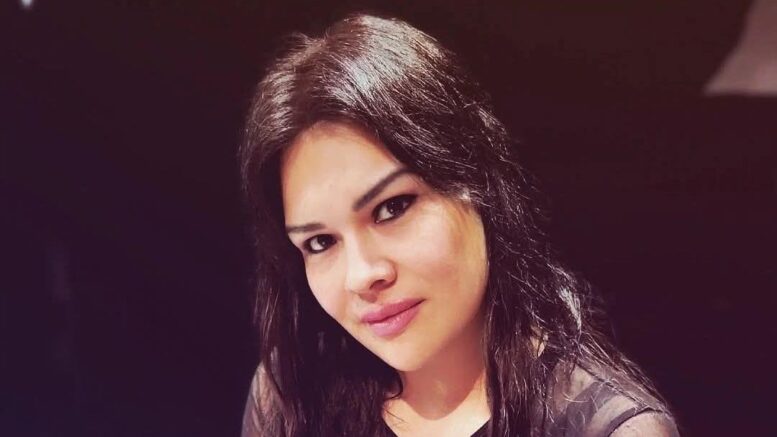
(ANNews) – For Melody McArthur, storytelling has never been limited to one stage.
A singer-songwriter, actor, Gladue report writer and entrepreneur, McArthur has built a career that moves between music, theatre, Indigenous storytelling and justice. A member of Bigstone Cree Nation, she grew up in the Slave Lake area and has spent years developing a voice that reaches audiences both within and beyond her community.
“I am a singer-songwriter first and foremost,” McArthur said.
She began releasing original music around 2014 and has since established herself as an accomplished Indigenous recording artist. By 2025, she had released six albums, with her music drawing from pop, R&B, roots, country and other influences. Her career has also included multiple No. 1 songs on the National Indigenous Music Countdown and several awards and honours, including a 2022 Native American Music Award and recognition as one of Edify Magazine’s 2023 Top 40 Under 40.
More recently, McArthur has expanded her storytelling into theatre.
In 2025, she performed in Bear Grease during its Off-Broadway run in New York City, taking on the role of Sandy after initially joining the production as an understudy. She also appeared in the world premiere of Tomson Highway’s Rose at the National Arts Centre in Ottawa, portraying the principal character Pussy Commanda.
For McArthur, however, her work in the arts is only one part of a much larger journey.
She has worked for approximately 12 years as a Gladue report writer and contractor for Alberta Justice Services. Her path into the justice system came unexpectedly when her mother was unable to attend a training session in Edmonton offered through Native Counselling Services of Alberta.
McArthur attended in her mother’s place – and left with a contract.
“What’s meant for me won’t miss,” she said.
The work quickly became one of her greatest passions. “It was just really fulfilling to be able to work with my people, but also within the system and kind of learning it and seeing a lot of the injustices, the inequalities between how our people are often the example that is set for what not to do,” McArthur said.
Her experience within the justice system has given her a firsthand understanding of inequalities affecting Indigenous people while also inspiring her to consider how her artistic work could become part of healing and rehabilitation. “I have these ideas about bringing theatre and arts into corrections somehow,” she said.
McArthur is currently exploring a project that could eventually bring theatre into a medium-security facility or healing lodge. Through Amazon Audible’s Indigenous Writers Circle, she is working with a mentor to rework a play that she hopes could involve women in corrections in the creation and performance of a theatrical production.
She believes live theatre can offer a unique opportunity for personal growth. “I just feel like there’s a lot of healing power in acting,” she said. “There’s something about the way you grow as a person in doing theatre, particularly live.”
McArthur’s belief in the transformative power of storytelling is also rooted in her own experiences. She spent much of her twenties in a 12-year abusive relationship. During that period, she said, the relationship consumed much of her attention and left little room for exploring who she was as an individual. She also became a mother overnight to two stepchildren.
It was after leaving that relationship that she began a deeper process of self-discovery. Travelling, touring and performing gave McArthur opportunities to understand herself in new ways. “When you’re on the road and traveling and touring and stuff, you’re really kind of forced to learn who you are pretty quick,” she said.
She found herself learning who she was not only while surrounded by audiences and fellow performers, but also during the quiet moments afterward. “Sometimes when the audience is gone, you’re just going back to your room all by yourself,” she said.
That period of exploration eventually changed the way she approached her music and her public identity.
McArthur said that becoming more authentic to herself led to what she considers her most authentic songwriting, branding and representation as an artist. She believes audiences recognize that authenticity.
For McArthur, stepping outside her comfort zone became essential to discovering what was possible. “I say that here’s the comfort zone, but the magic happens outside of it,” she said.
That philosophy has also shaped how she views the broader Indigenous arts community. McArthur believes Indigenous artists are experiencing what she describes as an “Indigenous Renaissance,” with artists increasingly taking their place on major stages and in industries where Indigenous voices have historically been underrepresented.
She sees that movement as much larger than music and theatre. “We’re all storytellers in multiple different kinds of ways,” she said.
For McArthur, artists include musicians and actors, but also beadworkers, painters, sketch artists and people working directly within their communities. “When I hear the word artists, I think of all of us Indigenous people as artistic in some way,” she said.
She is particularly proud to see younger Indigenous people pursue creative opportunities without the same hesitation that previous generations may have experienced. “I’m really, really humbled and proud to see this next generation just coming up and being fearless about it,” she said.
She also sees older people pursuing dreams they once believed were out of reach. “That groundwork has been laid,” McArthur said. “I see a fearless striving in the younger generation, and even people who are older that never thought they could, are going for things.”
For McArthur, that represents empowerment – and she is excited to see where Indigenous artists take the movement next.
Looking ahead, she is deliberately slowing down rather than rushing her next musical release. McArthur is planning for a 2027 release that will coincide with a lyric book she is developing with the Amazon Audible team.
The book is intended to be part lyric collection and part memoir, exploring the stories behind her songs and the experiences that shaped them. She wants to discuss the inspiration behind individual songs while also examining childhood experiences, trauma, positive experiences, risks and personal growth. “What I’m trying to do is just tell the gospel truth about it all,” she said.
For McArthur, honesty is central to connecting with her audience. She wants people to see not only the accomplishments but also the ongoing work of overcoming adversity and building a better life. She does not see her artistic abilities as something that belongs solely to her.
Instead, she considers herself a vessel for the gifts she has been given. “It’s a gift, so I’m just a vessel, and I’m meant to share it somehow,” she said.
From the justice system to the recording studio, from correctional healing initiatives to national theatre stages, McArthur continues to find different ways to share those gifts.
Her story is ultimately one of rediscovering her voice – and then using it to create space for others to find theirs.
“So, I mean, that’s all I’m really trying to do out here,” McArthur said, “is make a difference if I can.”

Be the first to comment on "Melody McArthur: Finding her voice through music, theatre and justice"