
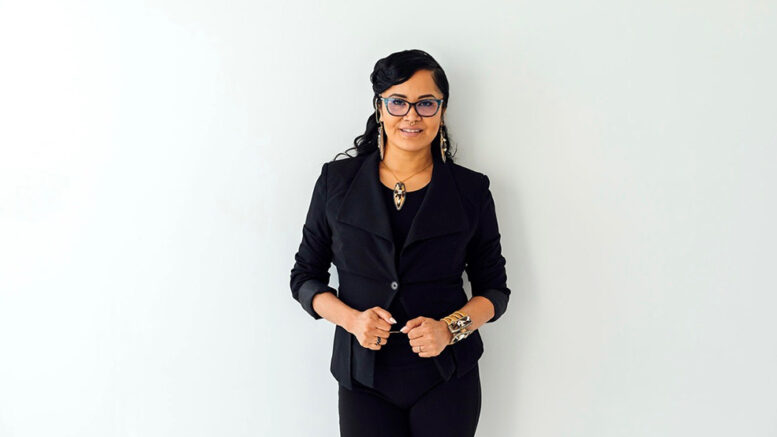
Through Goba Care, the Dene founder is helping Indigenous patients and families navigate medical treatment in Edmonton while maintaining connections to their culture, communities and home.
By Chevi Rabbit, Local Journalism Initiative Reporter
(ANNews) – For Indigenous patients travelling hundreds or even thousands of kilometres from their northern communities to receive medical treatment in Edmonton, accessing healthcare can mean leaving behind much more than home.
It can mean being separated from family, language, culture, familiar surroundings and the support networks that provide comfort during some of life’s most difficult moments.
For Melinda Laboucan, a member of the K’ahsho Got’ine First Nation from Fort Good Hope in the Northwest Territories, those experiences helped inspire the creation of Goba Care, an Indigenous-led organization working to ensure northern patients and their families do not have to navigate medical journeys alone.
I am from Treaty 11, Fort Good Hope, Northwest Territories, said Laboucan. “In my language, Goba means light on the horizon.”
As the founder and director of Goba Care, Laboucan draws on years of experience in advocacy, healthcare navigation, community-based research and facilitation. Her work is rooted in strong community relationships and a commitment to combining traditional and Western approaches to healing.
Her connection to community health began long before establishing the organization. Raised in Fort Good Hope, Laboucan said her Dene community encouraged volunteerism and social justice from a young age.
She has developed formal and informal experience in end-of-life care, cancer survivor support, addiction support and chronic disease management. Among her contributions to northern healthcare was leading the launch of the first community cancer care program in the Northwest Territories.
Her personal experiences also shaped her understanding of the challenges Indigenous families face when travelling south for medical treatment.
“As a northern Indigenous woman, I know how difficult it is, can be, to leave home for medical treatment. My personal experiences and traditional knowledge inspired me to create Goba Care, a place where people can find advocacy, compassion, navigation, cultural connection, and a little piece of home while receiving care here in Edmonton,” she said.
Laboucan said patients travelling from northern communities often face several barriers while trying to access healthcare.
“Patients often travel far from family, language, culture, and familiar surroundings. They may face financial stress, confusing systems, communication barriers, discrimination, and have to navigate those challenges alone while they are here and sick.”
Goba Care currently supports medical travellers, escorts and families from the Northwest Territories and Nunavut, primarily in Edmonton.
Rather than expecting patients to visit an office, the organization brings its services directly to the people who need them.
“Goba is a mobile, Indigenous-led organization. We visit patients and escorts at Edmonton’s five major hospitals. We meet travellers at the airport, attend appointments when needed, and may help with hotel costs when necessary and resources are low,” Laboucan said.
The organization’s support extends beyond hospital visits and appointment assistance.
Goba Care provides traditional medicines and foods, prayer and care kits, sewing kits, northern cultural healing retreats and gatherings. It also helps families facing a death connect with services to bring their loved ones home for burial and assists with emergency fundraising in serious situations.
For Laboucan, these services recognize that healthcare is about more than medical treatment. It is also about ensuring patients maintain their dignity, cultural identity and connections to their communities.
She believes culturally safe healthcare must recognize the importance of Indigenous knowledge and traditions alongside Western medicine.
“Our culture is part of our healing. Patients deserve to be heard, respected, and free from discrimination. Traditional medicines, foods, prayer, elders, and connection to the land can bring strength alongside medical care. Our people should never have to leave their identity at the hospital door.”
That message is central to Goba Care’s work and its vision for the future.
Laboucan hopes to grow the organization into a sustainable and trusted support system, with a dedicated cultural wellness space and stronger partnerships with hospitals, northern governments and communities.
She also wants to see improved communication, greater Indigenous representation in healthcare decision-making and services that recognize the whole person rather than focusing exclusively on medical conditions.
“I want Goba Care to grow into a sustainable, trusted support system with a dedicated cultural wellness space and stronger partnerships with hospitals, northern governments, and communities. I want better communication, more Indigenous voices in the healthcare decisions, and care that honors the whole person,” she said.
While the organization continues building its capacity, Laboucan wants northern patients and families to know that support is available when they arrive in Edmonton.
“To our Northern patients, escorts, and families, you are not alone. Whether you need guidance, a hospital visit, cultural healing, or simply someone to listen, Goba Care is here to help support you. No matter how far you travel from home, you should never feel forgotten.”
Before concluding the interview, Laboucan also emphasized the importance of acknowledging the people and communities who have helped make the organization’s work possible.
She expressed gratitude to Goba Care’s funders and the northern communities that continue to support its efforts.
“We wouldn’t be able to get this far without your support,” she said.
For Laboucan, the meaning behind Goba Care extends beyond providing assistance during medical appointments. It is about ensuring Indigenous patients and their families have access to compassion, cultural connection and someone who understands the importance of home.
As northern families continue travelling to Edmonton for medical treatment, Goba Care is working to ensure that distance does not mean disconnection.
Sometimes, healing also means having a familiar voice, traditional medicines, a supportive presence or simply someone who understands where you come from.
And, as Laboucan reminds northern patients, no matter how far they travel from home, they should never feel forgotten.

Be the first to comment on "Melinda Laboucan Brings Cultural Care and Advocacy to Northern Indigenous Patients"