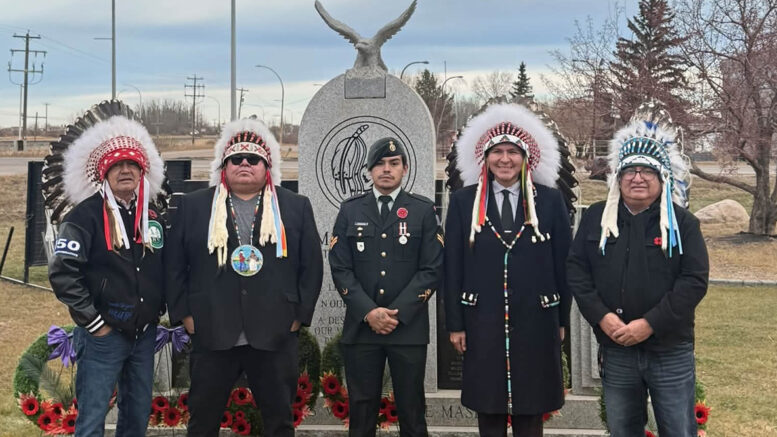
Chiefs Desmond Bull and Izaiah Swampy-Omeasoo reflect on Indigenous military contributions, historical injustices and the importance of preserving veterans’ stories for future generations.
By Chevi Rabbit, Local Journalism Initiative Reporter
(ANNews) – Indigenous soldiers have served alongside Canadian military personnel in some of the country’s most significant conflicts, including the First and Second World Wars, the Korean War and Afghanistan.
However, their contributions and sacrifices were not always met with equal recognition and benefits when they returned home.
In interviews with Alberta Native News on Remembrance Day, Louis Bull Tribe Chief Desmond Bull and Samson Cree Nation Chief Izaiah Swampy-Omeasoo reflected on the importance of remembering Indigenous veterans and ensuring younger generations understand their contributions.
Bull said Remembrance Day and Indigenous Veterans Day recognize different aspects of Indigenous military history. While Indigenous Veterans Day recognizes First Nations, Métis and Inuit veterans, Bull said Remembrance Day also provides an opportunity to honour those who served in Canada’s military conflicts.
He explained that Indigenous history of defending communities extends beyond modern military service to include traditional warriors and ancestors who fought to protect their way of life.
“There’s one that honours not only the veterans during the Indigenous Day but honours our past warriors that would include those that such as peacemakers, you know, such as our ancestors that fought for a way of life,” Bull told ANNews.
“While today was more or less honouring those that served within the military itself during the wars, including World War One, Two, Korean War, Afghanistan. It was a good day to honour and acknowledge those warriors,” he said.
According to Veterans Affairs Canada, more than 4,000 Indigenous people served during the First World War. During the Second World War, more than 3,000 First Nations members served, alongside an unknown number of Inuit and Métis recruits.
Exact numbers remain difficult to establish because Indigenous identity was not consistently recorded in military records.
Bull said Indigenous soldiers fought alongside other servicemen and Allied forces against tyranny and fascism, experiencing a sense of equality and brotherhood on the battlefield.
“They fought as equals on the battlefields. It didn’t matter what country they came from, what nationality they came from. And they were treated as equals in that brotherhood,” Bull said.
However, he said that equality did not continue when Indigenous veterans returned home.
“But that’s where that brotherhood kind of stopped for Indigenous warriors, Indigenous veterans,” Bull told ANNews.
Bull pointed to the unequal treatment First Nations veterans experienced after returning from war, including barriers to accessing land grants, pensions and other benefits available to other Canadian veterans.
“Everything that was given and privileged to Canadian veterans was missed upon the First Nation veterans; they didn’t receive anything at all,” he said.
Historical records document how First Nations veterans faced barriers when accessing federal veterans’ programs. Following the Second World War, many status First Nations veterans living on reserves faced different administrative processes and restrictions when attempting to access benefits.
Bull said recognition of Indigenous military contributions came late for many veterans who had already passed away. He nevertheless welcomed the increased acknowledgement of their service.
“But it’s good they did acknowledge them, you know. It’s good that they’re finally acknowledging them and letting them know that they did play a big part not only within Canada but even North America, the Indigenous people also,” Bull said.
Swampy-Omeasoo offered another perspective, focusing on the importance of recognizing veterans through Cree values and community responsibilities.
Speaking with ANNews, the Samson Cree Nation chief said the Four Nations community came together for a memorial service honouring past veterans and current serving military members.
Swampy-Omeasoo said recognizing Indigenous veterans comes down to fundamental Cree values, particularly respect for those who put their lives at risk to protect others.
“I believe it boils down to the fundamental of who we are as Cree people. Using respect and living our life with respect to everyone, especially to those who fought to keep our community safe,” Swampy-Omeasoo said.
He said veterans deserve recognition for the sacrifices they made to protect families and communities. “Most importantly, who went to go fight for our mothers, our nieces, our nephews and the kids, the women and the children of the community,” he said. “People who do that, I think are 100% deserving of every type of recognition that we have as Cree people.”
Swampy-Omeasoo also spoke about the responsibility of First Nations leadership to preserve veterans’ stories and address historical injustices. He said that responsibility includes pursuing legal action and establishing bilateral discussions with the federal government.
Swampy-Omeasoo raised concerns about racism and systemic discrimination experienced by Indigenous members of the Canadian military, including sexual violence and harassment against Indigenous women and the way those incidents are investigated. He also said historical issues surrounding the administration of veterans’ benefits remain important to address.
Swampy-Omeasoo pointed to the way First Nations veterans returning from the First and Second World Wars were directed to Indian Affairs rather than dealing directly with Veterans Affairs Canada. He said First Nations leadership must continue raising these issues with the federal government to ensure historical injustices are acknowledged and addressed.
Beyond military service, Chief Bull also believes Remembrance Day should recognize the contributions of animals during wartime. Horses transported soldiers and supplies, dogs assisted with tracking and detecting explosives, carrier pigeons delivered messages, and cats helped control rodents aboard military ships. Canada’s Animals in War Dedication in Ottawa, established in 2012, recognizes animals that served alongside military personnel.
Both chiefs emphasized the importance of ensuring younger generations understand the sacrifices made by those who came before them.
Swampy-Omeasoo offered a message to young people about remembering their history and the generations who made their lives possible.
He said, “Remember your ancestors because the only reason why you’re here is because of them.”

Be the first to comment on "Remembering Indigenous warriors and veterans who served Canada"