By Chevi Rabbit, Local Journalism Initiative Reporter
(ANNews) – For Brad Provost, recovery is not simply about putting down alcohol or drugs. It is about confronting grief, healing childhood trauma, learning to forgive himself and finding a reason to keep moving forward.
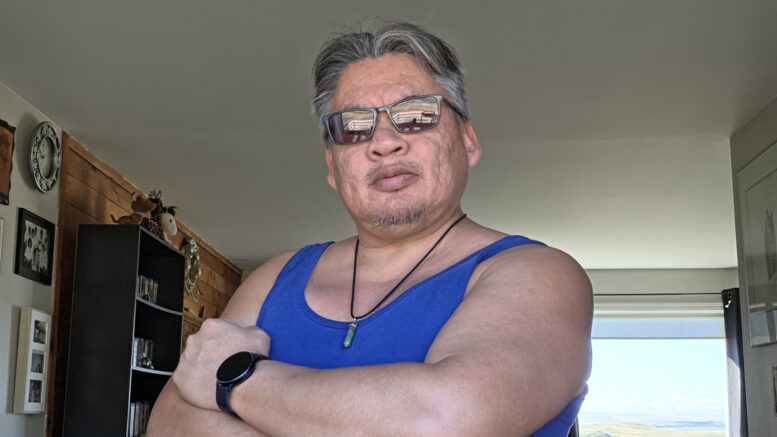
At 53, Provost describes himself as a kind, patient and hardworking person who is committed to taking care of himself mentally, physically and spiritually. He is also a recovering alcoholic and drug addict who hopes sharing his experience can help others facing addiction, grief and difficult personal circumstances.
Provost says his relationship with alcohol began when he was about 15 and continued through his teenage years. “I started drugs and drinking in high school,” he said.
Looking back, Provost connects his substance use to difficulties he experienced growing up, including bullying from an older sibling and conflict with his father. He says repeated insults affected his sense of self-worth. “My worth was just destroyed. I had no self-worth,” he said.
As a teenager, he rebelled, struggled at school and eventually dropped out. He also says he frequently ran away from home. “Basically, I let alcohol lead me around by the nose. I would go wherever it took me.”
Years of binge drinking eventually took a serious toll. Provost says he could drink until he could not drink anymore and then experience hangovers lasting several days. His health deteriorated, and he lost friends, family relationships and other important connections.
A turning point came around 1999 while he was drinking with a close friend. Provost says he suddenly became unable to drink because of severe health problems. “I can’t do this. I can’t do this. I gotta leave,” he remembers telling himself.
He walked toward the highway and found himself facing what he describes as a literal crossroads in his life. He could continue drinking, or he could choose a different path. He chose to leave.
Provost went to detox for several days before calling his father, who picked him up and brought him home. But sobriety did not immediately make the cravings disappear. “The morning I woke up, it was so strong. I couldn’t fight it,” he said.
His father recognized what was happening. “He said, ‘You’re lying. You’re going to go drinking.’” That conversation became another important moment in Provost’s recovery.
His journey was not straightforward. He describes periods of homelessness in Lethbridge, selling and using drugs, and living amid violence. At one point, he was introduced to fentanyl. “I wasn’t aware of how serious this drug was,” he said. “The drug had me.”
Provost eventually returned to treatment and moved to Fort Macleod, where he found work and began rebuilding his life. Fort Macleod is a southern Alberta community officially recognized by the Canadian Geographical Names Database.
Along the way, Provost experienced significant loss. He says his father and two sisters died, followed by his mother. He also lost a girlfriend, bringing another layer of grief to his recovery.
Those losses helped reinforce what healing means to him today. Provost says he has been receiving counselling for more than two years and believes addressing childhood trauma is an important part of recovery. “You have to learn to forgive,” he said. “In order to be free, you have to learn to let go.”
Faith has also become an important part of his life. “I believe in God. God is in my life,” he said. “I’ve never felt God’s love so strongly.”
Today, Provost says he wakes up grateful, prays, practices gratitude and affirmations, and takes pride in maintaining his home and his health.
His message to others struggling with addiction is straightforward: forgive yourself. “The biggest thing about recovery is we tend to beat ourselves up for the mistakes we’ve made,” he said.
While the past cannot be changed, Provost believes people can choose what they do with the present. “There’s nothing you can do about the past. It’s gone. It’s about living in the present moment.”
He encourages people struggling with addiction or unresolved trauma to seek counselling and use the support available to them. “Get counselling and work through those problems, because that’s what they’re there for,” he said. “Take advantage of it.”
Provost now hopes to eventually share his story more widely through speaking engagements. He wants his experiences to become something that can help others recognize that recovery and healing are possible. “I would like to go out there and help people and do talks,” he said. “Maybe my story will inspire them and help them.”
For Provost, telling his story is another part of that healing. “I’m just very grateful.”

Be the first to comment on "From addiction to recovery: Brad Provost wants his story to help others find healing"