By Chevi Rabbit, Local Journalism Initiative Reporter
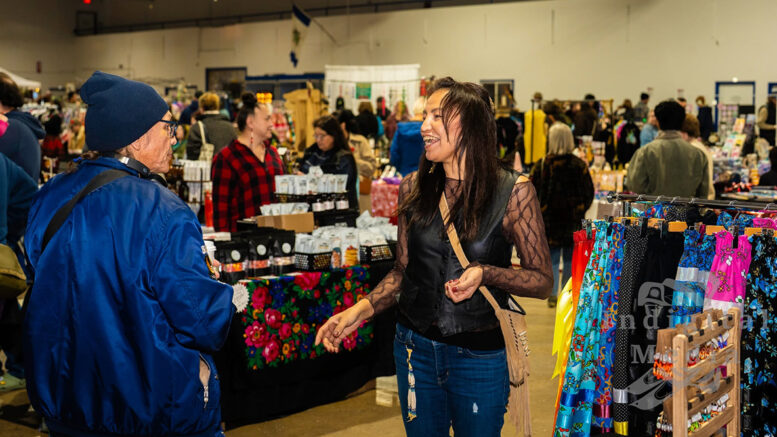
(ANNews) – What began in 2018 with four Indigenous artists has grown into what the Indigenous Artist Market Collective (I.A.M. Collective) describes as one of Canada’s largest and longest-running Indigenous holiday markets. The annual gathering brings together more than 100 vendors, performers and entertainers, creating opportunities for Indigenous artists, entrepreneurs and creatives to connect, collaborate and share their stories through art and entrepreneurship.
The 2026 event, A Very Indigenous Holiday Market & Cultural Gathering, took place over three days, from November 13 to 15, at the Alberta Aviation Museum Event Hangar, located at 11410 Kingsway NW in Edmonton. Admission was free, with donations accepted at the door. The market featured Indigenous vendors, live entertainment, traditional drumming and dancing, a fashion showcase, a silent auction and prize draws.
For Lorrie Lawrence, a founding member and current executive director of the I.A.M. Collective, the growth represents more than the success of a holiday marketplace. It reflects the importance of bringing Indigenous artists together, supporting emerging entrepreneurs and creating a platform where Indigenous creativity can be celebrated in all its forms.
Lawrence, an Indigenous artist who has spent close to 30 years creating in Treaty 6 territory, said the collective began with four artists and hosted its first holiday market that same year.
“In 2018, we started I Am Collective with just four artists, and that was our first year for holiday market as well. This year was our ninth.”
The 2026 holiday market featured 105 vendor tables representing approximately 112 artists, including vendors who shared tables. The event also welcomed more than 40 entertainers, including powwow dancers and drummers. Lawrence said the market is entirely Indigenous-owned and operated, from its vendors and entertainers to its food and beverage partners.
“Our event is 100% Indigenous. Every entrepreneur, every vendor, every entertainer, even the food trucks and the lemonade staff are all Indigenous owned, Indigenous operated.”
Beyond providing a marketplace for Indigenous entrepreneurs, the collective creates opportunities for emerging artists to learn from established vendors, build relationships and connect with potential clients. Lawrence said mentorship is an important part of bringing artists together, particularly for those beginning their entrepreneurial journeys.
“Our emerging artists get mentorship by the people that have been, you know, on the vendor trail forever kind of thing.”
The market also attracts organizations and individuals looking to connect with Indigenous artists for future projects, commissions and other opportunities. Lawrence said representatives from Indigenous tourism and the Edmonton Arts Council are among those who attend, making it easier for artists to establish connections and showcase their work.
“It’s a good opportunity for everyone to meet artists in person and not have to chase them all around, right? Because there’s so many there all at once.”
For Lawrence, bringing more than 100 Indigenous vendors together under one roof demonstrates the strength of collaboration. She said artists have worked to put aside differences and build relationships rather than compete with one another.
“It really shows the power of us coming together instead of working against each other.”
The gathering also creates opportunities for musicians, performers and vendors to exchange knowledge and collaborate. Lawrence pointed to musicians Alexis Wright and rapper Timeless, who connected through the market and collaborated on a song expected to be released soon. Vendors also share practical advice about securing opportunities at larger events, developing displays and growing their businesses.
Visitors can experience a wide range of Indigenous art and cultural practices, including traditional Haida tattooing. Lawrence said another important part of the event is challenging stereotypes about Indigenous creativity and showing audiences the diversity of contemporary Indigenous artistic expression.
“To show that we’re not just beads and buckskin,” she said.
While traditional arts and cultural practices remain important foundations, Lawrence said Indigenous creativity extends into contemporary art, graphic design, 3D printing, music and performance.
“That’s our roots. That’s the foundation of, you know, where we are, but we have, you know, 3D printed artists, graphic artists, you know, all sorts of people come out.”
The 2026 market also featured a drag showcase coordinated by returning master of ceremonies LaDonna Cree. Among the performers was Pheromone Killz, an Edmonton-based Métis drag performer and contestant on Season 7 of Canada’s Drag Race. The showcase brought new audiences to the market, including people who may not have attended otherwise.
“So we got a bunch of new faces that we might not see in our market, you know, regularly, right?”
For Lawrence, another important part of the collective’s work is teaching appreciation over appropriation. She encourages shoppers to learn about the artists behind the products they purchase, including where they come from, who created the work and whether particular designs or colours carry personal or cultural meaning.
“A big part of why I Am Collective is teaching appreciation over appropriation, appreciation, not appropriation.”
“If I buy a ribbon skirt off somebody, I’m going to ask who they are. Did they make it? Where are you from? You know, do these colours have meaning to you? I want to know about them.”
She believes sharing the artist’s story is another meaningful way to show appreciation. Someone wearing beaded earrings or a ribbon skirt can share the artist’s name and community when others ask where the piece came from.
“It’s not just for Indigenous people,” Lawrence said, explaining that contemporary Indigenous artists want their work to be enjoyed by people from all backgrounds. She said non-Indigenous shoppers can purchase and wear Indigenous-made clothing and accessories, but learning about the artist and respecting the story behind the work matters.
As the holiday season approaches, Lawrence is encouraging people to seek out Indigenous markets and support local artists and entrepreneurs when purchasing gifts. The collective highlights the economic impact of supporting local artists, noting that approximately 65 per cent of money spent with local artists and entrepreneurs goes back into the local economy.
“Of course we all love a furry blanket or whatever, you know what I mean? But if you can, buy handmade, buy locally made. It’ll make a big difference.”
Lawrence said artists contribute to their communities through everyday spending, including groceries and rent. She also wants shoppers to recognize the influence they have through their purchasing decisions.
“You’re buying gifts. You have power to influence our economy and, you know, things that are going on around us.”
For Lawrence, supporting Indigenous artists means more than purchasing a product. It means recognizing the people behind the work, learning their stories, sharing their creativity and helping create opportunities for the next generation of Indigenous entrepreneurs.

Be the first to comment on "I.A.M. Collective Indigenous holiday market celebrates creativity and entrepreneurship"