
By Chevi Rabbit, Local Journalism Initiative Reporter
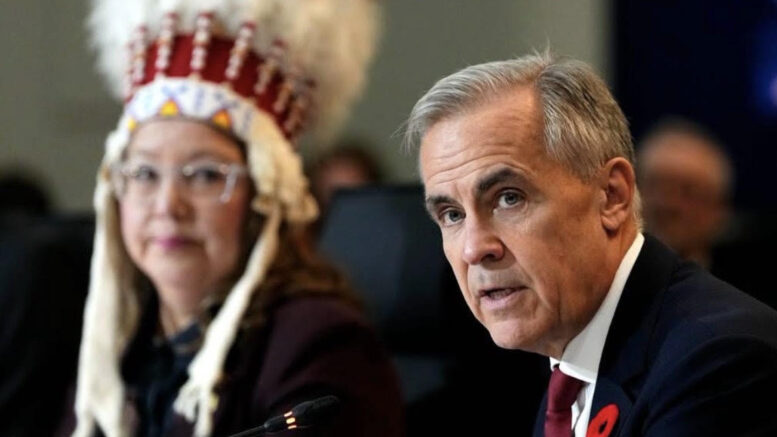
(ANNews) – Prime Minister Mark Carney brought nearly 200 First Nations Chiefs and leaders together with provincial and territorial premiers for an historic meeting focused on economic participation, community safety, infrastructure and the future of the Crown’s relationship with First Nations.
The Oct. 26 meeting marked the first gathering of its kind in two decades, according to the federal government, and opened discussions on a proposed First Nations Sovereign Wealth Fund intended to give First Nations a direct financial stake in major infrastructure projects across Canada.
The discussions come as governments pursue major infrastructure development, raising questions about how First Nations can participate in these projects, secure long-term economic benefits and exercise greater control over their economic futures.
Carney directed the federal Minister of Finance to work with First Nations leaders to determine how a sovereign wealth fund could be established, including mechanisms to ensure First Nations share in the revenues generated by major projects.
“Canada’s strength comes from what we can build and what we achieve together,” Carney said. “That means working in partnership, government to government, to ensure that First Nations not only have the opportunity to build their community and country stronger, but to share in the wealth we create – including through new revenue tools such as a First Nations Sovereign Wealth Fund.”
The proposed fund remains under discussion, with its structure and implementation still to be determined.
Expanding access to major projects
Alongside the proposed wealth fund, the federal government announced plans to amend the First Nations Fiscal Management Act to expand the lending authority of the First Nations Finance Authority.
The change is intended to make it easier for First Nations to secure financing for investments in major projects and participate in the financial returns.
Access to capital can be a significant factor in determining whether First Nations can move beyond consultation and take on ownership or investment roles in large-scale development.
The meeting also addressed workforce opportunities, with the federal government announcing $260 million over four years for a new Partnerships for Indigenous Workforce Readiness Fund.
The funding is intended to connect Indigenous Peoples with employment opportunities created by major projects.
The government is also developing an Indigenous-focused stream of its $8-billion Team Canada Strong initiative, which aims to connect Indigenous workers with paid, entry-level trades positions and help them enter job sites more quickly.
Together, the measures are intended to expand Indigenous participation in both the construction and economic benefits of major infrastructure development.
Charting a path beyond the Indian Act
The future of the Indian Act was another issue raised during the meeting, as leaders discussed the possibility of reforming or abolishing the legislation as part of a broader effort to modernize the relationship between First Nations and the Crown.
Carney reaffirmed his commitment to charting a path beyond the Indian Act and directed federal ministers to work in partnership with First Nations to develop that path.
The commitment places a longstanding issue of First Nations governance and Crown relations on the agenda alongside economic development and infrastructure.
However, the federal announcement did not establish a specific timeline or outline a finalized legislative plan for reform or abolition.
Minister of Crown-Indigenous Relations Rebecca Alty said the meeting brought governments together to address shared priorities and create lasting opportunities for First Nations communities.
“This historic meeting brought First Nations leaders, provinces, territories, and the federal government together to focus on our most important shared priorities: improving lives and creating lasting opportunities for First Nations communities,” Alty said.
“From major projects to housing, health, and strengthening emergency preparedness, we are working to ensure First Nations are full partners in building Canada’s future.”
Billions announced for emergency preparedness and policing
Beyond economic development, the meeting produced significant funding announcements aimed at addressing gaps in emergency response and public safety in First Nations communities.
The federal government announced more than $2.5 billion over five years, along with nearly $450 million in ongoing funding, through programs supporting emergency management, wildfire preparedness and fire protection.
The funding is intended to help First Nations communities conduct evacuations, provide emergency assistance and rebuild homes and critical infrastructure following disasters.
The government also announced more than $630 million over four years, alongside $250 million in ongoing annual funding, to renew and expand agreements under the First Nations and Inuit Policing Program.
According to the federal government, the renewed agreements will be based on a needs-based costing assessment and are intended to substantially close funding gaps between First Nations and non-Indigenous police services.
An additional $140 million over four years will support crime prevention and culturally sensitive community safety initiatives in Indigenous communities across the country.
Public Safety Minister Gary Anandasangaree said the investments are intended to address the distinct policing needs of Indigenous communities.
“We are working together with Indigenous leaders, along with provincial and territorial governments, to ensure that Indigenous communities all across Canada are places where people and families feel safe and secure,” Anandasangaree said.
“These historic investments will improve public safety outcomes and will help respond to the unique policing needs and priorities of Indigenous communities.”
Education, housing and clean water remain priorities
The meeting also addressed existing federal investments in education, housing, health care and infrastructure.
The federal government says it is investing $3.5 billion annually to improve access to high-quality, culturally safe education for Indigenous youth on reserve.
It has also committed more than $4 billion toward new rental homes and affordable housing for Indigenous communities, while continuing to invest $6 billion annually in culturally safe mental health and primary care services for First Nations.
In June, the government introduced Bill C-37, the proposed First Nations Clean Water Act, and committed more than $4.5 billion to support the legislation and build, maintain and operate water and wastewater infrastructure on reserves.
These commitments form part of a broader federal spending picture. Indigenous Services Canada’s annual expenditures have grown by an average of 15 per cent annually since the department was established in 2018, reaching $26 billion in the previous year, according to the government. Federal infrastructure investments totalled $33 billion over the past decade.
Indigenous Services Minister Mandy Gull-Masty said the meeting represented a renewed commitment to working with First Nations on priorities identified by their communities.
“Today marked more than a meeting. It marked a renewed commitment to work together, nation to nation, on the priorities First Nations have identified for our peoples and our communities,” Gull-Masty said.
“The investments announced today will help First Nations strengthen emergency preparedness, improve community safety, and build the infrastructure needed for future generations to thrive.”
She added that the discussions were helping establish a foundation for First Nations to become full partners in Canada’s economic growth and prosperity.
From commitments to long-term change
The meeting followed a commitment Carney made at the Assembly of First Nations Special Chiefs Assembly in December 2025 to convene First Nations leaders and First Ministers in 2026.
The Oct. 26 gathering brought together First Nations leadership, provincial and territorial premiers and the federal government to discuss priorities identified by First Nations communities.
The proposed sovereign wealth fund, expanded financing authority and workforce investments signal an effort to increase First Nations participation in major projects while addressing longstanding infrastructure and public safety gaps.
However, the sovereign wealth fund remains at the discussion stage, and its eventual impact will depend on how it is structured, how First Nations participate in its development and how the benefits of major projects are shared.
The federal government has also committed to upholding its duty to consult, its modern treaty and self-government obligations, and its commitments under the United Nations Declaration on the Rights of Indigenous Peoples Act.
For First Nations, the next stage will be determining how the commitments made at the meeting translate into practical arrangements, lasting economic opportunities and greater participation in decisions affecting their communities and territories.
The meeting established a forum for those discussions. The work ahead will determine how far the commitments extend beyond announcements and into long-term change.

Be the first to comment on "Carney brings First Nations leaders and premiers together to discuss sovereign wealth fund"