By Chevi Rabbit, Local Journalism Initiative Reporter
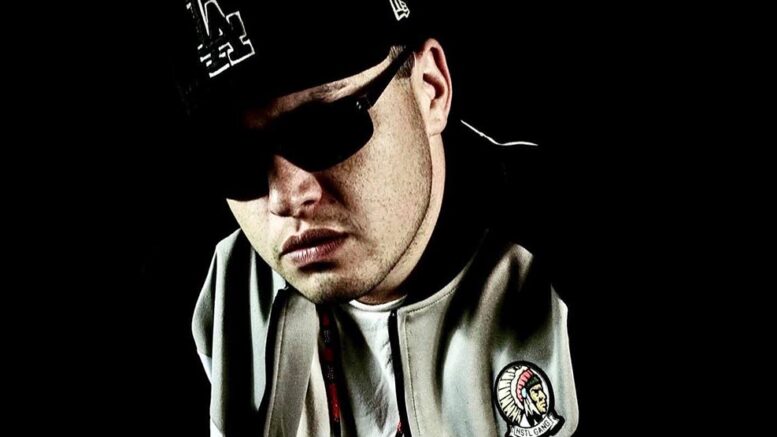
(ANNews) – For Alexander First Nation Cree hip-hop artist Lawrence Paul, music has been a lifelong form of expression, connection and storytelling. After years of recording, performing and building his career, Paul is now bringing a decade of previously unreleased material together for a new album – one he describes as the project he is most excited to release.
Paul’s musical journey began with the fiddle at nine years old before he entered hip-hop as a teenager. His catalogue now includes projects such as Gutta Muzik (Special Edition), Lost Tapes, and Lost Tapes 2, released in 2024.
“I’ve been a hip-hop artist since I was 15 years old, making albums, doing tours, opening for big artists in the city of Edmonton,” Paul said. “I’ve also come into digital media as part of my career choice, and it coincides with my hip-hop career as well.”
His musical work stretches back to at least 2008, when Gutta Muzik began. The venture later earned recognition at the Morinville Chamber of Commerce, where Paul was recognized with an Artisans Recognition Award.
Today, Paul is looking toward the next chapter. “I’ve had probably about a decade worth of material that has been unreleased,” he said. “So I’ve been compiling that into an album and probably a few mixtapes that I’m excited to release, but mainly the album.”
The upcoming album is being built from years of material that Paul has accumulated throughout his career. He says the project includes collaborations with Killah Priest, associated with the Wu-Tang Clan, and KXNG Crooked, the former Shady Records artist. He also has additional collaborations with Indigenous artists Melody McArthur and Joey Stylez in the works.
For Paul, releasing this material is not simply about putting older songs online. It is an opportunity to bring years of artistic development together and continue building his place within hip-hop.
Bringing Indigenous Hip-Hop to the Main Stage
Paul identifies himself first as an Alexander First Nation Cree artist. His own music profile describes him as Treaty 6 Cree and Indigenous to Turtle Island. “For me, it means a lot because we’re kind of underrepresented on the main stage when it comes to hip-hop,” he said.
Throughout his career, Paul has opened for major artists, including Snoop Dogg, G-Unit, Lloyd Banks and D12. “For me, opening for those guys, means a lot,” he said.
“First and foremost, [I’m] Cree from Alexander First Nation, and to me, you know, that means a lot to be from this nation and from our people in Treaty 6 and Turtle Island, and to brush shoulders with the greats.”
His career also extends beyond performing. Alexander First Nation currently lists Paul in its PR/Communications department, reflecting his work in digital media and communications alongside his music.
Music as a Bridge
For Paul, hip-hop can create a meeting place between cultures. “I think just, you know, meeting people where they are,” he said.
His audiences include people from different ethnicities and backgrounds, and he sees music as an opening for conversations about Indigenous history and treaties.
“They get curious, ask questions, and then you can educate them on the history of the land,” Paul said.
“A lot of them don’t understand what treaty means, so to be able to take that opportunity while they’re, you know, being curious about your own career or your own music, it’s an honour, and I don’t take that lightly.”
That connection between music and education is also evident in Paul’s 2022 single Ghost Dance, featuring Melody McArthur. The song was released on May 20, 2022.
Paul said the song came during a period of reflection following the discovery of the 215 unmarked graves at the former Kamloops Indian Residential School. His own family history made the subject particularly personal.
“My mom is a survivor of residential school, as well as a lot of, even before the residential school, the convents that my great-grandfather was a part of,” he said.
“Just bringing awareness to people, like this happened, and this is what we’ve been living with, and I know it’s shocking to you, but we’ve known about this kind of stuff for decades and generations.”
For Paul and McArthur, turning those emotions into music made the collaboration especially meaningful.
“To put the feeling into music was very special for me and Melody, and it’s one of my tracks that I hold dear to my heart,” he said.
Creating Space for Indigenous Artists
Paul believes Indigenous musicians have an important role in challenging stereotypes through the way they represent themselves.
“We’re the mirror to ourselves when it comes to stereotypes,” he said. “So as long as you hold yourself proudly and with discipline and morality, I think that’s important to combat those.”
At the same time, Paul says the Canadian music industry needs to create more opportunities for Indigenous artists. “I think it’s the lack of opportunity for many. The lack of opportunity and lack of diversity,” he said. “There’s a ton of Indigenous musicians that I feel don’t get the recognition that they deserve or the opportunity.”
Rather than relying on a small number of Indigenous artists to represent a much broader community, Paul believes audiences should have opportunities to hear many different Indigenous voices. “I think having a diverse amount of Indigenous artists kind of gives the Indigenous experience a much broader perspective,” he said.
His own catalogue demonstrates that range. Gutta Muzik (Special Edition), released in 2018, contains 14 tracks and features collaborations including Joey Stylez, Tribe Starr, Die Verse and others. Lost Tapes followed in 2019, while Lost Tapes 2 was released in 2024 with 14 tracks.
A Decade Ready to Be Heard
The upcoming album represents another step in a musical career that has already produced years of recordings and collaborations.
Paul is not simply looking back at where he has been. He is bringing older material forward while continuing to create new music with artists from Indigenous and mainstream hip-hop communities.
And when asked what he wants his music to say about Indigenous people of Treaty 6 and this generation, Paul pointed to a quality he believes has carried his people forward. “I’d say perseverance. I think, you know, we’ve been through the ringer. We’ve had many ups, many downs, but we’re still here,” he said.
“We rise above the genocide. We rise above the stereotypes.”
“We’re a very resilient people who just can’t be taken out so easy.”
“They tried already, and we are here to stay, and we are here to make our mark in the world.”
For Lawrence Paul, that mark continues to take shape through music. After a decade of songs waiting to be heard, his upcoming album offers listeners an opportunity to hear not only where he has been, but where he is going next. And for an artist who has spent years creating, performing, collaborating and representing Alexander First Nation and Treaty 6 through hip-hop, the next chapter is ready to be heard.
Listen to Laurence Paul Music on Instagram, TikTok, Facebook, YouTube, SoundCloud, Spotify and Apple Music.

Be the first to comment on "Lawrence Paul: A decade of music, ready to be heard"