
(ANNews) – Educational sovereignty could soon be coming to the Saddle Lake Cree Nation, ᐅᓂᐦᒋᑭᐢᑿᐱᐏᓂᐣ as the Saddle Lake Education Authority seeks international accreditation for its K-12 schools through the World Indigenous Nations Higher Education Consortium (WINHEC).
Authorised by a precedent-setting mandate from the Saddle Lake Cree Nation Chief and Council, Onchaminahos Elementary and Kihew Asiniy Education Centre (High School) are positioned to become the first accredited First Nation K-12 schools in Canada.
The pursuit represents a massive paradigm shift in how Indigenous education is measured and validated.
Flipping the Script on Colonial Frameworks
“The federal government funds First Nation schools on-reserve, they do not do accreditation—they’re not a Ministry of Education,” explains Dr. Diana Steinhauer, one of the key leaders guiding the accreditation process. “The province has a Ministry of Education, and they accredit all public schools, faith-based schools, and private schools, but they have no jurisdiction on-reserve. So for us to initiate this process is setting a pathway, essentially.”
WINHEC accreditation is globally recognized, created by and for Indigenous people, and founded within an Indigenous frame of reference.
“WINHEC accreditation is globally recognized, and it’s for our people by our people, and founded within an Indigenous frame of reference,” Steinhauer emphasizes. “Accreditation assigns quality assurance so that learners and parents have confidence in the school. What is unique about WINHEC accreditation is that schools are reviewed to reflect the identity of the community it serves. In the case of Saddle Lake, the schools are assessed with the addition of these indicators: nehiyaw language, culture, and addressing intergenerational harms our people have suffered as a result of the colonial project.”
Grounding Youth in Nehiyaw Tapisiniwin
For the people of Saddle Lake and its next generation of leaders, this historic change is about healing, reclamation, and holistic well-being. Saddle Lake is actively dismantling the legacy of colonial schooling and replacing it with an educational sanctuary built on the Cree way of life.
Under this framework, students moving from kindergarten through Grade 12 meet provincial curriculum standards while receiving a firm grounding in Nehiyaw Tapisiniwin—the pursuit of living a good life.
Dr. Steinhauer outlines what this transformation looks like for a child moving through kindergarten to Grade 12 under the new framework: “Essentially, they will meet the Alberta provincial curriculum standards, but in addition to that, they will have a firm grounding in Nehiyaw Tapisiniwin… And that is essential for identity. That’s essential for grounding them in who they are, their belonging, and that will enliven it and ensure success in whatever endeavour they do after Grade 12.”
She adds that accreditation offers an assurance that students won’t be held back when stepping into their future callings. “The accreditation just is an affirmation and assurance to the community… that what Saddle Lake Education Authority is providing in their schools will ensure seamless transition from Grade 12 to post-secondary of their choice… as well as if they decide not to go into post-secondary, they choose rather to go into trades or enter into employment immediately. All of that is absolutely within their reach.”
Crucially, this cultural foundation offers a way to break generational trauma. “You know, we’ve been subject to the colonial project for generations. Within our schools, we are addressing that so that we can break those cycles in the future,” says Steinhauer. “Our children won’t be pulled back by those cycles any longer. So that’s really empowering—emotional, spiritual, physical, mental well-being and growth.”
A Four-Year Journey to Precedent-Setting Sovereignty
The rigorous process behind this shift has been years in the making. While community education laws were passed following years of foundational development, the formal WINHEC accreditation process itself spans a structured four-year journey initiated in 2022.
The path to international accreditation follows five rigorous phases: First, a Letter of Intent. Submitted with aligned membership fees to the Board of Accreditation. Second, an Eligibility Application. Documentation and proposal review to advance to candidacy. Afterwards, a Self-Study: A comprehensive self-analysis – culminating in a detailed 78-page review – examining community goals, operations, and achievements.
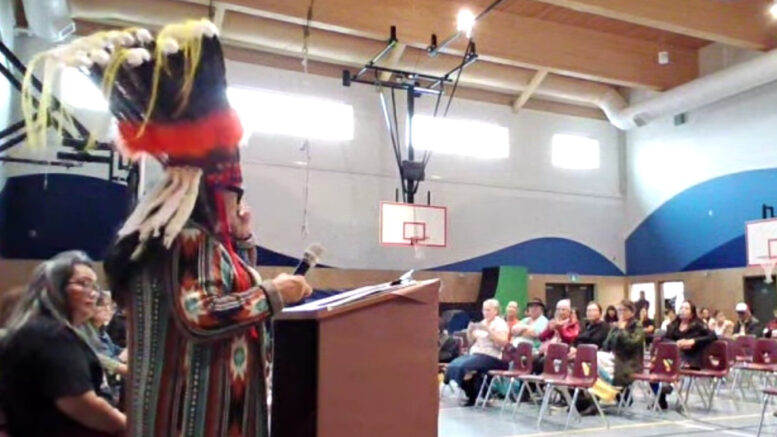
Next, a Visiting Committee conducts an intensive on-site review featuring classroom observations, community interviews, and preliminary findings. This has just happened in Saddle Lake on October 23.
Finally, if successful, the Accrediting WINHEC Board Ruling quickly follows.
With the recent completion of the international site visit, the WINHEC Accreditation Board will make its official determination and notify the Nation by letter in December. If approved, the formal handover of the accreditation certification will take place at the WINHEC Annual General Meeting in July at Six Nations Polytechnic.
“Because there is no accreditation of First Nations schools on-reserve at the moment, we are setting a precedent for others to follow if they so choose,” Steinhauer reflects.
Saddle Lake will secure a cultural future for its own youth while blazing a trail for First Nations across Turtle Island looking to break free from conventional colonial educational frameworks and reclaim true educational sovereignty.

Be the first to comment on "Saddle Lake Cree Nation is achieving educational sovereignty"