By Chevi Rabbit, Local Journalism Initiative Reporter
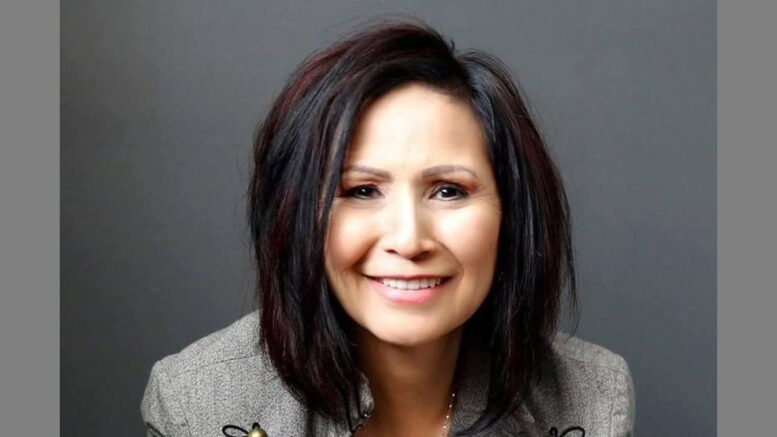
(ANNews) – Cara Currie-Hall, a political organizer from Montana First Nation in Maskwacis, Treaty 6 territory, is the founder of Rock the Indigenous Vote. Her experience in political organizing includes serving as chief of staff to former Assembly of First Nations National Chief Matthew Coon Come and helping mobilize Native American voters during Barack Obama’s 2008 presidential campaign. In 2015, she brought that experience to Canada by founding Rock the Indigenous Vote, continuing her work to organize and encourage Indigenous people to participate in the political process.
Her work has also included Indigenous sport. In 2023, she was inducted into the Alberta Sports Hall of Fame in recognition of her contributions as a multisport builder.
Treaty Chiefs respond to the separation debate
As Alberta’s debate over the possibility of separation intensified, Treaty Chiefs and First Nations leaders raised concerns about the potential implications for Treaty rights, sovereignty and the relationship between First Nations and Canada.
“Our leaders in Treaty 6, 7, 8 and the Blackfoot territory are united. They’re firm. And they’re really alert in terms of being sovereign authorities,” Currie-Hall said.
She believes the political developments surrounding the separation debate prompted a stronger response from Indigenous communities.
“And so that’s what she provoked. And we are thankful for that because had she not threatened us like this, we may have not risen to the extent that we have today,” she said, referring to Premier Danielle Smith and the separation debate.
For Currie-Hall, the debate raised concerns about the future of Treaty relationships and the role of First Nations in decisions affecting their rights and communities.
First Nations leaders also challenged the approval of a citizen-initiative petition seeking an Alberta independence referendum. Athabasca Chipewyan First Nation and three Blackfoot Treaty 7 Nations – Piikani Nation, Siksika Nation and Kainai Nation (Blood Tribe) – brought legal challenges to the process.
On May 13, 2026, Alberta Court of King’s Bench Justice Shaina Leonard set aside the Chief Electoral Officer’s approval of the petition in Athabasca Chipewyan First Nation v. Alberta (Chief Electoral Officer), 2026 ABKB 375. The court found that the duty to consult First Nations had not been met. The decision concerned approval of the petition that could have led to a referendum on separation, not a referendum that had already been scheduled. The decision was subsequently appealed..
The legal challenge underscored concerns about the relationship between provincial decision-making, constitutional authority and Treaty commitments between First Nations and the Crown.
Treaty leadership and grassroots mobilization
Currie-Hall distinguished between the role of Treaty Chiefs in responding to the separation debate and the grassroots movement that mobilized voters.
“The Chiefs had the discussion, but the Chiefs represent nations, and the movement is grassroots,” Currie-Hall said.
She emphasized that grassroots people were the ones who showed up at polling stations and made a statement about the separation proposal and the other nine questions on the provincial ballot.
“And because it’s the grassroots people that show up at the polls, and they’re the ones that made the resounding statement against the separation threat, and then all the other nine,” she said.
Currie-Hall recalled participating in discussions about mobilization during a June meeting involving Alberta Treaty Chiefs, where she said she served as a proxy Chief.
“That was easy for me,” Currie-Hall said, explaining that her experience came from founding Rock the Indigenous Vote.
“We did that on the national scale in 2015,” she said.
Currie-Hall said the campaign followed the lead of another grassroots movement, Idle No More, and that the two movements were aligned in their work.
“We followed on the heels of another movement, we allied with them and aligned with them and that was with Idle No More,” she said.
Idle No More emerged in late 2012, bringing Indigenous people and allies together around Indigenous rights, sovereignty and concerns about government decisions.
Currie-Hall also connected Indigenous mobilization to earlier advocacy for missing and murdered Indigenous women and girls. She recalled former Alberta premier Jim Prentice questioning whether a national inquiry was the appropriate response.
“I’m not convinced that an inquiry is what we need to do at this point,” Prentice said.
Currie-Hall recalled the impact of those remarks. “And the provocation was when the premier said to do an inquiry was not a priority. And he just put a value on our lives, at Indigenous women,” she said.
“So that was the main provocation. And we mobilized, and then we shifted the history and changed everything,” she said.
For Currie-Hall, the history of Indigenous organizing demonstrates how political decisions can prompt communities to mobilize and demand action.
Indigenous voters make their presence felt
Currie-Hall said she witnessed the turnout firsthand in Maskwacis on Oct. 19 and described it as a remarkable display of grassroots participation.
“I don’t know where you were on election day, but I was in Maskwacis, and it was phenomenal just to watch the turnout. And the times that the different polling stations were running out of ballots. They were running out of ballots because the turnout was so high, and it wasn’t just here in Maskwacis,” Currie-Hall said.
Ballot shortages were reported in several First Nations communities during the provincial vote. Elections Alberta confirmed that it delivered additional ballots to at least five First Nations communities. Samson Cree Nation, Louis Bull Tribe and Ermineskin Cree Nation received three separate deliveries, while Whitefish Lake First Nation and a voting location serving Siksika Nation and Kainai Nation (Blood Tribe) also required additional ballots.
Currie-Hall said Indigenous voter participation gives First Nations a greater role in decisions affecting their communities and future.
“The vote is very powerful because you are the one that gives a legislator a mandate. And so we need to hold these legislators to account,” Currie-Hall said.
She also emphasized the importance of showing up consistently and making Indigenous voices heard by governments.
“We show up and we show up in force,” she said, referring to Indigenous communities.
Currie-Hall said she had been told Indigenous voter participation was three times higher than historical levels.
“Now, the number I was told is we showed up three times higher than we have in history, which means when we’re provoked, we will show up,” she said.
That figure reflects what Currie-Hall said she had been told; it should not be presented as a verified provincewide statistic without supporting turnout data.
She said keeping voters engaged would require ongoing communication and meaningful involvement between Indigenous communities and governments.
“How do we keep them engaged? We have to keep them informed, and the government has to engage with us. We are a huge factor. We’re a deciding factor. We’re a swing vote,” Currie-Hall said.
Indigenous people have historically been described as a “sleeping giant,” said Currie Hall, but she believes the political debate demonstrated a more active and visible role in public life.
“Well, the sleeping giant is not asleep anymore. We are alert. We’re aware. We’re engaging, and we’re taking our space,” she said.
She said Indigenous communities felt compelled to participate because of concerns that the possibility of separation threatened their Treaty relationships. She also argued that the other nine questions on the provincial ballot raised constitutional concerns for First Nations.
“Every time they try to discuss the constitution and what Alberta’s role will be in having the constitutional discussion, that means she’s going to continuously run into the treaty nations, because the treaty nations are recognized and protected within the Canadian Constitution,” she said, referring to Premier Danielle Smith.
Racism, division and accountability
Currie-Hall said the political debate exposed divisions in Alberta, including racism experienced by Indigenous people and immigrants.
“There’s a lot of division and a lot of people, like a lot of natives experience racism, and same with immigrants right now. So there’s a lot of divide going on. Oh my God, it was terrible,” Currie-Hall said.
She said she did not believe Smith had handled the situation well, but argued that the debate had also made existing divisions more visible.
“It wasn’t she did a good job, but she did expose all that. You know, she exposed who she was representing, and I call it redneck land,” Currie-Hall said.
Currie-Hall also described tensions between First Nations communities and nearby towns, saying she had heard similar concerns in other reserve communities. Asked what Indigenous people should do in response, she recalled suggesting a pointed response to those who wanted Alberta to separate from Canada.
“I’ll have a going-away party. If we have to, we will boycott their towns,” she said.
Currie-Hall said the provincial vote and the surrounding debate left many Albertans angry and contributed to tensions between communities. She called on Smith to take responsibility for the consequences of the political debate and address the racism experienced by First Nations people.
“The government forced a referendum election on everybody here, and people are not happy. People are angry, and especially our First Nations people; [they] face a lot of racism, and it’s incumbent on her to fix what she broke. And so we have to demand accountability from her to now fix what you’ve broken. And we need to assert ourselves consistently at a very high level,” Currie-Hall said.
She pointed to an upcoming First Ministers’ Conference, where she believed Smith might be present, although she said the premier had not confirmed her attendance at the time of the interview.
“We’re going into a First Ministers’ Conference in a couple days, and she’s going to be at the table, being one of the First Ministers. I think she’s going to be at the table. She hasn’t even confirmed yet…” Currie-Hall said.
Currie-Hall said the anger extended beyond disagreements with the premier, with divisions also emerging between people and communities.
“I think people are very angry at her, and people were angry at each other. So the division we have to try to heal. And First Nations people are not going anywhere,” she said.
She described the work ahead as requiring both reconciliation and continued political engagement.
“So it’s going to be a reconciliation effort and combined with a political move, because we’re going into the first ministers,” Currie-Hall said.
A different kind of political awareness
Currie-Hall said Smith’s approach to the separation debate had helped prompt Indigenous political awareness and mobilization that she believed might not otherwise have reached the same level.
She said the response brought Treaty leadership and grassroots organizers together around a shared concern: defending the relationship between First Nations and the Crown.
“And our leaders in Treaty 6, 7, 8 and the Blackfoot territory are united. They’re firm, and they’re really alert in terms of being sovereign authorities,” Currie-Hall said.
She argued that the political threat had prompted Indigenous communities to organize more firmly and assert their position in public life.
“And so that’s what she provoked, and we are thankful for that, because had she not threatened us like this, we may have not risen to the extent that we have today,” she said.
For Currie-Hall, that mobilization must continue beyond the provincial vote. She said Indigenous voters need to remain informed, engaged and prepared to hold elected officials accountable.
Looking ahead to 2027
Currie-Hall said the grassroots movement would need to stay motivated as Alberta approaches the 2027 provincial election. She pointed to Indigenous candidates expected to run for different political parties and called on communities to support them so First Nations perspectives would be represented in the legislature.
“Well, there’s an election coming up. 2027 isn’t very far away, and we have indigenous candidates that are going to be running for different parties. The movement has to stay motivated to get behind them, put them in office so that they can be our voice on the floor,” Currie-Hall said.
For Currie-Hall, the referendum vote was not the end of Indigenous political engagement. She said continued participation, public education and accountability would remain important as governments make decisions affecting First Nations.
She also pointed to the importance of discussions between federal, provincial and First Nations leadership, including at First Ministers’ meetings.
“First Nations people are not going anywhere,” Currie-Hall said.
Currie-Hall said she wanted federal leaders to acknowledge the role Treaty Chiefs played in responding to the separation threat and defending the unity of the country.
“I just wanted the Prime Minister to give acknowledgment to everybody, give acknowledgment to the role that the treaty chiefs played in saving this country, because they kept the country together by defeating the threat of separation and confronting it firmly, insistently, and immediately. And now the Prime Minister has the country to govern,” Currie-Hall said.
For her, the political debate reinforced the importance of Indigenous people participating in decisions that affect their future, holding governments accountable and defending Treaty relationships.
“This is treaty land and will always be treaty land,” Currie-Hall said.

Be the first to comment on "Rock the Indigenous Vote: Treaty Chiefs, grassroots mobilization and the fight for Indigenous voices"