By Chevi Rabbit, Local Journalism Initiative Reporter
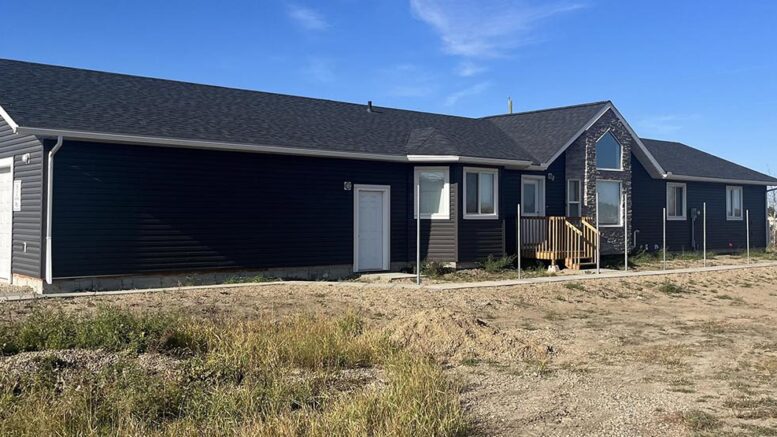
(ANNews) – In Cold Lake, a 10-bed recovery facility is helping people move beyond treatment and begin rebuilding their lives through employment, cultural connection, peer support and stable housing.
Kokum’s House Recovery was founded by Zane Thain, who serves as the organization’s founder, program manager and recovery coach. What began as an effort to establish an emergency wet program eventually evolved into a post-treatment recovery facility. Today, Thain describes Kokum’s House as a place where people can move from what he calls “surviving mode” into “thriving mode.”
“When we first started Kokum’s House, it was supposed to be an emergency wet program, but then the John Howard Society took over that need in the community,” Thain said. “So we turned it into a recovery house.”
The facility provides a structured three-month stay for people coming from treatment, while also helping residents prepare for what comes next.
Thain said residents enter at different stages of recovery, meaning there is no single path that works for everyone. Some arrive directly from a treatment centre. During their time at Kokum’s House, residents work with Thain to develop an individual recovery plan while becoming involved in volunteer activities, employment preparation and community life.
“We get them involved in working with the guys and doing different volunteer stuff,” Thain said. “It just gets them into a work mode, building a work ethic.”
Employment is another important part of the transition. Thain helps residents obtain safety tickets and draws on relationships with industries throughout the region to connect people with employment opportunities based on their interests and goals.The approach is intentionally non-clinical and relies heavily on peer support.
“There’s a house of 10 guys all in the same boat, right? All in a different stage of recovery,” he said. “So it’s peer-to-peer counselling.”
Thain also brings personal experience to the work. “I’m straight off the street myself,” he said, explaining why he is able to understand many of the barriers residents encounter.
For Thain, recovery is about more than simply removing drugs and alcohol. He believes people who have spent significant periods living on the streets can develop an entire lifestyle around survival.
“Once you’re on the streets, you develop – it’s a culture. It’s a lifestyle all on its own, and you develop a family and you develop everything,” he said. “It’s a survival mode.” That is where his philosophy of moving people from surviving to thriving comes in.
Thain said people leaving treatment can face a series of barriers when they return to their communities, from obtaining identification to finding employment and securing stable housing. “You can get out of rehab and go back to where you’re from and you get told no,” he said. “You’re going to be told no lots.”
Kokum’s House attempts to remove as many of those barriers as possible. Thain works with residents to obtain identification, get organized and begin taking practical steps toward employment and independence. He believes those positive steps can create momentum.
“Positivity breeds positivity,” Thain said. Once residents begin making progress and preparing for employment, he said, the pull of the street lifestyle can begin to diminish as they develop new goals and look toward a more stable future.
The program has also expanded beyond its original 10-bed facility. Thain said Kokum’s House has recently opened three second-stage sober-living houses in Cold Lake, addressing another gap in the community. He said there were previously no sober-living houses in Cold Lake, creating another challenge for people attempting to maintain their recovery after treatment. The second-stage housing provides another step between treatment and fully independent living.
Cultural connection is also an important component of the program. Thain said residents have access to sweats, ceremonies and smudging, while the program incorporates the I’m a Kind Man approach developed through the Native Friendship Centre movement.
Residents also participate in cultural and community activities, including providing security at powwows and other events. “We’re in a region where there’s five different reserves around and a couple of settlements, so there’s culture all around us,” Thain said.
He said many people entering recovery have become disconnected from their culture and that reconnecting with cultural teachings can become part of their healing journey. “We try to get as much culture as we can,” he said.
The program also incorporates the Seven Grandfather Teachings and teachings addressing relationships, violence and the impacts of colonialism and substance use. For Thain, cultural programming is not separate from recovery. It is part of rebuilding a person’s identity, community connections and sense of purpose.
Kokum’s House operates with the support and vision of the Cold Lake Native Friendship Centre, and Thain credits Executive Director Agnes Gendron with placing significant trust in him when the house was being established. “She put a lot of trust in me to start the house and keep it going,” Thain said.
He said he is beginning to understand the larger organization that is being built around Kokum’s House, including plans to eventually establish its own society. While demand for the program continues to grow, Thain said the organization remains small in relation to the need.
“Kokum’s House is a 10-bed facility. We’re kind of small for what we do,” he said,, adding that Kokum’s House needs additional funding, a larger facility and more staff to meet the growing demand for its services.
He said there is considerable potential for the program to expand its services, but he also recognizes that organizations often have to demonstrate their effectiveness before additional funding becomes available.
“I realize that we have to prove what we’re doing first before we get anything,” he said. For now, the work continues one resident at a time.
Kokum’s House is attempting to create a bridge between treatment and the realities of everyday life – helping people obtain identification, develop work skills, find employment, reconnect with culture, build relationships and ultimately find stable housing.
For Thain, the goal can be summed up simply: helping people move from surviving to thriving.
Follow Kokum’s House Recovery
Readers can learn more about Kokum’s House Recovery through its official website and social media presence.
- Website: Kokum’s House Recovery
- Facebook: Kokum’s House Recovery
- Email: [email protected]
- Phone: 1-877-762-4055
- Location: 4710 40 Avenue, Cold Lake, Alberta

Be the first to comment on "From surviving to thriving: Kokum’s House builds a recovery path in Cold Lake"