
By Jeremy Appel, Local Journalism Initiative Reporter
(ANNews) – An Indigenous environmental organization focused on water protection is slamming the Alberta Energy Regulator’s (AER) decision to exempt Suncor’s plan to release millions of tonnes of tar sands tailings into the Athabasca River from an environmental impact assessment.
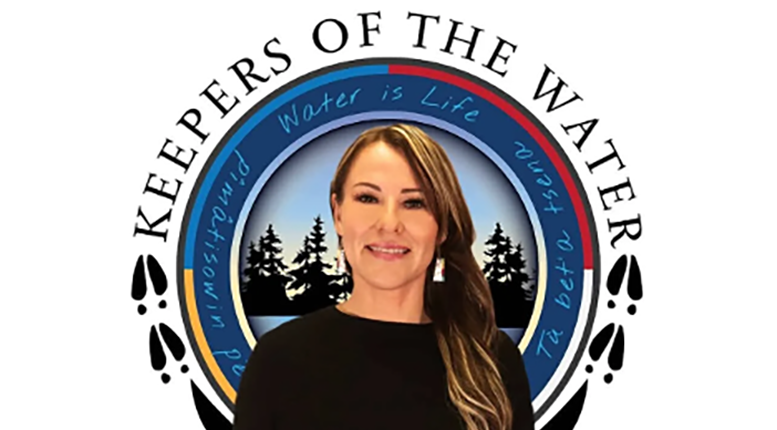
“This is why we need federal oversight,” Jesse Cardinal, executive director of Keepers of the Water, told Alberta Native News. “This is what happens when you offload all of this responsibility to the provinces.”
The exemption was first reported by online news outlet Canada’s National Observer, which obtained a July 2026 letter from the AER to Suncor stating that the tailings release is not a “mandatory activity for the purposes of environmental assessment.”
Alberta Native News has not independently viewed the AER’s letter.
Tailings are the toxic liquid that is the byproduct of extracting oil from tar sands bitumen, which accumulate in ponds adjacent to mining sites.
Suncor’s plan is to draw 10-to-12 million litres of tailings fluid from its Base Plant mine, process it at an onsite water treatment facility and release it into the Athabasca River.
Suncor’s own water testing report acknowledges the presence of chemicals in the Base Plant pond, including ethylbenzene, phenols and naphthenic acids, which are potentially carcinogenic.
In a statement, the AER explained that Suncor’s treatment of tailings is already covered by the environmental impact assessment for its proposal to expand the Base Plant to include an additional open-pit mine, and “does not require further assessment.”
The assessment for the expansion, which was first proposed in 2020, hasn’t been completed.
Cardinal emphasized that there’s a broad consensus against releasing treating tailings among First Nations.
“There’s no free, prior, and informed consent,” she said, referring to the principle enshrined throughout the United Nations Declaration on the Rights of Indigenous Peoples. “It’s just ramming through what the Alberta government wants to do, and we are being held hostage by industry.”
In November 2025, Dene Nation National Chief George McKenzie expressed “grave concerns” about plans to release treated tar sands tailings into the Athabasca watershed, arguing that it “threatens the health of our communities and environment downstream from the oil sands.”
Athabasca Chipewyan First Nation, which is a member of Dene Nation, and Mikisew Cree First Nation have both been vocally opposed to any plans to release treated tailings in the water.
Both First Nations have also been vocal for years about elevated cancer rates in Fort Chipewyan, a community of 900 downstream from the oil sands inhabited by members of both bands, which their leaders attribute to tar sands pollution.
In April 2026, Mikisew Cree First Nation announced preliminary findings that show Fort Chipewyan’s cancer rate was 25 per cent higher than the rest of Alberta between 1993 and 2022, the most recent year for which data is available.
The First Nation is reportedly waiting for Alberta Health Services to disclose more recent cancer data before releasing its complete findings.
In February 2023, 5.3 million tonnes of untreated trailings from Imperial Oil’s Kearl mine leaked into two tributaries of the Athabasca River – nine months after the regulator last notified the downstream nations of seepages from the mine.
A January 2025 peer-reviewed study in the Environment Assessment and Monitoring journal found that the AER was vastly understating the size of the spills and falsely claiming they had no environmental impact.
“We’re a petrostate,” added Cardinal. “The decisions that are being made are in the best interest of industry. They’re not in the best interest of the environment. They’re not in the best interest of the communities, of the people, of future generations. It’s the best interest of the companies and their shareholders.”
In the past, the federal government would have conducted its own impact assessment, but a March 2026 agreement between Prime Minister Mark Carney and Premier Danielle Smith adopts a “one project, one review” approach that defers to Alberta’s environmental assessments in most cases.
But Cardinal emphasized that the federal government still has the ability to prevent the release of potentially toxic chemicals into watersheds.
Section 36 of the Fisheries Act requires federal ministerial approval for the “deposit of a deleterious substance of any type in water frequented by fish or in any place under any conditions where the deleterious substance or any other deleterious substance that results from the deposit of the deleterious substance may enter any such water.”
“The federal government needs to step it up and start ensuring that Canada is functioning as a country and not offloading all of this to the provinces, because now the provinces are making very reckless decisions,” said Cardinal.
She added that impacted First Nations in Alberta and the Northwest Territories, as well as her own organization, have been meeting with Environment and Climate Change Canada to express their opposition to releasing treated tailings.
The ministry didn’t respond to this newspaper’s inquiry into what the federal government would do if Alberta’s government didn’t secure the consent of downstream First Nations for a tailings release.
On X (formerly known as Twitter), federal NDP Leader Avi Lewis called the AER’s decision “part of a larger pattern of reckless de-regulation in Canada today,” adding that Prime Minister Carney and Premier Smith “are embracing this approach together.”
“The anger in the community is searing, and it is justified,” wrote Lewis.

Be the first to comment on "Keepers of the Water slams environmental exemption for Suncor’s tailings release"