By Chevi Rabbit, Local Journalism Initiative Reporter
(ANNews) – From Sturgeon Lake Cree Nation in northern Alberta, Julian Thomas is helping build a platform rooted in the lived experiences of Indigenous men, honesty, and Indigenous storytelling through The Native Room.
Now reaching its 10th episode, the podcast was created out of a need to reflect voices and experiences that are often missing or misunderstood in mainstream media.
“The reason why we started The Native Room is because… we kind of feel that Native males, Indigenous males are starting to be underrepresented,” Thomas explains.
That sense of underrepresentation is tied directly to lived experience.
“We both grew up in homes without dads that were in them,” he says. “And so we had to learn a lot of what we know as Native males today the hard way.”
Building something real, together
For Thomas, The Native Room is more than a podcast – it is a shared project built with co-host Cody Trottier that has strengthened their relationship and purpose.
“This is a thing that me and Cody are doing together,” he says. “It’s building our bond greater and we learn and shoot off of each other.”
He emphasizes that the process itself is part of the growth. “We’re just trying to do something positive,” he adds.
As the podcast expands, Thomas says the response has gone far beyond what they initially expected. “We got people watching us from across the world right now,” he says. “It’s amazing.”
That growth has come with direct engagement from listeners.
“People are inboxing and messaging us… letting us know they support us and giving us feedback, giving us ideas,” he explains.
For Thomas, that interaction confirms the need for the type of conversations they are having. “It’s really cool,” he says. “We’re actually getting recognized when we go places.”
From grassroots setup to growing platform
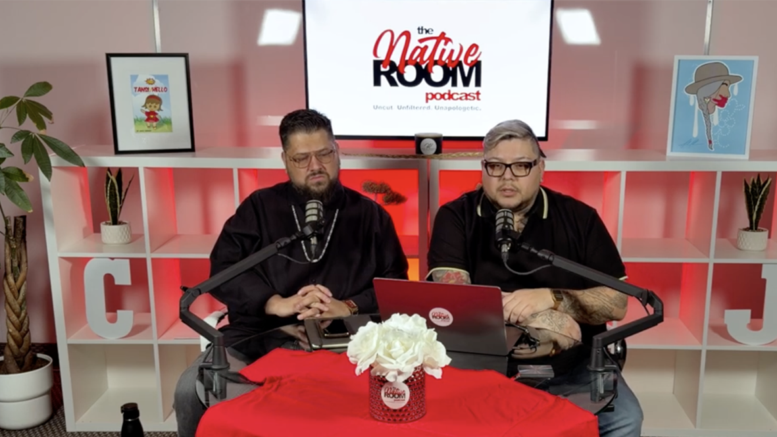
The podcast did not begin with funding, sponsorships, or professional equipment. It started with whatever they had available. “We just started with a couple lapel mics… $30 Amazon lapel mics and my cell phone to record us,” Thomas recalls.
Over time, the setup evolved. “We got better lighting, podcast mics, and a Rodecaster 2 mixer,” he says. “We started taking it a little more serious.”
Even with growth, the podcast remains self-funded. “We don’t have sponsors or anyone paying for us. This is coming out of pocket,” he says. “We’re utilizing our space, we’re utilizing our time.”
The team works out of a downtown office space they converted into a studio. “We have an office downtown and we ended up turning half of it into our studio,” Thomas explains.
A defining feature of The Native Room is its balance between heavy topics and humour, which Thomas says is deeply rooted in Indigenous culture.
“That’s a big part of podcasting… that’s how you can capture the culture of who we are as Indigenous people,” he says. “Humour is a big one… that’s how we deal with colonialism.”
That balance is intentional. “We take on some serious topics, but we also want it to be light,” he says.
He points to episodes like True or False as examples of keeping things grounded. “We wanted some of these episodes to also be light,” he explains.
Humour between Julian and Cody is natural. “Me and Cody, all we do is crack on each other. We tell jokes… we’ve got Native humour,” he says. “But there’s a lot of serious stuff too – we can’t always be so serious.”
Navigating representation and voice
As the podcast grows, Thomas says they are also navigating conversations about representation and who is featured. He recalls being asked about bringing on guests outside their usual format.
“I was asked to bring a female on,” he says. “And I’m not sure if we’re gonna bring any female guests on the show because… as males, we’re underrepresented.”
At the same time, he acknowledges the importance of maintaining space for Indigenous male perspectives. “We feel like we need a voice too,” he adds.
Still, he emphasizes that their audience is not limited. “A lot of our listeners are not just males,” he says. “They understand what we’re talking about.
For Thomas, part of the appeal of The Native Room is its unfiltered nature. “We’re not professional podcasters by any means,” he says. “We’re just going with the flow.”
That authenticity extends into how they speak on the podcast. “We swear on The Native Room because we’re just being ourselves,” he explains. “If we’re holding stuff back, then it doesn’t feel real.”
He believes that honesty is what audiences are responding to. “People are craving that… they want something real,” he says. “They don’t want something scripted or too proper.”
Digital growth and recognition
While long-form episodes live on YouTube, Thomas says short-form content has become a major driver of growth. “Our TikTok shorts are huge,” he says. “Our last one had almost 80,000 views. Every one we put up has 30,000 plus views.”
That visibility has started translating into real-world recognition. “We were at River Cree a couple weekends ago and it was like, ‘Hey, it’s the Native Room guys,’” he says.
As their platform grows, Thomas says they are also learning how to be mindful of timing and community context.
He references the importance of May 5, the National Day of Awareness for Missing and Murdered Indigenous Women and Girls.
“May 5th is for Missing and Murdered Indigenous Women,” he says. “I didn’t want to take away from what today was.”
Instead, he adjusted their release schedule. “We’re going to be releasing our new episode tomorrow,” he explains. “We didn’t want things to be overshadowed.”
Despite growing reach, recognition, and audience engagement, Thomas says the approach remains simple. “We’re just going with the flow,” he says.
At its core, The Native Room is still what it started as: two Indigenous men having real conversations, learning publicly, and building something meaningful without pretense. “We’re just trying to do something positive,” Thomas says again.
And for him, that is enough – because the goal has never been perfection. It has been honesty, connection, and creating space where Indigenous men can finally be seen, heard, and understood in their own voice.
Watch & listen
YouTube: The Native Room
Website: thenativeroom.com (stream all episodes)
Streaming platforms: Spotify, iHeartRadio, and other major podcast platforms

Be the first to comment on "The Native Room: Creating space for Indigenous men to be seen, heard, and understood"