By Chevi Rabbit, Local Journalism Initiative Reporter
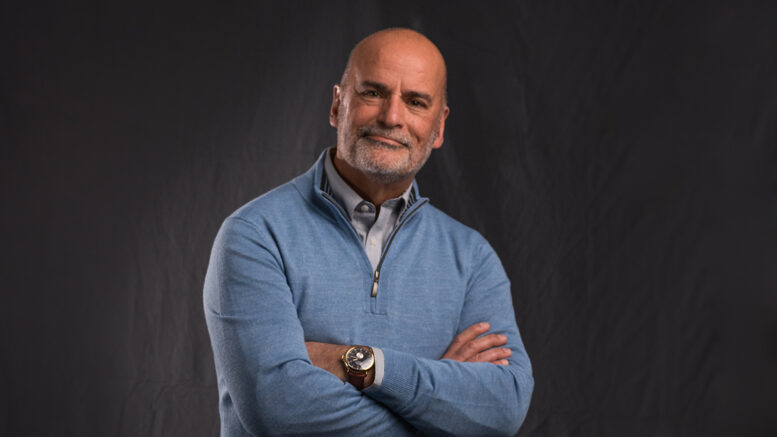
(ANNews) – AI themes were some of the key features of a panel moderated by Jorge Aviles at this year’s Forward Summit, an Indigenous-led national gathering held in Calgary that brought together Indigenous leaders, entrepreneurs, industry partners, youth, and policymakers focused on advancing economic reconciliation, workforce development, and community prosperity.According to summit organizers,
Forward Summit served as a major platform for dialogue between Indigenous communities and the corporate sector, aimed at strengthening collaboration, supporting entrepreneurship, and improving long-term quality of life across Indigenous communities in Canada.
Aviles says the AI discussion at the summit reflected both optimism and caution as communities navigate rapidly evolving digital systems.
He describes artificial intelligence as a potential equalizer for Indigenous governments and organizations engaging in economic development and negotiation. “AI is going to be a leveler,” Aviles says. “It’s going to give Indigenous communities the capacity to negotiate with non-Indigenous companies at the same level.”
He says AI has the potential to reduce long-standing capacity gaps in research, planning, and technical fields, allowing communities to participate more fully in economic decision-making processes.
At the same time, Aviles warns that AI introduces serious concerns around data sovereignty and the protection of Indigenous knowledge systems. “The big fear is that the sacredness of traditional knowledge is at risk,” he says. “AI is taking information, it’s feeding, it’s growing from the knowledge of the people that use it.”
He emphasizes the need for clear protocols and protections to ensure that Indigenous knowledge is not extracted, misused, or removed from its cultural context without consent.
Despite those risks, Aviles highlights one of the most promising opportunities discussed during the panel: Indigenous-controlled AI systems designed to keep knowledge within communities. “One of the major ones we discussed is that there are systems within AI where information doesn’t have to leave the community,” he explains.
He points to language revitalization as a key application, particularly through the preservation of oral knowledge shared by Elders. “You could preserve language orally,” Aviles says. “You could have a database with Elders talking about pronunciation, expressions, and usage, and that could be stored for future generations.”
For Aviles, this extends beyond communication and into cultural survival. “Language is an expression of how we think,” he says. “When you preserve language, you preserve history, mindset, and values. You’re not just rescuing a language – you’re rescuing a culture and a group of people.”
Aviles also draws on international experience to reflect on leadership and cross-cultural understanding. Born in Argentina and having lived in Canada for nearly five decades, he says global perspectives have challenged Western ideas of individualism. “We are in such a secluded, individualistic society,” he says. “That’s one of the huge barriers in cross-cultural communications.”
He references the African philosophy of Ubuntu as a guiding framework for collective identity and leadership. “It literally means, ‘because you are, I am,’” he says. “We’re all connected.”
For Aviles, leadership is not about individual success but shared progress. “When I succeed within a community, my community succeeds with me,” he says.
Aviles raises concerns about Indigenous youth feeling pressure to distance themselves from their identity in order to succeed within mainstream systems. “One of the biggest dangers Indigenous youth face is thinking they need to be less Indigenous to succeed,” he says.
Instead, he argues that success comes from grounding oneself in cultural values shared across Indigenous communities globally – including respect, care for Elders, and responsibility to community. “The way that people are going to succeed is by sticking to their values,” he says. “Not abandoning their values.”
At the heart of Aviles’ message is a broader reflection on how society categorizes people and the consequences of those divisions. “We classify people – Indigenous and non-Indigenous, educated and uneducated, races, degrees, salaries,” he says. “And all we’re doing is deciding how much respect we think we should have for them. And that is just so wrong.”
Instead, he calls for a return to a more universal ethic of dignity rooted in shared humanity and spiritual understanding.
“We should respect everybody for who they are,” he says. “Who we all are is a reflection of the Creator. We were all made by Creator, and we should respect that regardless of the labels society puts on people.”

Be the first to comment on "Forward Summit highlights AI, Indigenous leadership, and a global vision of community"