
By Chevi Rabbit, Local Journalism Initiative Reporter
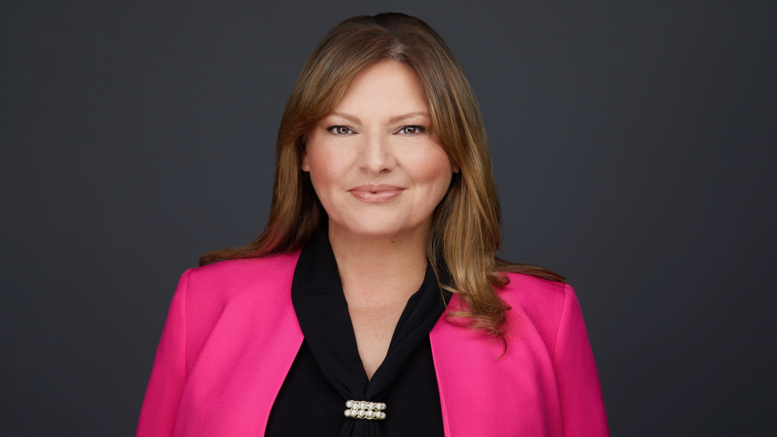
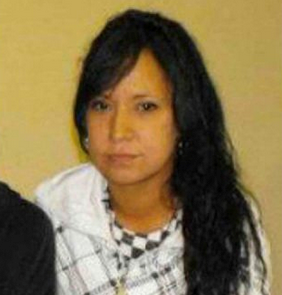
(ANNews) – Lisa Weber, President of the Institute for the Advancement of Aboriginal Women (IAAW), says her leadership is shaped by both lived experience and a long-standing commitment to advancing justice, visibility, and opportunity for Indigenous women and girls across Alberta.
A lawyer by profession for more than 25 years, Weber explains that her involvement with the organization began early, even while she was still in law school. She says she was drawn to the work because she saw it as directly connected to addressing systemic injustice faced by Indigenous women.
“I was just really impressed and wanted to contribute back and to be part of an organization that to me was making, taking some really solid continuing steps to address injustice for Indigenous women,” she explains, particularly those facing barriers within social systems and the justice system.
Founded in 1994 by Muriel Stanley Venne, the Institute for the Advancement of Aboriginal Women – also known as Esquao (a Cree word for “woman”) – is a non-profit organization dedicated to supporting First Nations, Métis, and Inuit women through advocacy, programming, and leadership development. Its work includes initiatives in violence prevention, housing supports, justice navigation, financial literacy, and youth leadership development.
One of its most significant programs is the Esquao Awards, established in 1995 by Muriel Stanley Venne and Margo Pariseau. The awards are widely recognized as the largest Indigenous women’s recognition event in Canada. Each year, Indigenous women are nominated by their communities and honoured not through competition, but through recognition as community leaders and “Community Champions.” Since its inception, hundreds of women from nearly 100 communities across Alberta have been honoured for their contributions in fields such as education, health, justice, culture, sports, business, and community service.
The 30th Annual Esquao Awards will take place on Thursday, May 7, 2026, from noon to 4 p.m. at the River Cree Resort and Casino in Enoch, Alberta, continuing its long-standing tradition of celebrating Indigenous women’s leadership across the province.
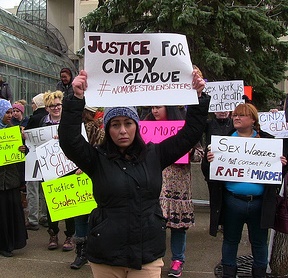
Weber says stepping into her role as president has been shaped by both her legal career and her commitment to justice work. She highlights the organization’s involvement in landmark legal advocacy, including its role as an intervener in the case of Cindy Gladue.
“We as an organization were very adamant in holding him accountable through acting as an intervener in that case. We went all the way to the Supreme Court of Canada,” she says, adding that she personally acted as legal counsel in that work on a pro bono basis.
“It was my personal commitment to do that…I was not paid for it,” Weber explains, emphasizing that her motivation was rooted in justice and accountability for Indigenous women.
She also notes the organization’s participation in the National Inquiry into Missing and Murdered Indigenous Women and Girls, describing it as part of a broader responsibility to advocate for systemic change.
For Weber, leadership is also about legacy. She reflects on the influence of Indigenous women leaders such as Muriel Stanley Venne and Margo Pariseau, who helped build the foundation of the organization.
“They always led with grace,” she says. “That’s something that’s very important to me as the president now… to take a stand… respectfully and with grace, but to not waver in our commitment.”
Beyond institutional leadership, Weber says one of her most personal motivations is ensuring Indigenous girls and young women see possibility in their own lives.
“I was a 17-year-old single parent,” she shares, explaining that without family and community support, her life could have taken a very different direction. “But for the support of my family and my community, my life could have been very different than it was.”
She emphasizes that many young women face similar barriers and may not always feel confident asking for help. “We support each other. We can be and will be there for them,” she says. “Often you just need to ask.”
Through youth leadership programs and community-based initiatives, Weber says the organization works to ensure young Indigenous women have access to guidance, opportunity, and support systems that help them thrive.
“I hope that they see that we have such success and opportunity, and if we are dealing with challenges, that we’re there for each other,” she says.
Weber also reflects on the broader role of the Esquao Awards in shifting public understanding of Indigenous women’s leadership. She says the awards help challenge stereotypes and elevate Indigenous women’s contributions across every sector and demographic.
She notes that the event is also a powerful platform for education, engaging governments, corporations, and organizations to better understand Indigenous women’s leadership roles and contributions.
“We also always let governments, corporations, and organizations know about the Esquao Awards, but more particularly why we’re having the Esquao Awards,” she says. “It is a real opportunity to better inform society… what Indigenous women are doing throughout the province.”
Weber also stresses the importance of celebration in the face of ongoing challenges and negative narratives. “We have to, as Indigenous people, really take these moments to celebrate and recognize our achievements too,” she says. “Otherwise, there’s always so much negative… it can really break us down.”
She explains that while the Esquao Awards honour achievement, they also reflect the reality that Indigenous women continue to navigate systemic barriers. The organization’s year-round programming responds to those realities through supports in housing, justice navigation, violence prevention, and community wellness.
At its core, Weber says the Esquao Awards exist to honour leadership in its many forms – visible and invisible, emerging and established.
As she puts it, Indigenous women are “such committed, valuable, knowledgeable, respected leaders in so many different areas,” and the awards ensure that those contributions are not only recognized, but seen as essential to the strength of communities across Alberta.

Be the first to comment on "The Leaders Are Everywhere: Lisa Weber on the Diverse Leadership Reflected in the Esquao Awards"