By Chevi Rabbit, Local Journalism Initiative Reporter
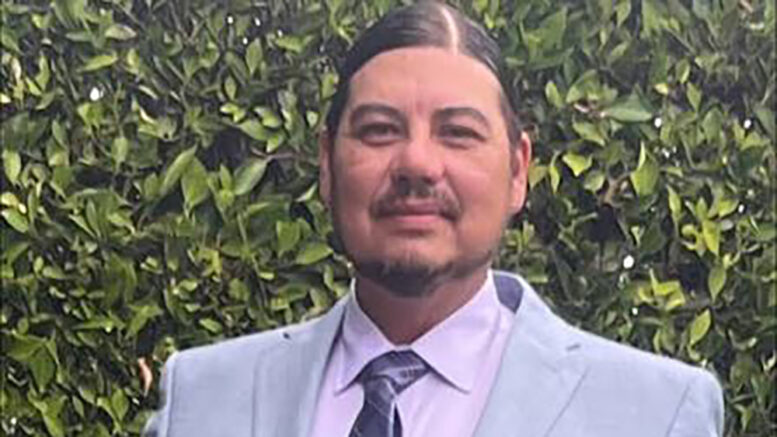
(ANNews) – Chief Joey Pete has announced he will not attend the First Nations–First Ministers Meeting scheduled for October 26 in Ottawa, citing concerns about the federal government’s legislative agenda, the role of the Assembly of First Nations (AFN), and the exclusion of sovereign Treaty Nations from decisions affecting their rights and territories.
In a statement released October 25, Pete said he had chosen to remain with his Nation rather than participate in a meeting he believes could legitimize federal government decisions and processes that may affect constitutionally protected Treaty and inherent rights.
“I made the deliberate decision to stay home with my people rather than attend a meeting that is not ours, that we did not organize, and where the federal government and AFN have determined who gets a seat at the table,” Pete said.
“As Chief, I have a responsibility to protect our Treaty, our inherent rights, our lands, waters and territories. My attendance must never be interpreted as consent to a process or an agenda that could undermine the rights of my Nation.”
Treaty Chiefs challenge AFN’s mandate
Pete pointed to a unanimous resolution adopted September 17, 2026, by the Assembly of Treaty Chiefs representing Treaties No. 6, No. 7 and No. 8, along with the Blackfoot Confederacy.
Resolution R#09/2026/09/17 states that the AFN does not have the consent, mandate or jurisdiction to represent sovereign Treaty Nations on matters affecting their Treaty rights or territorial integrity.
According to Pete, the resolution affirms that Treaty Chiefs will represent their own Nations and that attendance at AFN meetings should not be interpreted as endorsement of AFN processes.
“I was elected to represent my people. I have never delegated my authority or my Nation’s Treaty jurisdiction to the AFN or any other political organization,” Pete said.
“The AFN is not a Treaty rights holder. It is an advocacy organization, not a government with jurisdiction over our Nations. It has no authority to determine which Chiefs can participate in discussions affecting our collective future.”
Pete criticizes federal engagement process
Pete also criticized the federal government’s approach to engaging First Nations through a national political organization rather than directly with the sovereign Nations whose rights, lands and territories could be affected by government decisions.
“This is divide-and-conquer politics. The federal government is creating a situation where a select group of Chiefs, participating through an AFN-coordinated process, could be used to create the appearance of First Nations support for an agenda that many of our Nations have never consented to,” he said.
He warned that the process risks creating divisions among First Nations leadership while allowing the federal government to claim it has engaged Indigenous representatives.
“A meeting with selected Chiefs is not consent from Treaty Nations. Political engagement with AFN is not consultation with rights holders. And a photograph of Chiefs sitting with the Prime Minister does not satisfy the Crown’s constitutional obligations,” Pete said.
He argued that genuine nation-to-nation relationships cannot be established through processes that bypass the governments and institutions of sovereign First Nations.
Bills C-37 and C-39 raise concerns
Pete expressed particular concern about federal legislation, including Bills C-37 and C-39, and what he described as a broader push to accelerate economic development and major projects without adequately respecting First Nations jurisdiction.
“Our Treaties are not obstacles to economic development. They are solemn agreements that establish enduring relationships, obligations and responsibilities. Canada cannot use economic uncertainty or national development priorities as an excuse to diminish the rights of First Nations or bypass our decision-making authority,” he said.
Pete warned that legislative frameworks that weaken meaningful consultation, accommodation or the requirement to obtain free, prior and informed consent could threaten the lands, waters, resources and future of Treaty Nations.
His concerns centre on the relationship between federal development priorities and the rights of First Nations to participate in decisions affecting their territories.
Calls on Treaty Chiefs to stand firm
Pete urged Chiefs and First Nations governments across the country to take a stand against federal processes that he believes could undermine Treaty relationships, inherent jurisdiction and self-determination.
His decision not to attend the October 26 meeting reflects his stated position that participation in federal discussions must not be interpreted as consent to decisions affecting a Nation’s Treaty rights.
Pete maintains that sovereign First Nations must speak for themselves and that their governments must be directly involved in decisions affecting their lands, waters, territories and future.

Be the first to comment on "Chief Joey Pete to Boycott First Nations–First Ministers Meeting, Citing Treaty Rights Concerns"