
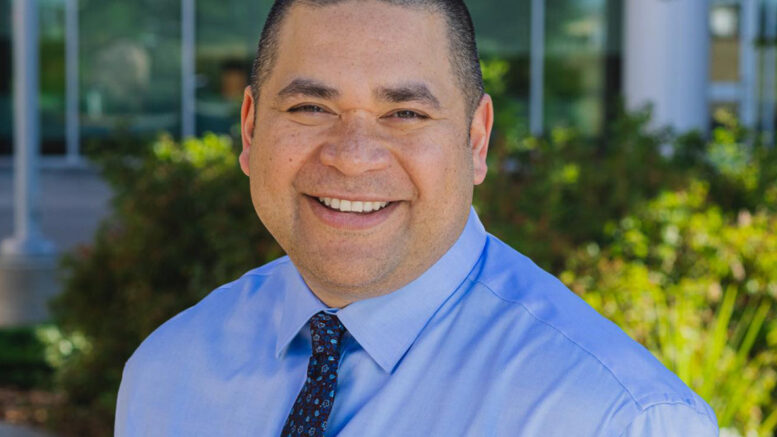
By Chevi Rabbit, Local Journalism Initiative Reporter
(ANNews) – Dr. Alika Lafontaine says Alberta’s healthcare system is carrying pressures that cannot be solved by hospital reform alone, arguing that health is largely shaped in community spaces long before medical care is needed.
He says the way “innovation” is discussed in healthcare policy often assumes that change is automatically beneficial, when that is not always the case. “When we talk about innovation, I think there’s this cultural connotation that somehow it’s positive,” he says. “Not all innovation is positive, as sometimes innovation is just change for change’s sake.”
He points to healthcare settings that are already functioning well as examples of systems that may not require constant redesign. “One example is if you have a place that is functioning well, where patients are having good experiences and they’re moving through quickly. If people have challenges, maybe they wait a few days, but if it’s an emergency, there’s always slots open for them to kind of pop in, if it’s a primary care clinic or somewhere else.”
Lafontaine says these systems are often targeted for improvement even when they are already working effectively. “People often look at those environments and say, let’s innovate so we can be more efficient. But in reality, maybe you should just leave it alone. There are certain things that work well, and we should just support.”
At the same time, he says there are areas of the healthcare system where change is urgently needed. “Now, there are a lot of places where things are not working well, and innovation is super important,” he says. “But we had a time before this crisis where folks felt like the healthcare system actually was working well.”
He also acknowledges that not all patients experience the system equally. “I’ll just say an exception here… First Nations patients and Métis patients in this province have not had positive experiences.”
He adds that experiences vary widely across populations. “That doesn’t cut across all patient demographics, but some people have never had a good experience, and other people do remember having better experiences.”
For Lafontaine, improving healthcare requires focusing attention where it will have the greatest impact.
“I think we have to target our attention to places where it can have the most impact.”
That includes broadening how people access care and how demand is managed within the system.
“The healthcare system is trying to decrease demand and have people look elsewhere for care. I think maybe including other options in where people can search for care.”
He reflects on how community supports once played a central role in health and wellbeing. “I had a mental health crisis. I would turn to my family, I would turn to my community, but there were community centres, there were activities, there were community potlucks.”
He says those supports were essential in helping people cope outside of formal medical care. “And I think if the healthcare system is going to have a chance of becoming sustainable, we have to think about health outside of healthcare.”
He adds that this requires investing in the spaces that help build resilience before people reach crisis points. “And we have to turn to places and fund those places.”
Lafontaine says many of these community-based supports have been reduced over time. “I do think that we have done this in the past, but we’ve really dismantled those community structures that really provided those offerings for people to have their health needs met in ways that didn’t require the formal healthcare system.”
He also cautions against assuming all community-based approaches should be absorbed into healthcare systems. “I think lots of folks nowadays are trying to formalize those more holistic kind of community-based ways of doing things,” he says. “I don’t think that’s bad in all situations, but innovation sometimes should know when it’s not needed.”
He says strong communities should be supported rather than restructured. “If a community is doing really well with supporting its members, and there’s a lot of social cohesion, and folks are objectively hitting those health markers that show people are thriving, I think we should just double down and continue to support those places.”
He adds that this perspective is closely tied to his growing focus on upstream health factors. “I’ve become a much bigger advocate for the social determinants of health, but not within the healthcare system.”
Lafontaine says governments should reconsider how funding is allocated, particularly where community-based supports have been reduced. “I think we do have to turn our attention back to those places that we’ve cut support and funding.”
He also suggests reinvesting in those spaces as part of a broader strategy for sustainability. “And maybe one thing that the Alberta government needs to consider is, if it’s looking at cutting costs in healthcare, maybe they should reinvest those funds into places where this care used to exist outside of healthcare.”
Lafontaine also speaks to racism in healthcare, saying many experiences are never formally reported and often remain within communities.
“I think we’re starting to hear more about it, but I would say the majority of racism… most people don’t share negative experiences with folks in the formal system.”
He says patients often turn to family, community, or leadership instead of official reporting channels. “They may say it to their family. They may share with their community. They may go back and tell their chief or council member.”
He says distrust in reporting systems plays a major role in underreporting. “But for the most part, people are really frustrated with the reporting system, and they don’t really feel like reporting is going to make a big difference.”
Lafontaine adds that the reporting process itself can be difficult and discouraging.“Reporting racism in the healthcare system requires a lot of effort and labour, and it can often lead to additional harm, and those costs are mostly carried by the people who are harmed.”
He says this leads many people to question whether reporting is worth the emotional and practical cost.
“That’s a good response, because it’s true, actually, a lot of people don’t want to. They say, what’s the point if nothing’s going to really change? It’s ongoing.”
He says the first step toward addressing harm in the system is acknowledging it exists.
“I think that these are the challenges that have to be thought through, but the first step is just acknowledging the fact that the harm is happening.”
He adds that research suggests the issue is significantly underreported. “It’s very, very likely, based on all the research that has been done over the last couple of decades, grossly underreported.”
For Lafontaine, the broader challenge is ensuring healthcare reform does not focus only inward on hospitals and institutions, but also outward toward the communities that shape health every day.
Ultimately, he says, the sustainability of the system depends on recognizing that health is created far beyond the walls of healthcare itself.

Be the first to comment on "Dr. Alika Lafontaine: When Health Lives Beyond Hospitals – Rebuilding the Community Roots of Care"