
By Chevi Rabbit, Local Journalism Initiative Reporter
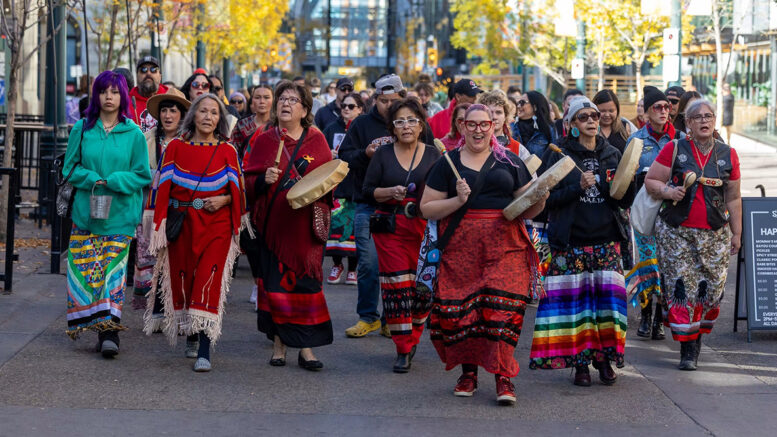
(ANNews) – For 22 years, Chantal Chagnon has helped organize Calgary’s Sisters in Spirit March and Vigil, held in recognition of Sisters in Spirit Day on October 4. The annual gathering honours the lives of missing and murdered Indigenous women, girls and Two-Spirit people and supports the families seeking justice.
A Cree-Métis woman from Muskeg Lake Cree Nation, Chagnon has witnessed the movement grow from a relatively quiet initiative into an annual reminder that the violence and exploitation affecting Indigenous families remain ongoing concerns. “It’s become a huge reminder every single year that this is a problem, this isn’t going away. We’re not going away,” Chagnon said.
Sisters in Spirit began as an initiative of the Native Women’s Association of Canada (NWAC). In its early years, attendance was limited, and the issue received little public attention. Chagnon said the work of advocates and families has helped bring greater visibility to the lives affected by violence and the ongoing search for justice.
Over the years, the vigil has honoured women, girls and Two-Spirit people, while also recognizing men who have been taken and loved ones who have experienced exploitation. Chagnon said the annual gatherings have become an opportunity to advocate for families across Canada who continue to seek answers and accountability.
For Chagnon, one of the central concerns is whether the justice system treats Indigenous women’s lives with the seriousness they deserve. Even when cases reach court, she said, proceedings can be dismissed or the consequences for perpetrators can seem inadequate.
“I think a lot of the time we say we’re striving for justice, but sometimes even though the perpetrators have been brought forward in a court of law, those cases get thrown out or dismissed, or the consequences for those actions are just like a slap on the wrist. And we’ve seen this time and time again, where it seems like Indigenous women’s lives aren’t as valuable as our settler counterparts,” Chagnon said.
She said advocacy must also challenge the systemic issues affecting Indigenous people across institutions, including social services and health care. Chagnon connected the ongoing struggle for justice to the lasting effects of colonization, which she said took power away from Indigenous women.
“Colonization was the one thing that really started to take the power away from our women. And now it’s the time that we need to step forward and start taking those voices back, start really honouring and calling people to task,” she said.
Chagnon also wants people to look beyond statistics and recognize the individuals and families behind each missing or murdered person. News reports can reduce lives to numbers, she said, while vigils create space to remember that every person had a story, relationships and loved ones left to cope with grief.
“A lot of the time we hear these stories in the news and on the media, but it makes it sound like these women are statistics. It makes it sound like these girls and two-spirit people are just statistics. So when we do events like this, it reminds us that there’s a story. There’s a life. There’s a family. There is, you know, pain and anguish and hope for justice for these women behind those numbers,” Chagnon said.
The first few gatherings drew approximately 60 people, she recalled. As the event gained momentum, more people began attending, learning about the cases and finding ways to support Indigenous women and families. Chagnon said the growth has reflected a greater willingness among community members and allies to stand alongside families and advocate for change.
For those who have lost loved ones, gathering with others who understand their grief can also offer a sense of belonging. Chagnon said the vigils remind families that they are not alone and that their loved ones have not been forgotten.
“This is why I think it’s so imperative to keep walking and keep creating these vigils across the year to remind nations and to remind people that they’re cared for and they’re loved. Their stories matter. They’re women and they’re girls and they’re two-spirit people. Their family members matter,” she said.
Chagnon believes the responsibility to create change extends beyond an annual march or vigil. She encourages Canadians to read the Calls for Justice from the National Inquiry into Missing and Murdered Indigenous Women and Girls, alongside the Truth and Reconciliation Commission’s Calls to Action, and consider how they can put those recommendations into practice in their communities, schools, homes and workplaces.
The two sets of recommendations overlap in important ways, she said, giving individuals, institutions and governments concrete steps they can take to address systemic problems. Chagnon believes consistent, everyday action can contribute to broader change.
“These are manageable items, and I think when we do one little thing every day, we can make a massive difference,” she said.
Ultimately, Chagnon wants Indigenous women and girls to know that they are valued, loved and deserving of justice. She said families should not have to live with unanswered questions after a loved one goes missing or is murdered.
“There’s so many women that have gone missing or been murdered, and their families are left to pick up the pieces, but without any answers and without any justice. And I never want that to happen to another family,” Chagnon said.
Her message also extends beyond Indigenous communities. Chagnon said women must stand together across backgrounds to challenge the rhetoric and attitudes that devalue them, protect future generations and ensure that their voices are heard.
For Chagnon, the purpose of Sisters in Spirit is ultimately about connection, remembrance and collective responsibility: ensuring that families are supported, that the lives behind the statistics are honoured, and that the call for justice continues long after October 4.

Be the first to comment on "Their stories matter: Calgary’s Sisters in Spirit vigil calls for justice"