By Chevi Rabbit, Local Journalism Initiative Reporter
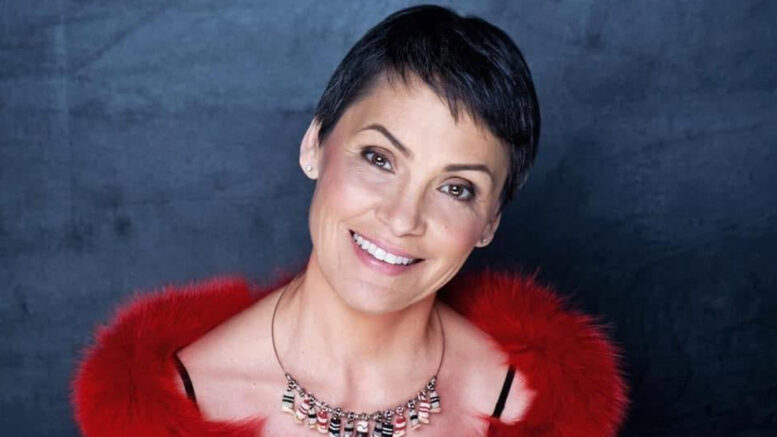
(ANNews) – For Susan Aglukark, a career in music has become a journey of discovery, connecting Inuit identity, cultural history and healing. The Inuk singer-songwriter and author also supports Northern Indigenous youth through the Arctic Rose Foundation, using arts and culture to create opportunities for connection and mentorship. As she looks ahead to new music and another instalment in her Una Huna? book series, Aglukark reflects on her career, the importance of Indigenous-led organizations and protecting the connection between Indigenous people and the land.
Staying the course
Aglukark moved from Nunavut to Ontario in 1988 to start a new chapter of her life. She released Arctic Rose in 1992 before signing a record deal and releasing her breakthrough album, This Child, in 1995. “I was about 21 at the time. A series of opportunities very quickly present themselves, and a couple of years after moving to Ottawa, I find myself with a record, the Arctic Rose album, and then following that was the record deal, and then our debut album, This Child, which got released in January of 1995, was very successful. And so, I found myself on this path of art and artist and songwriting.” Aglukark said.
Looking back, she says, staying in an industry that can be difficult to navigate is one of her greatest accomplishments. “I think at this point in my career… I’m very proud of what has occurred in terms of how the career has rolled out,” she said. Over the years, she faced moments when she questioned whether she could continue, but opportunities helped her find a way forward. “I’m very proud of that because if I hadn’t stayed, I wouldn’t have discovered discovery,” she said.
Through songwriting and artistic expression, Aglukark found a deeper purpose in her work. “As artists, we interpret, translate our creative process into what I’m very grateful for, a healing journey,” she said. She now hopes to share what she has learned with others, particularly within Indigenous communities. “My goal and my commitment now, moving forward, is I’m going to stay in my career as long as I can, but I’m also now sharing the more critical parts of what I’ve discovered and what parts of me have healed enough that I can look back and say, ‘This happened. This is possible,’ and share those possibilities with the Indigenous community,” she said.
Protecting the connection to the land
Aglukark recently participated in the Together for Nature tour across southern Ontario, with Terra Lightfoot joining her for the opening show in Ottawa. She accepted the invitation because she believes Indigenous artists need to use their platforms to speak about their relationships with the land and the importance of protecting those connections. Her parents’ early lives were closely connected to traditional Inuit ways of living on the land, experiences that shaped the cultural knowledge passed down through generations. “My generation is connected to the land in that way, and we need to protect that connection because without that connection, we lose a critical piece of our Indigenous selves,” she said. During the tour, Aglukark shared songs written over the course of her career that explore what the land means to Inuit people.
Creating space for Northern youth
Aglukark’s commitment to Indigenous communities extends through the Arctic Rose Foundation, which supports Northern Inuit, First Nations and Métis youth through arts-based programming. The organization grew out of the Arctic Rose Project, started by Aglukark in 2012. It received charitable status in 2016 and was incorporated as the Arctic Rose Foundation in 2020.
One program, Messy Book, uses expressive arts to create opportunities for youth to explore creativity, build relationships and connect with mentors. More than 30 guest artists visit partner communities, while local youth help run after-school programming. Aglukark says the program recognizes mental health challenges in Indigenous communities while encouraging people to draw on their own community knowledge and strengths. “We have mental health issues in all our Indigenous communities, and we need to understand the historical context of it. But what we’re extrapolating or taking from those experiences in our communities and the environments of crisis are our ways of managing mental health,” she said.
Painting, dance, songwriting, writing and beading provide opportunities for creative expression, cultural connection and mentorship. The foundation also operates Kamajiit, an Inuit youth leadership development program incorporating cultural and creative activities, mentorship and practical support. Aglukark discussed plans to expand the program’s work with young adults in her region. “It utilizes a process I’ve developed where we support each other, and we utilize expressive arts as well to encourage us to connect with our capacity as we pursue our lives in our environments for a better future in our environments or in our communities,” she said.
Reconnecting through art and storytelling
Aglukark’s work as a singer-songwriter, author and mixed-media artist has helped her reconnect with Inuit history and the experiences of previous generations. “My generation, again, we’re born to the last generation of Inuit who can claim they come from – their parents come from – the old ways,” she said. Through artistic expression, she has explored her family history and developed a deeper understanding of her identity as an urban Inuk. “Through the arts, I was able to dig deeper into who they were, and find a new sense of purpose and pride in that,” she said.
Her children’s series, Una Huna?, follows a young Inuk girl named Ukpik and explores cultural change and the experiences of earlier generations. The first book, Una Huna? What Is This?, was published in 2018, followed by Una Huna? Ukpik Learns to Sew in 2022. Aglukark is working on the third instalment. “Ukpik explores the time between my parents and my grandparents on the land, and when they were slowly being placed into settlement life, and the things that were new to them in that period,” she said. Her 2025 memoir, Kihiani: A Memoir of Healing, co-written with Andrea Warner, reflects on her life, career and journey toward healing.
Looking ahead
Aglukark continues to develop new creative projects while supporting Indigenous communities. Her five-song EP, Disco Ball, is planned for early 2027. Its lead single, “For You,” was delayed while she sought a new distribution partner, according to Nunatsiaq News. She is also continuing her work with the Arctic Rose Foundation and preparing the third Una Huna? book, which she has described as a Christmas story.
For Aglukark, the next chapter remains rooted in discovery and sharing what she has learned. “I wake up so excited, and I can’t wait to get back to whatever that next discovery is going to be,” she said.

Be the first to comment on "After 35 years, Susan Aglukark is still finding new ways to tell her story"