
By Chevi Rabbit, Local Journalism Initiative Reporter
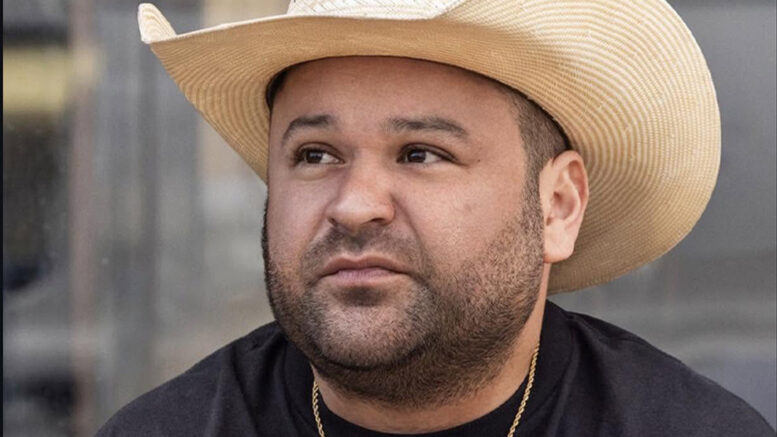
(ANNews) – For Cody Lightning, Smudge the Blades is more than a hockey film. It draws on the young players he coached, the Northern Alberta communities he knows, his family’s filmmaking history and the experiences that brought him back to storytelling.
The filmmaker, actor and hockey coach brought his second feature to the Toronto International Film Festival, where Smudge the Blades had its world premiere on Sept. 12 as part of the festival’s Centrepiece programme. On Sept. 20, it received the Best Canadian Discovery Award, which recognizes an emerging Canadian filmmaker whose first or second feature brings a distinctive voice to Canadian cinema.
The award includes a $10,000 CAD cash prize. The TIFF jury described Smudge the Blades as “electric,” praising its heart and humour, its portrayal of challenges facing Indigenous communities and Lightning’s direction and attention to character.
At the centre of the film is the Treaty 6 Blades, an Indigenous U18 hockey team in Northern Alberta that is forced out of its league and must salvage its final year of eligibility in a rough Northern Alberta country league. Local zamboni driver Willie Gladue, played by Lightning, steps in as coach.
The fictional team is rooted in Lightning’s more than seven years of playing and coaching hockey, including his time working with young players in Enoch. Many of the film’s characters were inspired by players he knew.
“So much of the blends were mostly based off of my coaching, because I play hockey and I coached for over seven years,” Lightning said. “I worked in Enoch, coached all those boys. Those are all characters based off kids that I actually coached. And so, a lot of those stories are real with the characters.”
Bringing those young players into the production made the experience especially meaningful. Production sometimes meant spending as long as 10 hours on the ice, but Lightning said watching the players take part in filmmaking gave the project a purpose beyond the screen.
“It was just incredible to see them all show up, and they all did such an incredible job,” Lightning said. “I started wearing Skechers,” he joked.
“I know that they’re all very grateful and very proud of their work,” Lightning said. “And I’m just very fortunate that I get to say that I had the opportunity to lead them.”
For Lightning, the story behind the film began long before its TIFF premiere.
He grew up in Maskwacis. When he and his siblings were young, their late mother, filmmaker Georgina Lightning, moved the family to Los Angeles and raised them in the film industry.
“Times were tough, but we persevered and survived, and we made it work as a family,” Lightning said.
 Film became a family effort, with the siblings contributing to the household whenever they found work. Lightning described the industry as difficult then and still difficult today.
His own path was not always direct. He stepped away from the industry several times, returned to school and spent time skateboarding and snowboarding while trying to determine what he wanted from life.
“I was a pretty rebellious teenager, so I drove my mom a little bit nuts,” he said.
Still, projects and opportunities repeatedly drew him back.
The film was directed by Lightning and co-written with Samuel Miller. The cast includes Lightning, Jana Schmieding, Paulina Alexis, Ed Helms, Treycen Wuttunee, Isaiah Kakepetum, River Rayne Thomas, Elijah James Lee Moar, Ezekiel James Mekanek and Tyler Halcrow.
Lightning does not approach Indigenous storytelling by trying to make everything comfortable for audiences. For him, authenticity means showing people as they are, with humour, conflict, sadness, resilience and imperfections.
“A couple people asked me why they are all drinking and doing this and that,” Lightning said. “And I’m like, that has nothing to do with being Indigenous. They’re teenagers.”
He said Indigenous communities can experience dysfunction while still finding ways to laugh, persevere and move forward.
“There’s a lot of dysfunction in our communities. And we still find a way to get through. We still find a way to laugh,” he said. “So I didn’t sugarcoat anything.”
“It’s authenticity. It’s truth. It’s raw. It’s funny. It’s sad. It’s aggressive. But it’s real,” he added. “And so that’s the biggest thing, to portray that with my storytelling.”
Lightning said he intends to continue telling stories about subjects he knows.
“Sometimes it’s not that pretty,” he said. “Our communities have a lot of stuff going on.”
He is already working on what comes next, including a horror script and another comedy.
While hockey is built around competition, Lightning’s decision about the film’s ending was personal. When he and Miller debated whether the team should win or lose, Lightning knew what he wanted.
“You know, winning is huge,” he said. “Winning’s huge because, for me as an individual, I’ve lost a lot.”
“When I was writing the script with my partner, I was like, do we have them win in the end, or do we have them lose? And I was like, I want them to win. They’re winning.”
He had seen teams lose in other films but wanted a different outcome for his players.
“I’ve been in films where the teams lose, and I was like, hell no, we’re gonna have our boys win,” he said. “So yeah, it’s huge. It’s everything.”
Lightning’s perseverance was also shaped by his mother. He and his siblings had different relationships with her, he said, but all three witnessed the challenges she faced as a single mother trying to establish herself in a demanding industry.
“She was a single mother of three kids in a big city trying to make it in an industry that’s not always promising, but she did it,” Lightning said.
Georgina Lightning’s recent passing made the film’s festival journey particularly difficult. Her death came as Smudge the Blades was beginning its festival run, forcing Lightning to balance the celebration of his work with grief.
“It’ll be a tough one, and I know that there’s gonna be rough roads ahead for my emotions and my spirit and stuff like that,” Lightning said.
He credited his friends and partner with helping him through the loss.
“I have a really, really, really great support team,” he said. “I have my really close friends. I have my partner, and they both help me get through this.”
Even while grieving, Lightning continued travelling with the film and attending festival events. “With my mom’s passing I have to do the press and travel around with it, but it’s just I’m doing it with an empty tank of gas,” he said.
During the TIFF awards ceremony, he dedicated the Best Canadian Discovery Award to his mother, recognizing her influence on his life and storytelling.
For Lightning, filmmaking is also a way to create opportunities for others, particularly young Indigenous people trying to enter the industry. “I don’t make projects just for myself,” he said. “It’s for so many other people.”
The film industry can be difficult to enter, Lightning said, and he wants to help whenever he has the opportunity. “If I ever get the opportunity to promote that and to spearhead the head of the ship, I’ll do it every single day,” he said.
That commitment came into focus during TIFF. Among the young hockey players attending the festival were teenagers playing in what Lightning described as the “mini NHL.”
One young player approached him, “gave me the biggest hug,” held his hands and said, “Thank you.”
“That’s powerful,” Lightning said.
The moment reminded him why representation and opportunity matter – not only for filmmakers, but also for young people watching and wondering whether they could one day be part of the industry.
The film’s production reflects that collaborative spirit. Smudge the Blades was produced by Lightning Mill Inc. and North Country Cinema. Producers include Cody Lightning, Joshua Jackson, Kyle Thomas, Sara Corry, Hayley Morin and Dylan Morin. Executive producers include Harlan Kingfisher, Mike Falbo, Brett Harris and Ed Helms.
The production received support from Telefilm Canada, the Government of Alberta, the Indigenous Screen Office, Shaw Rocket Fund and the Edmonton Screen Office. It was produced in association with Crave, APTN and CBC Films.
The film’s festival journey continued following TIFF – in Edmonton, Vancouver and Calgary.
Lightning’s message to other artists and young people is straightforward. “Just keep writing. Just keep being badass. Just keep moving forward.”
He believes communities need creativity, especially during difficult times. “We need this. We need more art. We need more music. We need more film. We need more – all of it,” Lightning said.
There will be difficult periods, he acknowledged, but his answer is to keep creating and coming together.
“So just be kind to one another, and just do your best to persevere through all the crap,” he said. “You know, Nitchies, we’ve done that forever. We’ve always done that. We need to continue.”
Lightning carries a message for the next generation: the doors of the industry are not reserved for somebody else.
“I just wish that anyone that watches it just knows that they can do it too.”

Be the first to comment on "Cody Lightning brings hockey, community and raw storytelling to TIFF with Smudge the Blades"