By Chevi Rabbit, Local Journalism Initiative Reporter
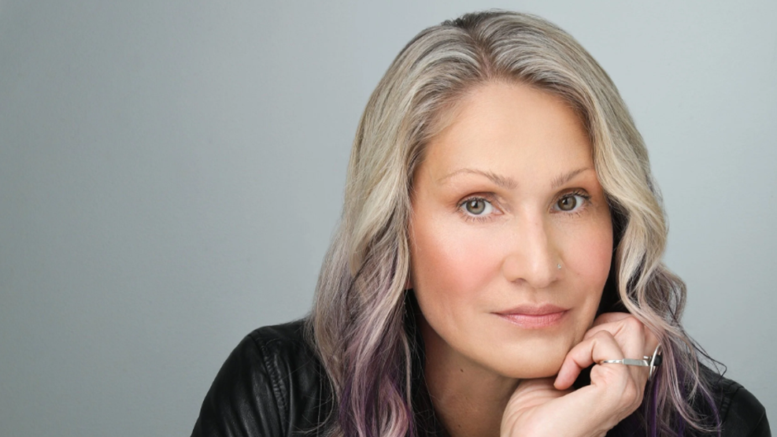
(ANNews) – Vancouver-based Cree filmmaker, writer and academic Dr. Jules Arita Koostachin has spent much of her career using storytelling to explore Indigenous identity, family, healing and the lasting effects of colonialism.
In a conversation with Alberta Native News, Koostachin reflected on the making of her documentary WaaPaKe (Tomorrow), the weight of intergenerational trauma and the difficult conversations Indigenous families must sometimes have in order to begin healing.
For Dr. Jules Arita Koostachin, making WaaPaKe (Tomorrow) meant asking a deeply personal question: Who are we without the trauma we inherited?
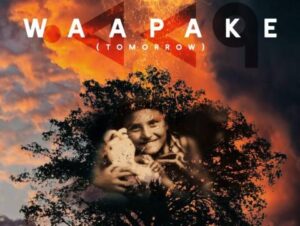 The documentary explores the effects of residential school trauma across generations, focusing particularly on the children of Survivors and the ways they have grown up carrying experiences they did not personally live through, but have nevertheless inherited through their families.
“I think for me, the centralized question for this film was, Who am I without her trauma?” Koostachin said. “I kept that in mind. I didn’t tell anybody that. It was just something, like I said, it’s a centralized question, like a thesis question. But yeah, who are we without their trauma?”
That question grew out of what Koostachin sees as a gap in academic research about the experiences of Survivors’ children. While considerable attention has been given to Survivors and the direct effects residential schools had on them, she believes there is still much to understand about what happened to the generations who grew up alongside that trauma.
“I don’t think there’s enough scholarship yet. I don’t think we’ve unpacked it,” she said. “I feel like we haven’t even scratched the surface in terms of being their children.”
For Koostachin, the lack of conversation is not simply an academic issue. It is something she has experienced within her own family and community. That became one of the reasons she wanted to make a film that could create space for people to talk about experiences that are often difficult to bring into the open.
“I don’t think we’ve had a lot of conversation within our homes or communities, being the children of Survivors,” she said. “So I feel like what motivated me in terms of making this film, is allowing that conversation to transpire. I know it’s really hard to create safe spaces, but to kind of ignite truth, in a way, to talk about what it’s like to be raised by Survivors and the impacts of intergenerational trauma.”
She sees WaaPaKe as a starting point for that conversation, particularly because the people speaking in the film are not discussing the subject from a distance. They are speaking about their own lives as children of Survivors.
“I think that’s what WaaPaKe does. It’s firsthand interviews with people who are children of Survivors just to talk about how it’s impacted us, because they are our parents,” Koostachin said. “I just wanted to create a platform, and I think that’s what the film did. It was a very personal piece, an important piece, I think an important conversation starter.”
Starting that conversation, however, does not necessarily mean it will be comfortable. Koostachin said families can sometimes avoid difficult discussions because they do not want to hurt the people they love. But she believes avoiding those conversations can also prevent healing.
“You have to talk about it. You have to kind of pull the Band Aid off in a way, and it stings. But that’s how healing starts,” she said. “You can’t just ignore the fact that all of this has transpired within our families.”
That tension became particularly personal when Koostachin’s mother watched the film. Making a documentary about family trauma meant confronting the possibility that the people closest to her could feel hurt by what she had created.
“In terms of healing, I know for me it was really hard when my mom watched the film because I was scared,” she said. “I was really worried about her being offended, because as their kids, we’re raised to take care of them in a way.”
That sense of responsibility continued to shape how Koostachin viewed the film after it was released. She said she still worries about whether people will consider her insensitive or believe she should have protected her mother rather than explored her own experience. At the same time, she has reached a point in her life where she feels those conversations cannot continue to be avoided.
“I’m going into my fifties now, and it’s just kind of like, well, we do need to talk about it,” she said.
For Koostachin, that need has also been complicated by loss. Since the film was made, she said, she has lost both a younger brother and an older brother. Her foster brother was also found frozen in the streets of Ottawa several years ago. Those experiences have left her questioning what healing means when grief and trauma continue to affect families and communities.
“It’s like, has healing occurred?” she said. “With all that loss happening in our families and communities and suicide, we still have a long way to go, I think. Do we have the tools? Sometimes. Do we have the resources? Sometimes.”
Those questions also speak to the limitations of filmmaking. Koostachin sees both as ways of opening conversations and giving people information, stories and creative outlets, but she does not see them as substitutes for the work of healing itself.
“I feel like we do the work that we do to try to get things started, but we can’t heal everybody,” she said. “We can only use our talents and our own platforms to educate the best we can. It’s about creating those conversations so people can begin the work.”
Creating those conversations also required Koostachin to think carefully about how the people featured in the documentary would be treated. She said everyone interviewed was given an opportunity to see their interview before the film was released. A counsellor was available online, and the production included conversations about healing at the beginning and end of filming.
The production also relied largely on an Indigenous crew. For Koostachin, that was an important part of creating an environment where participants could speak without constantly having to explain their experiences to people who did not share their cultural background.
“They don’t have to overexplain themselves,” she said. “It was a big part of my methodology, just making sure that there was Indigenous people, and the non-Native people on set were allies, and true allies. They understood what was happening.”
That approach extended to her mother’s interview. Koostachin placed a curtain between her mother and the camera so that the interview could feel more intimate and less like a traditional filmed interview. She also made time to debrief with participants afterward, asking whether they were comfortable with what they had shared and whether there was anything they wanted removed.
“I made sure, Are you okay with everything that you’ve said? Is there anything you want to retract?” she said. “Just doing the things that you need in a Native community to make sure we’re not retraumatizing or victimizing anyone.”
That responsibility, she said, is part of working within an Indigenous community where filmmakers, journalists and other storytellers remain accountable to the people whose stories they tell.
“We are held accountable and obligated to do things the right way,” Koostachin said.
The responsibility also shaped who she made the film for. Rather than creating WaaPaKe primarily as an educational film for non-Indigenous audiences, Koostachin said she wanted to speak first to Indigenous people who already understand the history and are living with its continuing effects.
“When I make films, I don’t make it for a non-Native audience,” she said. “I made it for an Indigenous audience first and foremost.”
Her hope is that Indigenous viewers will recognize something of their own experience in the film and feel able to begin releasing some of the weight they have carried.
“Hey, I’ve been carrying this weight for a very long time. I have to shed it, because I want to soar. I want to fly. I want to live my life,” she said. “I’m so tired of carrying this heavy weight of trauma.”
That idea of carrying weight returns to the central question behind the documentary. Koostachin said she wanted to explore what identity can look like when a person begins to separate their own life from the trauma experienced by previous generations.
For her, that does not mean forgetting what happened. It means asking whether people can acknowledge that history while also allowing themselves to experience a life beyond it.
The film has also become part of a broader body of Indigenous storytelling that Koostachin sees growing across Canada and internationally. WaaPaKe received Best BC Film at the 2023 Vancouver International Film Festival, followed by several awards in 2024, including recognition at the Junction North International Documentary Film Festival in Sudbury, the Indie Awards in Los Angeles and the Montreal First Peoples’ Festival.
Koostachin sees that growing recognition not simply as an achievement for individual filmmakers, but as part of a longer history of Indigenous artists creating opportunities for those who follow.
She points to trailblazers such as Alanis Obomsawin and Willie Dunn, along with Indigenous lawyers, journalists, artists and others whose work helped create space for the generation working today.
“I think we’re already living it,” she said. “If we could look at TIFF and look at all the Indigenous films out there in the world right now, we’re already on that path.”
For Koostachin, the word “tomorrow” in WaaPaKe represents that continuing movement forward.
“For me, tomorrow just keeps getting better and better,” she said. “We have our trailblazers, you know, like Alanis Obomsawin, Willie Dunn, all these people before us, and artists before us, and lawyers and journalists. They’ve done so much work, right? So it makes it a little bit easier for us. I hope.”
WaaPaKe (Tomorrow) was screened at the Royal Alberta Museum’s Amiskwaciy Theatre in Edmonton on Wednesday, Sept. 30, from 1:30 to 3 p.m., as part of the museum’s recognition of the National Day for Truth and Reconciliation. The screening was open to all ages and was included with general museum admission. Admission to the museum was free for Indigenous Peoples.
The film is also available through the National Film Board of Canada for viewers who want to watch it online. Watch WaaPaKe (Tomorrow) through the National Film Board of Canada.
For Koostachin, the work is ultimately about creating enough space for people to acknowledge what they have carried, while also beginning to imagine what life might feel like without carrying it alone.
“And WaaPaKe, is the first step in allowing yourself to feel something.”

Be the first to comment on "WaaPaKe asks Indigenous families to confront the weight of intergenerational trauma"