
By Jeremy Appel, Local Journalism Initiative Reporter
(ANNews) – Treaty 8 First Nations of Alberta has voted unanimously to henceforth be known as Treaty 8 Sovereign Nations, which the organization attributes directly to the “unprecedented political climate being fostered by the current Alberta government.”
Treaty 8 Sovereign Nations announced its new name the day after the 2026 Honouring Our Treaty Gathering and Annual General Meeting wrapped up on July 30 on Woodland Cree First Nation territory.
A July 31 news release from Treaty 8 Sovereign Nations states that the modified name better “reflects and reinforces the sovereignty held by every First Nation throughout Treaty No. 8 Territory,” noting that the Treaty was signed in 1899 – six years before Alberta came into existence.
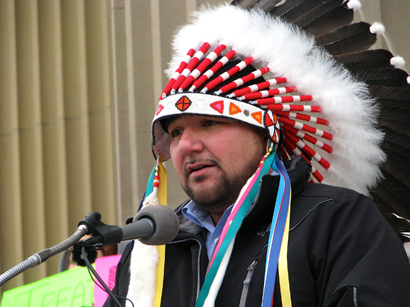
“This historic change sends a clear message that we will stand together and defend our Treaty, our people, and our future,” said Treaty 8 Sovereign Nations Grand Chief Trevor Mercredi in the news release.
In addition to approving the name change, the gathering included the signing of a memorandum of understanding (MOU) with Dene Nation “to protect, preserve, and steward the waters that connect our Territories,” and the re-election of Chief Sheldon Sunshine of Sturgeon Lake Cree Nation as deputy grand chief.
“The challenges before us are significant, and we must continue the momentum we created,” said Sunshine. “Over the next year, I look forward to continuing to demonstrate the power Treaty No. 8 holds when we stand together.”
The Yellowknife-based Dene Nation signed the MOU with Treaty 8, which concerns the Mackenzie River Basin, on July 29, the gathering’s second day.
The Dene Nation represents about two dozen ethnically Dene First Nations, mostly in the Northwest Territories, but Athabasca Chipewyan First Nation and Dene Tha’ First Nation are members of both Treaty 8 Sovereign Nations and Dene Nation.
“Our waters are sacred with a living memory that is central to the wellness of our people and cultures. This partnership reaffirms our shared responsibility to protect our waters, guided by ancestral laws, Treaty rights, and Indigenous Knowledge,” Dene National Chief George Mackenzie said in a July 29 news release.
“Together, the Dene Nation and Treaty 8 First Nations of Alberta stand united to ensure the health of our waters for future generations and to hold governments and industries accountable for their actions.”
The agreement commits both organizations to creating shared environmental monitoring databases, expanding the role of traditional Indigenous knowledge in water-related policies, regulations and governance, pushing for accountability from governments and industry for the environmental and health impacts of tar sands tailing ponds and examining the impact of proposed lithium, hydroelectric and nuclear projects on the Peace River.
“Water does not recognize provincial or territorial boundaries, and the effects of decisions made upstream are felt by First Nations peoples from the heart of Treaty 8 Territory to the Arctic Coast,” said Grand Chief Mercredi.
“Our partnership with the Dene Nation strengthens our collective voice and our shared responsibility to defend the lands and waters that sustain our people.”
Both groups are seeking Treaty First Nations’ full involvement in the development of an updated Mackenzie River Basin Transboundary Waters Master Agreement, which the federal government signed in 1997 with the B.C., Alberta, Saskatchewan, N.W.T. and Yukon governments.
They’re also calling on Alberta specifically to backtrack on changes to the Water Act, which now permits transfers of water between watersheds without legislative debate.
Bigstone Cree Nation will be the setting of the next 2027 Treaty 8 Gathering and AGM.

Be the first to comment on "Treaty 8 First Nations comes out of 2026 AGM with new name, water agreement with Dene Nation"