By Chevi Rabbit, Local Journalism Initiative Reporter
(ANNews) – For 40 Indigenous youth in Calgary, becoming a superhero was about much more than creating a 3D-printed action figure. It was about discovering their own strengths, connecting with culture, and recognizing the power they already carry within themselves.
The Urban Society for Aboriginal Youth (USAY) created the Medicine Wheel Warriors project to bring together Indigenous teachings, technology, and youth creativity while helping participants see themselves as leaders and heroes within their communities.
The inspiration behind the project came directly from youth.
LeeAnne Ireland, Executive Director at USAY, said the idea began years ago after youth visited a makerspace at Red Deer College and were introduced to 3D printing technology.
“They had this amazing, innovative makerspace where they were 3D printing bobbleheads,” Ireland said. “One of the youth said, ‘We should have Indigenous youth bobbleheads,’ and another youth said, ‘We should make superheroes.’ And that’s really where the project came from.”
That moment of creativity became the foundation for Medicine Wheel Warriors – a project designed to combine Indigenous representation, technology, and cultural learning.
 “We wanted Indigenous youth to have representation in the superhero space, but also to involve youth in understanding more about technology, 3D printing, 3D design, and things like that,” Ireland said.
The project gives youth an opportunity to explore emerging technology while seeing themselves reflected in powerful and positive ways, she added.
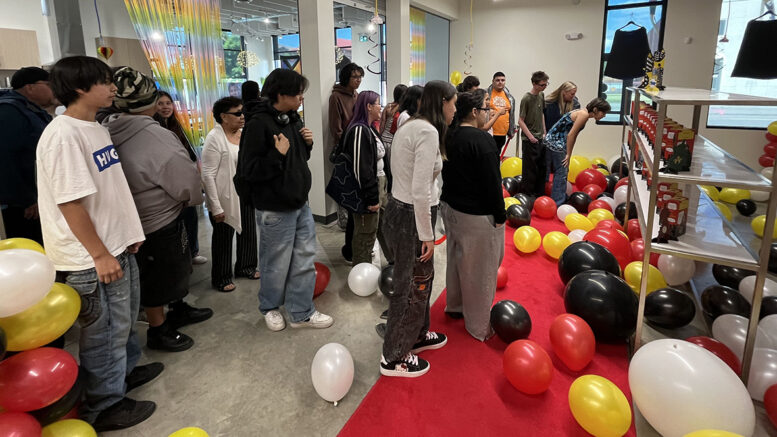
The project worked with 40 youth from the Calgary Board of Education who participated in creating their own superhero identities. Each youth was 3D scanned and transformed into their own superhero action figure.
Su Spotted Bull, Senior Program Lead at USAY, said the program was created to shift the focus away from negative narratives often placed on Indigenous youth and instead celebrate their strengths.
“We wanted to move away from the negative narratives that are often placed on our youth, and instead we wanted to focus on their strength,” Spotted Bull said.
Participants created their own superhero stories, powers, and identities.
“The superheroes are created by the kids,” Spotted Bull said. “They come up with their own lines, they make up their own superhero powers, and then we put them onto an action figure for them.”
At the centre of the project are Medicine Wheel teachings, helping youth understand balance within themselves – physically, emotionally, mentally, and spiritually.
“We wanted them to see the attributes of being a true warrior,” Spotted Bull said. “Balance in the physical, the emotional, the mental, and the spiritual of what was inside them, and then we wanted to expand on that with them.”
For families, seeing their children transformed into superheroes became a powerful moment of pride.
“The children and youth are ecstatic,” Ireland said. “They’re so excited to see themselves as superheroes.”
Ireland said families are inspired by the stories youth create and the values reflected in their superhero identities.
“Some of them are like, Spaghetti Man – ‘I like to feed all the poor kids around the world,’” Ireland said. “I think it’s really inspiring for family members to see how kind and loving and sweet their children are.”
The program also allows youth to connect cultural teachings with their own creativity.
“Our staff always love when youth take the Elder teachings around the Medicine Wheel and apply those cultural teachings to their superheroes,” Ireland said. “You get a lot of really cool, inspired superhero stories around providing culture or support or different Medicine Wheel teachings in their lives.”
Elders Adrian Wolfleg and Darren Weaselhead both contributed teachings to the Medicine Wheel Warriors program. Wolfleg served as the primary Elder, providing Medicine Wheel teachings and leading the opening prayer, while Weaselhead also shared teachings that helped youth connect with culture, identity, and community values.
Elder Weaselhead said his work with youth focuses on sharing traditional knowledge and helping young people understand the importance of respect, kindness, and caring for one another.
“My work with them is to educate some of the students on everything about traditional living, talking about tipis, buffaloes, our way of life,” he said.
Cultural teachings also play an important role in creating safer and more accepting communities, he added.
“It’s also an anti-bullying thing too, because I do speak to accepting people, regardless of how they live or how they love,” Weaselhead said. “It’s about treating each other with respect and kindness.”
Youth carry these teachings forward by learning how to care for themselves, their spirits, and their communities, he said. “We want to bring all those good things from the culture to the forefront, all the good teachings and valuable things they should know about taking care of their own spirit but also helping each other as a community to take care of one another.”
Looking ahead, USAY plans to continue Medicine Wheel Warriors, giving more Indigenous youth the opportunity to explore their identities, creativity, and leadership potential.
Ireland said the ultimate goal is for participants to recognize that being a hero is not about having extraordinary powers – it is about living according to values that create positive change.
“I hope that they see themselves as everyday heroes,” Ireland said. “You don’t have to do some crazy act. You just have to understand your traditional teachings and then utilize those teachings in your everyday life.”
Through culture, technology, and imagination, Medicine Wheel Warriors is helping Indigenous youth recognize that their greatest superpower is the strength, kindness, and knowledge they already carry within themselves.
For more information: usaycalgary Official: Instagram, Facebook | Linktree

Be the first to comment on "Medicine Wheel Warriors Helps Indigenous Youth Discover Their Inner Superheroes"