
By Jeremy Appel, Local Journalism Initiative Reporter
(ANNews) – Almost two-thirds of Indigenous women have experienced some form of mistreatment and three-quarters have been disrespected while giving birth, according to a recent academic study.
The survey, published in Global Frontiers in Women’s Health on June 30, 2026, was based on the findings of a broader national survey of 6,096 Canadian women’s experiences in the maternal health-care system. Of these participants, 309, or 6.7 per cent, were Indigenous.
The data shows that First Nations, Metis and Inuit women were more likely to suffer various forms of mistreatment while giving birth than white women, almost half of whom experienced mistreatment, or other racialized women, just more than half of whom experienced mistreatment.
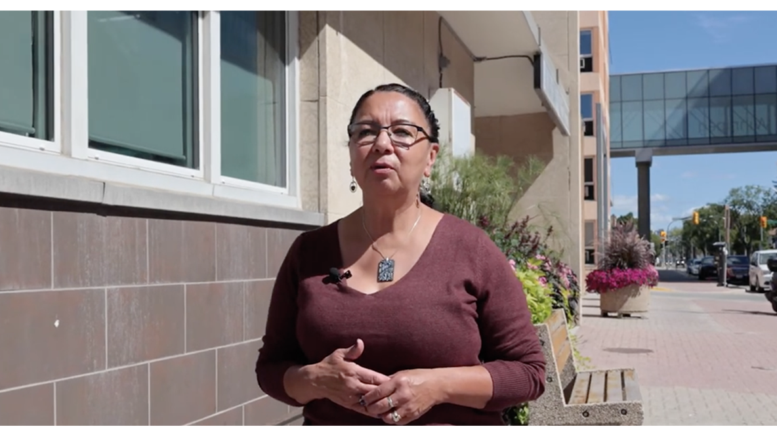
The study was coauthored by University of Manitoba nursing professor Wanda Phillips-Beck, who is the Indigenous Research Chair in Nursing with the First Nations Health and Social Secretariat of Manitoba.
Phillips-Beck told Alberta Native News that she feels “validated” by the study’s findings.
“We knew that this was happening in our health-care system, but we had no numbers,” she said.
“We were hearing about these stories in other studies qualitatively, but this is the first study of its kind that was able to put some numbers to some of these stories.”
Phillips-Beck collaborated with Elder Roberta Price of Snuneymuxw and Quw’utsun First Nations, as well as Nisha Malhotra, Kathrin Stoll and Saraswathi Vidam of the Birth Place Lab at the University of British Columbia’s Faculty of Medicine.
Thirty-one per cent of Indigenous survey participants reported having treatment either withheld from them or imposed on them without consent, compared to 19.4 per cent of white women and 20 per cent of racialized women.
This experience violates the United Nations Declaration on the Rights of Indigenous Peoples Article 7, which concerns the right to security of the person, Article 3, which deals with self-determination, and Article 19, which outlines free, prior, and informed consent regarding care, the analysis notes.
Physical abuse was experienced by 10.8 per cent of Indigenous survey participants, compared to 9.2 per cent of racialized and 6.3 per cent of white participants.
At 2.2 per cent, Indigenous women were just as likely to be sterilized without their consent as racialized women, both of which were more than three times as likely to receive this form of mistreatment than white women (0.6 per cent).
Phillips-Beck identified this statistic in particular as particularly troubling, given the long history of forced sterilization of Indigenous women across Canada.
“This study is able to show that, yes, we may have made some strides in terms of bringing attention to the issue and highlighting how wrong it was in terms of violating our human rights, but it is still happening,” she added.
A more common occurrence for all demographic groups surveyed was women being pressured to consent to procedures against their will, which 7.9 per cent of Indigenous participants experiencing, compared to 2.7 per cent of racialized and 2.8 per cent of white participants.
“It may not be as overt as women coming away from the hospital and being well-informed about being sterilized, but having to make that decision under duress in a time of extreme stress, and then walking away from that incident feeling that something terribly wrong had happened,” explained Phillips-Beck.
“Women are being pressured and coerced into these kinds of procedures,”
Indigenous participants were more than three times more likely to have private information shared without their consent (19.4 per cent) than white women (6.2 per cent) and more than twice as likely as racialized women (9.3 per cent).
In addition to measuring experiences of mistreatment, the survey looked at the likelihood of Indigenous, racialized and white women being disrespected while receiving maternal health care.
The study found that three-quarters of Indigenous participants experienced disrespect, compared to 69.2 per cent of racialized women and 58.4 per cent of white women.
Indigenous women were three times more likely to receive negative comments about their sexual activity from a health-care practitioner (7.4 per cent) as other racialized women (2.4 per cent), and more than four times as likely as white women (1.6 per cent).
Negative comments about their physical appearance were experienced by 19.4 per cent of Indigenous survey participants, compared to 7.8 per cent of white and 5.4 per cent of racialized participants.
Indigenous women were more likely to receive negative comments about their ethnicity or culture (8.4 per cent) than racialized women (4.7 per cent) or white women (0.6 per cent).
Health-care practitioners neglected to seek permission prior to performing a vaginal examination for 38.3 per cent of Indigenous participants, compared to 29.3 per cent of racialized and 24.9 per cent of white participants.
A main solution to the issues outlined in the survey, said Phillips Beck, is “training our health-care professionals to be more informed about the history of Indigenous people in this country” and providing health-care workers with “adequate time” while they’re on the job to complete this training.
“If we’re expecting them to do it on their own time, it’s not going to happen,” she cautioned.
Another necessary reform Phillips-Beck identified is for Elders, knowledge keepers, “culturally-safe care ceremonies and teachings” to be integrated into the health-care system, as well as prioritizing the recruitment of Indigenous midwives and other health-care workers.
“Everybody’s doing something, but we’re not doing it together,” she said. “We’d be more effective if we were able to collaborate a little more closely together to make these changes.”

Be the first to comment on "Study reveals: Nearly Two-Thirds of Indigenous Women Face Mistreatment During Childbirth"