
By Chevi Rabbit, Local Journalism Initiative Reporter
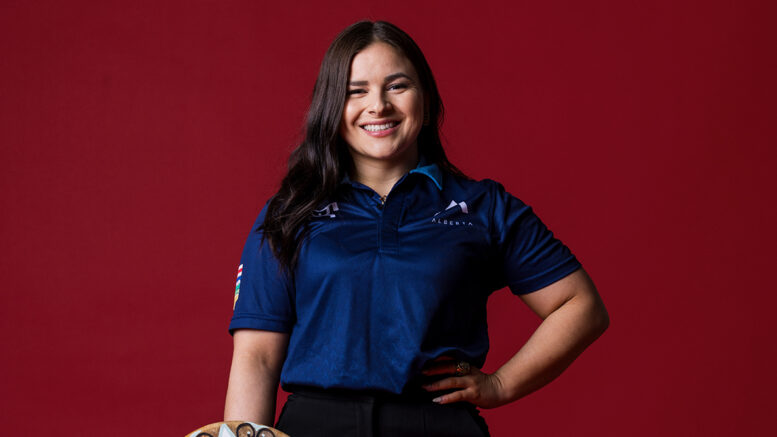
(ANNews) – Taylor McPherson’s journey from the wrestling mat to becoming a winner of The Amazing Race Canada Season 10 is a story built on resilience, representation, community, and believing in what is possible.
Alongside her best friend and wrestling teammate Katie Mulkay, McPherson captured the attention of Canadians through their determination, teamwork, and ability to overcome challenges throughout the competition. Their victory was not only a personal achievement, but also a moment of representation for young women, athletes, and Indigenous communities watching across the country.
For McPherson, the experience became a powerful reminder of the strength she has built through years of sport and the people who have supported her along the way. “Honestly, I think the biggest lesson was that I can do anything I put my mind to,” McPherson said. “Especially with the support of my best friend and just understanding communication and how well we work together.”
She said the competition showed her the importance of giving everything you have to a goal. “There’s truly nothing that I can’t do after being on that show,” she said. “It’s really shown me what it means to really put your whole heart and self into it.”
Strong is Beautiful
McPherson and Mulkay became one of the few all-female teams to win The Amazing Race Canada, a milestone that carried deep meaning for McPherson.
As a woman who has spent much of her life in wrestling – a sport traditionally dominated by men – she understands the importance of visibility and creating space for future generations. “It means a lot to me, being a young female in a very male-dominated sport,” McPherson said. “Katie and I just wanted to show Canada that strong is beautiful, and that it doesn’t matter what size, what gender, what you look like – you can do anything you put your mind to.”
McPherson, a proud member of Miawpukek First Nation, said representing her community on a national platform was one of the most meaningful parts of the journey.
She reflected on the significance of being an Indigenous woman sharing her story with audiences across Canada. “I believe I was also the first Indigenous woman to win the race, so I thought that was pretty cool too – to be able to do that for my community and for other little Indigenous girls across our country,” she said.
Her message to young people is rooted in confidence, perseverance, and believing in themselves. “There’s literally nothing you can’t do if you put your mind to it and believe in yourself,” she said.
Finding Identity Through Representation
For McPherson, being seen and represented has been a major part of her personal journey. Growing up, she said she did not always see people like herself represented in sport or on television. “I didn’t really see a whole lot of representation in my sport growing up, let alone in TV and all of that,” she said.
McPherson described her experience growing up as walking between two worlds – being proud of her First Nations identity while continuing to learn more about her culture as she got older. “Being a young girl who walked between two worlds, and not really understanding my culture from a young age, I started understanding a lot more as I got older and started exploring,” she said.
She explained that her pride in who she was always existed, but her connection to culture continued to grow through learning and reconnection. “I was always proud to be First Nations and proud of who I am and where I come from, but I was never taught anything,” she said.
Being able to represent her community through her success was a powerful moment. “Having my community acknowledge who I am and be proud of me for that as well was a huge, huge deal,” McPherson said.
Through her work with Indigenous communities in Alberta, she also saw the impact of having people she supports cheering her on. “Having all of my participants and clients cheering me on and being proud of who we are and what we were representing was such a big deal to me,” she said.
The Teacher Who Changed Her Path
Like many athletes, McPherson’s journey was shaped by mentors who recognized her potential before she fully saw it herself. One of the most influential people in her life was her Grade 5 teacher, Mr. Watts, who introduced her to wrestling.
“He’s the one who actually got me into wrestling,” she said. “He encouraged me to try it when I got into junior high, and I did, and he basically changed the trajectory of my life.”
That introduction became a turning point. “Wrestling became the centre of my world, and I wanted to work hard to be as good as I could in the sport,” she said.
Her passion for wrestling took her across Canada, the United States, Europe, and eventually onto the national stage through The Amazing Race Canada.
McPherson wrestled for six years with the University of Alberta Pandas Wrestling program, where she also gained experience coaching and supporting other athletes. “I got to coach at the university, got to coach provincial teams, at nationals, all these different amazing opportunities – all because one teacher told me I could do this,” she said.
Creating More Opportunities in Sport
While McPherson celebrates her achievements, she also recognizes that barriers still exist for many athletes, especially young women and Indigenous youth. She said girls continue to leave sport at high rates and emphasized the importance of safe programming, access, and supportive coaches. “Girls are still dropping out at extremely high rates right now,” she said.
McPherson said representation in coaching and leadership remains important. “I come from a male-dominated sport. I very rarely had a female coach,” she said. “It wasn’t really until university that I actually had a female coach for the first time.”
She believes more women and Indigenous people need opportunities to lead within sport. “Women aren’t taking up those spaces still the way we need them to,” she said. “And especially our Indigenous peoples, we’re still not in those spaces the way we need to be representing.”
She also identified barriers such as cost, transportation, location, and access to training opportunities.
The Importance of Relationships
For McPherson, creating meaningful change starts with relationships. “I think the biggest thing is just creating meaningful relationships first,” she said. “Relationship building is huge in our culture.”
She said organizations working with Indigenous communities need to approach partnerships with respect, understanding, and collaboration. “You can’t just go into an Indigenous space, Indigenous organization, Indigenous community and say, ‘we have this, we’re going to run it, take it or leave it,’” she said.
“You need to actually collaborate and work and understand what the wants and needs are. Because if you don’t, it will never be a successful program or relationship.”
The Next Chapter: Research and Community Impact
As McPherson looks ahead, she is entering a new chapter focused on education, research, and expanding opportunities for Indigenous youth. She will begin a PhD program at the University of Calgary in January, where she hopes to continue developing work connected to Indigenous sport and physical literacy.
A major focus of her research will be the SHED program – Spiritual Holistic Exercise Den – an initiative designed to bring sport and physical literacy opportunities into rural Indigenous communities.
The program trains older youth within communities to lead summer camp programming. “It’s basically a sport-specific and physical literacy program that we bring into rural Indigenous communities and train older youth in the community to be able to run it as a summer camp,” she said.
McPherson hopes her research will help expand the program into more communities and create data that supports future growth and funding. “I’m really going to be trying to focus my research around that and getting more SHED programs opened up,” she said.
For McPherson, the next chapter is about building pathways for others – using her experiences in sport, education, and community leadership to create opportunities for the next generation.
From wrestling competitions to a national television stage and now into research and community development, Taylor McPherson’s journey continues to show what can happen when passion, purpose, and perseverance come together.

Be the first to comment on "From the Mat to the Finish Line: Taylor McPherson’s Journey of Strength and Identity"