
by John Wirth, Local Journalism Initiative Reporter
(ANNews) – As the Prime Minister’s office fast-tracks the Pacific Link oil pipeline under new major projects legislation, First Nations leaders warn that a two-month consultation window compromises free, prior, and informed consent.
In a bid to distance Canadian energy interests from the USA, PM Carney and Premier Danielle Smith announced that through the “Pacific Link oil pipeline,” Canada will have its first “National designation” from its major projects office. But not everyone embraces the news. The weight of it haunts the future of Indigenous communities’ access to clean drinking water and should not be rushed.
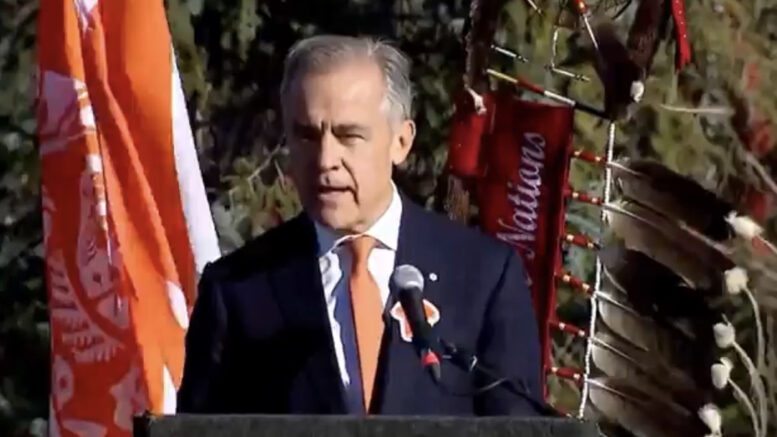
Prime Minister Mark Carney eagerly pledged that his major projects agenda would not compromise Canada’s obligations under the United Nations Declaration on the Rights of Indigenous Peoples. But actions speak louder than words, and the First Nation communities were given less than a fiscal quarter to decide the fate of their ancestral home.
The Assembly of First Nations told The Canadian Press in a statement that the government is “predetermining outcomes and approving projects in advance of meaningful consultations. The government’s decision today is coming only 12 days after the consultation deadline. As we have said on many occasions, First Nations support economic development and prosperity for all, but not at the expense of our rights, the planet, and the government’s legal obligations to our people.”
Construction is expected to begin nine short months from this consultation deadline. A streamlined oversight committee and reformed laws have paved the way for a prior, free (but not properly compensated), and malformed (whatever is decided, it will arrive prematurely) consent that is reminiscent of touching the pen while the government scribe implies consent during the initial treaty negotiations.
As reported by The Canadian Press, the UN declaration is cited in the pipeline consultation document, which says Ottawa’s engagement efforts were designed with those principles in mind. The document notes that more than 130 Indigenous communities could be affected by the pipeline route and that the Major Projects Office sent a letter in July to begin consultations.
Indigenous communities warned during those consultations that their participation would be held back by summer harvesting, ceremonial gatherings, and wildfires, which threatened many communities and forced evacuations.
The office then extended the consultation deadline from Aug. 28 to Sept. 18. The document says the office held over 140 meetings with representatives from more than 110 Indigenous organizations and communities. During those meetings, many community leaders said they lacked information they needed to make informed decisions—things like routing, engineering and design, environmental effects, marine shipping, emergency responses, and impacts on Aboriginal and treaty rights.
Responding to these concerns, the document notes: “The GIC is satisfied that these processes provide an appropriate framework through which potential adverse impacts on Aboriginal and treaty rights, including specific concerns already raised in consultation, can be further addressed before any final federal authorizations are issued.”
Alberta Native News has closely monitored these pipeline developments through multiple administrative changes and documented the stance which First Nations leadership has taken. However, the intent behind the script never changed.
Indigenous leaders have maintained a stalwart position that their ideas of free, prior, and informed consent do not align with the federal administration’s, and until these points are resolved, no level-ground negotiations can take place.
Cold Lake First Nations Chief Kelsey Jacko said while Carney has talked about building a new relationship with First Nations and partnering on major project development, the pipeline announcement Thursday does not reflect those intentions.
“Yesterday the Treaty 6 chiefs shared grand entry with the prime minister, and I spoke to him briefly and invited him again to our nation,” said Jacko, referring to Carney’s participation in an event to mark the National Day for Truth and Reconciliation. “Today, the leaders of the Nations and communities that will be heavily impacted should have been in the room. This runs right through our territory.”
Fort McKay First Nation Chief Raymond Powder said he was feeling both excited and concerned about the pipeline’s designation.
“We’re excited that we get the opportunity to be a participant for the equity stakeholders and also really, really seeing the area for Fort McKay First Nation to continue to sustain the growth in our nation,” he said after the announcement.
“The areas of concern, of course, are always the challenge of the ecosystems and really being harmonious with the environment and balancing with the economy.”
He said he has been working with the federal and provincial governments on the consultation process and described it as meaningful.
“We’ve had some respectful conversations,” he said.
“Of course, there are some complexities and some challenges, and we’re really addressing those with the federal and provincial governments and my brothers and sisters in the five First Nations within this region.”
This report by The Canadian Press was first published Oct. 1, 2026.

Be the first to comment on "Pacific Link Pipeline: Indigenous leaders challenge Ottawa’s Fast-Tracked Consultation timeline"