
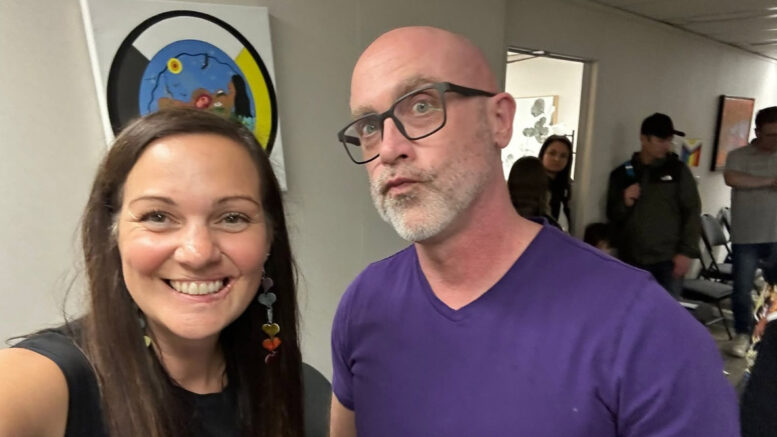
By Chevi Rabbit, Local Journalism Initiative Reporter
(ANNews) – What started as one woman’s personal healing journey has grown into a nationally connected network of Indigenous mental health professionals dedicated to helping communities heal through culture, ceremony, and connection.
On June 5, Indigenous Psychological Services (IPS) celebrated its fifth anniversary, marking five years of providing culturally grounded counselling and wellness services for Indigenous people across Alberta and beyond.
According to Indigenous counsellor and facilitator Joanna Gladue, the organization’s roots are deeply personal.
Five years ago, founder and CEO Leigh Sheldon was navigating her own healing journey while searching for Indigenous mental health supports. “Leigh Sheldon was on her own journey of healing and trying to seek out Indigenous counsellors and trying to get some help with her own things she was processing,” Gladue explained.
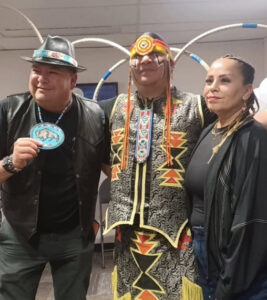
Curt Young, Lakota Tootoosis and Joanna Gladue. Photo supplied.
Already working in the field of psychology herself, Sheldon recognized a significant gap in available services for Indigenous people seeking care from professionals who understood the realities of colonization, intergenerational trauma, and cultural disconnection. “Realizing there was a gap in mental health counselling for Indigenous people, she had this idea to put together a team that focuses on working with Indigenous communities and also people in the Edmonton area.”
From that vision, Indigenous Psychological Services was born, bringing together Indigenous counsellors and non-Indigenous allies who shared a common commitment to improving access to culturally safe mental health care. “She brought together counsellors, some Indigenous and some allies, that really had that same want—to close the gap in Indigenous mental health services.”
Unlike many organizations, IPS was founded through traditional ways of knowing. “This agency is very different because it actually started with ceremony and prayers and offerings,” Gladue said. “It came together in ceremony, grounded in the land.”
That foundation continues to shape the organization’s work today. “Our staff have to attend regular ceremonies. We go to sweats, we go to pipe ceremonies, and we bring Elders in for teachings.”
Alongside professional credentials, staff members are expected to understand the impacts of intergenerational trauma and colonization while helping clients reconnect with resilience and cultural identity. “Our staff have to be very well versed in Indigenous people, intergenerational trauma, colonization, but then also supporting our clients with resiliency and reclamation of culture.”
Over the past five years, one of the organization’s greatest accomplishments has been its remarkable growth. “I would say the things that we’re most proud of at our team is growing with staff numbers,” Gladue said. “We started out with a handful of providers, and now we are close to 30 people, and we are able to reach Indigenous peoples all across Canada, thanks to using online telehealth.”
The expansion has allowed IPS to extend culturally grounded mental health services far beyond urban centres. But Gladue says the organization has also become a place of support for Indigenous professionals entering the field.
“Another thing that we are proud of is that we are bringing together a community of Indigenous people who work in the mental health field who may have some of those insecurities about starting out their own business on their own. So we really come together and support each other in community.”
Rather than describing the organization as simply a workplace, Gladue says the team embraces another word. “We kind of like to call ourselves a collective.”
That collective approach extends beyond the office walls.
As demand for Indigenous mental health services has increased, IPS has expanded its work directly into First Nations communities. “I would definitely say being able to go out to community, because our team has grown, we now have the capacity to answer the calls from those Indigenous communities outside of the urban areas,” Gladue said.
The organization has worked alongside communities including Bigstone Cree Nation, Alexis Nakota Sioux Nation, Alexander First Nation, Saddle Lake Cree Nation, Paul Band First Nation, and most recently held discussions with Enoch Cree Nation. “Our team is able to meet the demands of the community because our communities are continuously reaching out to us.”
Rather than adopting what Gladue describes as a “helicopter approach,” where organizations arrive temporarily and then leave, IPS focuses on strengthening existing community supports. “We are also building that capacity right in community. We don’t want to go in flying in and then leaving. We really want to build capacity in community and work alongside our communities.”
That means identifying current strengths and helping communities sustain programs long after the initial work is done. “We look at what current supports they have and how we can build some capacity within. We want them to be able to sustain any type of programs that we start, whether it’s individual, whether it’s working in the schools, whether it’s helping organize community events with their Nation.”
Gladue also points to ongoing barriers that still exist within Indigenous mental health care. One of the issues IPS advocates for is expanding the range of professionals recognized under the Non-Insured Health Benefits program. Currently, only registered psychologists and clinical social workers can bill for counselling services through the program, excluding many qualified Indigenous counsellors, mental health therapists, and addiction counsellors with similar education and experience.
Gladue believes broadening eligibility would remove a significant obstacle for Indigenous people seeking culturally relevant care, particularly given that fewer than five per cent of psychologists across Canada are Indigenous.
For Gladue herself, the work is deeply personal. Growing up, she experienced the effects of addiction, family violence, and intergenerational trauma while lacking access to culturally grounded supports. “I grew up in a family with addictions, family violence, intergenerational trauma,” she said. “Seeing the lack of supports that were there for me during my childhood and adolescence and also not being connected to my culture when I was young.”
Looking back, she says knowing organizations like IPS now exist would have meant everything to her younger self. “That little me would be so happy to know that there are agencies and professionals that are culturally based, that are Indigenous counsellors, and that support is there for so many of our people.”
As Indigenous Psychological Services marks five years, Gladue says its mission remains rooted in the values it was founded upon. “I would say that really, the importance of Indigenous Psychological Services is that this was really put together as a healing collective.”
She says the organization honours both its Indigenous providers and the allies who stand beside them in addressing longstanding gaps in the mental health system. “We recognize and honour not just our Indigenous providers, but our allies that work with us, and they also share that commitment to improving the gaps in the mental health care system for Indigenous people.”
Five years after beginning with ceremony, prayer, and a vision for something different, Indigenous Psychological Services continues to grow – not simply as a counselling agency, but as a collective dedicated to helping Indigenous people heal through culture, community, and connection.

Be the first to comment on "Five Years of Healing: Indigenous Psychological Services Celebrates Milestone Anniversary"