
By Chevi Rabbit, Local Journalism Initiative Reporter
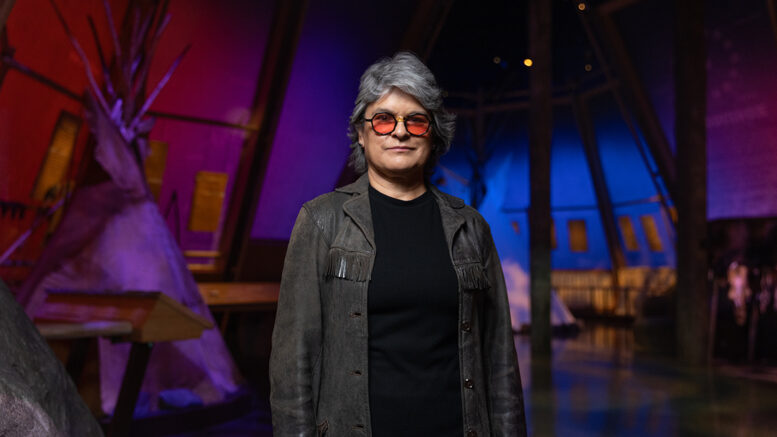
(ANNews) – Georgina Lightning is a Cree filmmaker, screenwriter, actor, and Indigenous media advocate from Edmonton, Alberta, and a member of Samson Cree Nation. With more than three decades in film and television, she has dedicated her career to advancing Indigenous voices on screen.
Speaking with Alberta Native News, Lightning outlined her vision to transform Alberta into a global hub for Indigenous-owned film and media, focusing on story ownership, economic development, and sustainability. She said Alberta must support its own storytellers: “These are Alberta workers, and we’re trying to make Alberta the Indigenous film capital of the world. That means working with ministers and with Nations across Treaty 6, 7, and 8 – every treaty region – to build something that’s real and lasting.”
Lightning emphasized that the timing is right to advance this initiative. “We’re now working with the Edmonton Screen Office, and Luke Acevedo is on fire. For the first time, it feels like everything in my career has led to this moment. This work is necessary, it’s needed, and now it’s finally being welcomed.” She noted the success of her Banff Centre lecture on Decolonizing the Narrative on November 19, 2025, as evidence of strong interest.
Highlighting systemic underinvestment in Indigenous filmmaking, she said, “Last year, only one Indigenous film from Alberta was funded by Telefilm – and that was my son Cody Lightning’s film. Alberta should be comparable to any other province. Why aren’t we producing content at the same scale as Ontario?” In response, she and collaborators announced a dedicated film fund for Alberta-based Indigenous creators. “Luke from the Edmonton Screen Office brought several Alberta film commissioners with him, and they were incredibly receptive and eager to work with us. We announced that we’re developing a film fund specifically for Alberta-based storytellers. That doesn’t mean we’re becoming exclusive – it’s about investing in our own storytellers at home.”
Alberta, Lightning noted, must shift from a service-provider model. “Provinces like Ontario and British Columbia function largely as service providers. The stories come from somewhere else – often Hollywood – and productions come here because it’s cheaper. But the intellectual property and profits go back to where the story is owned. Alberta people need to own the stories. We need to develop them here, produce them here, and distribute them from here.”
She stressed the economic potential of film. “This is a multi-billion-dollar industry, yet we still treat it primarily as art or culture, tucked into the arts portfolio. Those films are important – but film also belongs in economic development. We need to be investing far more in building Indigenous-owned intellectual property right here in Alberta.”
Lightning also described the influence of media on public perception. “I always use Blood Diamond as an example. That one film changed how people viewed and purchased diamonds worldwide. That’s the impact of a well-told, socially relevant story. Media shapes perception and shifts the social climate.”
She highlighted the value of Alberta’s skilled workforce. “If you’re great in marketing, we bring you in. If you’re an accountant or a lawyer from oil and gas, we create transitional programs and move those skills into film. Film is a product. You sell it into different territories around the world. That’s how you build an economy – and it could be the next great economy in Alberta.”
Returning to her core message, Lightning said, “Story is the resource. If we get behind our storytellers, we don’t just change culture – we build an economy. Hollywood doesn’t exist without story. You can have a thousand producers, but if there’s nothing to produce, none of it matters. Indigenous people have tons of stories. In a world experiencing a spiritual deficit, people are hungry for meaning – and they respond deeply to Indigenous storytelling.”
For Lightning, Alberta has a clear opportunity: by investing in Indigenous storytellers and keeping the value of stories within the province, Indigenous filmmakers can reshape both the cultural and economic future of Alberta.
Alberta Film Industry Context
Alberta’s film and television sector has seen rapid growth in recent years, with over 130 productions generating more than 3,200 jobs and contributing over $250 million to the provincial economy. Major projects like The Last of Us spent over $140 million locally, supporting more than 1,000 businesses and nearly 1,500 jobs. Incentives such as the Film and Television Tax Credit, offering up to 30% refundable credits, and the Alberta Made Screen Industries Program have attracted numerous productions. However, Lightning emphasizes that Indigenous creators have not fully benefited from these programs.
By focusing on Indigenous-led content, Alberta can strengthen both its creative culture and economic impact, ensuring that the province’s stories are owned, produced, and distributed locally.

Be the first to comment on "Story Is the resource: Georgina Lightning on building Alberta as the Indigenous film capital of the world"