
By Chevi Rabbit, Local Journalism Initiative Reporter
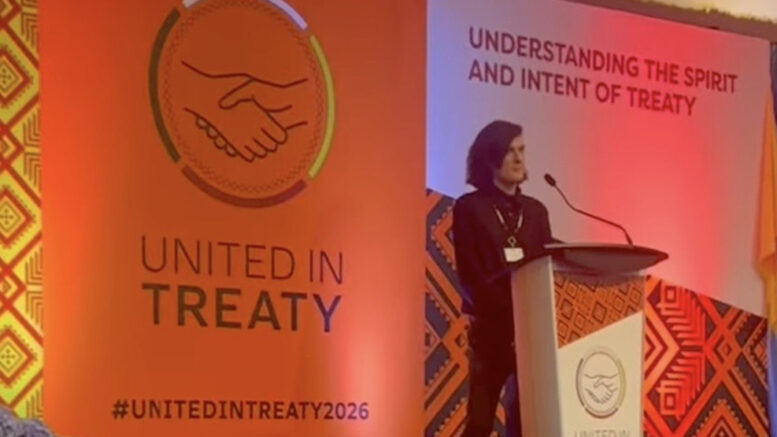
(ANNews) – As hatred and prejudice toward Indigenous people become increasingly visible in public discourse, non-Indigenous Calgarian and social media influencer Bryce Tippe is using his background in political science to help Canadians understand the systems, history and policies shaping Indigenous experiences today.
In a conversation with Alberta Native News, Tippe shared his concerns about residential school denialism, the challenges of accountability and the responsibility non-Indigenous Canadians have in addressing the continuing harms of colonization. Through his online content, he aims to make complex political and constitutional issues accessible to everyday audiences and encourage conversations that can lead to meaningful change.
Tippe began creating content about a year and a half ago, covering a broad range of topics, including Indigenous issues, Canadian politics and constitutional law. With a degree in political science emphasizing Canadian studies and international politics, he draws on his academic background to explain complex subjects in ways that everyday audiences can understand.
“I’m a systems thinker, so I like talking about the Canadian Constitution and Supreme Court decisions and working them into conversations in a way that’s accessible to the public,” he said. For Tippe, understanding politics should not be limited to academics or people who follow government closely. Civic knowledge helps Canadians understand how their society functions and how political decisions affect their lives.
“Everybody should know about politics. Everybody should know about how society functions and how their own government functions because it affects them,” he said. That understanding becomes particularly important when discussing Indigenous rights, colonialism and the responsibility to address historical and ongoing injustices. Tippe believes Canadians must recognize that colonization is not simply a chapter in history that has ended. Although people living today did not establish the original colonial system, he argues that its effects continue and that addressing them requires collective effort.
“Nobody living today was responsible for setting up the colonial system, but we currently benefit from it as non-Indigenous Canadians, while Indigenous Canadians continue to suffer from it,” he said. He believes Indigenous communities cannot be expected to dismantle those systems alone, and that meaningful change requires collaboration and support that respects Indigenous autonomy.
Tippe is particularly concerned about what he sees as the normalization of hostility toward Indigenous people and the growing presence of residential school denialism in public discussions. He worries that political polarization can turn opportunities to understand Indigenous history into confrontational debates. Instead of focusing on survivors, children who never returned home and the continuing effects of residential schools, conversations can become dominated by defensiveness and ideological conflict.
Tippe said challenging these attitudes requires thoughtful communication, including finding ways to reach people who might otherwise reject difficult conversations. “If we’re too hostile and aggressive with certain rhetoric, it might actually alienate people who could have been persuaded through other means,” he said. He believes education remains essential, but it must be accompanied by opportunities for Indigenous and non-Indigenous Canadians to build relationships, share experiences and learn from one another.
“If we put effort into bringing Indigenous people and non-Indigenous Canadians together through community gatherings, conversations and opportunities to share culture and experiences, that might help lessen the hostility,” he said.
Social media can complicate these efforts, Tippe added, because online echo chambers allow people to surround themselves with content that reinforces their existing beliefs. This can make it harder to recognize prejudice or consider perspectives that challenge their understanding of the world. He acknowledged that he does not have all the answers, but believes greater humility and curiosity are necessary to move these conversations forward.
Tippe also reflected on what it means to support Indigenous communities without centring oneself in the process. Rather than labelling himself an ally, he prefers to describe himself as an advocate, emphasizing that actions matter more than self-identification. “I don’t even really like to call myself an ally because that’s me labelling myself, and I don’t really get to call myself an ally. I like to just say that I’m an advocate because that’s what I actually do,” he said.
As a non-Indigenous, white Canadian, Tippe recognizes that he does not share the lived experiences of Indigenous people. He believes advocacy requires listening, learning and avoiding assumptions about the issues affecting Indigenous communities. “The most important thing for me is to listen and learn and best understand, and not be presumptuous or try to make assumptions or project my own lived experience,” he said.
He also believes gaps in public education contribute to misunderstandings about Indigenous rights and Canada’s colonial history. Tippe recalled learning very little about Section 35 of the Constitution Act, 1982, which recognizes and affirms existing Aboriginal and treaty rights, even during a university course on the Canadian Constitution. For him, this illustrates why accessible education about Indigenous history, constitutional rights and ongoing colonial impacts matters.
Tippe hopes his content encourages people to share what they learn and engage others in conversations they might not otherwise have. “I’m trying to educate people who don’t know about these things so they can, in turn, tell other non-Indigenous Canadians,” he said. “Maybe that will be able to affect change in a small way.”
He acknowledged that many of his followers and supporters are First Nations and Indigenous people, whose engagement he appreciates. “I’m honestly very appreciative. I’m very humbled. I’m just a guy who likes to talk to my phone,” he said. Tippe described himself as someone who is continually learning and growing, recognizing the responsibility that comes with discussing issues affecting Indigenous communities.
Through his social media platform, Tippe hopes to reach people who might not otherwise engage with Indigenous history, rights and contemporary issues. His approach emphasizes listening to Indigenous perspectives, questioning misinformation and encouraging constructive conversations that extend beyond online spaces.
For Tippe, advocacy begins with recognizing the limits of one’s own experience and remaining open to learning from others. He believes that greater public understanding, meaningful relationships and a willingness to confront prejudice can help contribute to a more informed and respectful society.
Follow Bryce Tippe on Facebook: @Bryce.Tippe

Be the first to comment on "Bryce Tippe Uses Social Media to Challenge the Normalization of Hatred Toward Indigenous People"