By Chevi Rabbit, Local Journalism Initiative Reporter
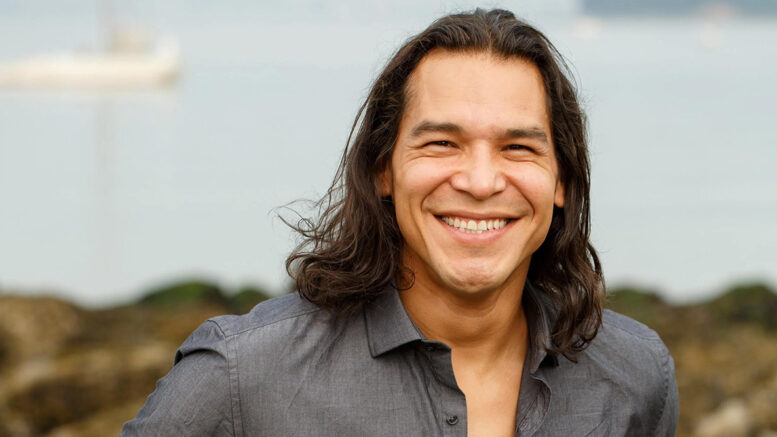
(ANNews) – “I think it’s identity, responsibility, family, future,” actor Nathaniel Arcand said, reflecting on what Treaty 6 means 150 years after it was signed.
For Arcand, the anniversary is not simply an opportunity to look back at an agreement made generations ago. It is a chance to consider the relationships created through Treaty 6, the responsibilities that continue today and what those relationships will mean for the generations that follow.
Last month, communities across Alberta marked the 150th anniversary of Treaty 6. Arcand was among those taking part in the commemorations, attending the flag-raising and pipe ceremony at Edmonton City Hall alongside Mayor Andrew Knack.
Arcand said he was invited by his chief, George Arcand of Alexander First Nation, to represent the community at the ceremony.
“He just wanted me to be present to be representing Alexander at the City Hall flag raising and the pipe ceremony,” Arcand said.
For Arcand, the anniversary provides an opportunity to think beyond the document itself. “I think for me it’s the relationship thing. It’s not just a document, really. It’s the relationship that we have with non-Natives, and how that can improve, and how we’re going to, you know, survive the next 150 years,” he said.
Understanding Treaty
Arcand believes understanding Treaty 6 begins with learning why treaties exist and what they mean to the people who entered into them. “I think non-Natives should read more into the treaty and why Natives have treaty rights and what they’re for and why they’re in place,” he said.
He connected misunderstandings about Indigenous peoples and treaty rights to gaps in knowledge about Canadian history. “A lot of misunderstanding and misconceptions and ignorance comes from not knowing your own history or reading the history of where you are or where you come from,” Arcand said.
He believes newcomers to Canada should also take an interest in the history of the country they have chosen to call home. That history, Arcand emphasized, extends far beyond European contact. He would like to see greater attention paid to Indigenous histories, cultures, beliefs and ways of life that existed long before contact.
“Where’s the pre-contact and all that?” he asked.
Indigenous Stories and Oral History
For Arcand, learning history is closely connected to storytelling. “We are storytellers,” he said, describing it as an Indigenous tradition through which knowledge about ancestors, culture, language, history and ways of life has been passed between generations.
“It’s oral history,” Arcand said. “Those old elders telling stories to their young people are important, and about our people, about our ways, our language, our rights, everything.”
As an Indigenous actor, Arcand has also used film and television to bring Indigenous stories to wider audiences. He sees contemporary media as another way of documenting the present for future generations. “You’re sharing the history that’s going on today,” he said.
Arcand would like to see more films and documentaries exploring Indigenous history beyond familiar narratives of contact and colonization, including the histories and cultures that existed before those encounters.
Knowing Who You Are
That connection to history is especially important for Indigenous youth, Arcand said. When asked what he hopes the next generation understands about Treaty 6 and their place within that relationship, he returned to identity.
“I think it’s just knowing who they are, really, where they come from, and that their voices matter,” he said.
Arcand wants young people to receive an education that connects them to their own cultures while also preparing them to understand the wider world. “We want them to go to school and learn not only our ways, but the ways of the world and everybody else and their things.”
He said that perspective was influenced by his grandfather, who taught him that knowing one’s own roots should go hand in hand with learning about and respecting other people.
The Next 150 Years
For Arcand, the 150th anniversary is ultimately an opportunity to consider what comes next. “Not to commemorate this treaty by looking backward, but to honour it by asking what our responsibilities are for the future of it,” he said.
Arcand does not view Treaty 6 as something that has reached an endpoint. Instead, he sees it as an ongoing relationship that continues to shape the lives of Indigenous and non-Indigenous people. “How do we fix what was wrong and move forward with a better frame of mind on both sides, or whoever’s involved?” he asked.
That future, he said, requires people to understand one another, respect different histories and recognize their responsibilities within the relationships they share. “Everybody’s important,” Arcand said.
For Arcand, the next 150 years will be shaped not only by how people remember Treaty 6, but by how they live its relationships forward. That means carrying knowledge from Elders to youth, making room for Indigenous stories and ensuring that the history of this land is understood as more than something found in the past.
The anniversary, in that sense, becomes a starting point for another generation: one that knows where it comes from, understands the responsibilities that come with that knowledge and has a role in shaping where the relationship goes next.

Be the first to comment on "Treaty 6 at 150: Nathaniel Arcand on Relationship, Responsibility and the Future"