By Chevi Rabbit, Local Journalism Initiative Reporter
(ANNews) – For the Redcrow family, the drum is more than music. It is a heartbeat, a connection to culture, and a source of belonging.
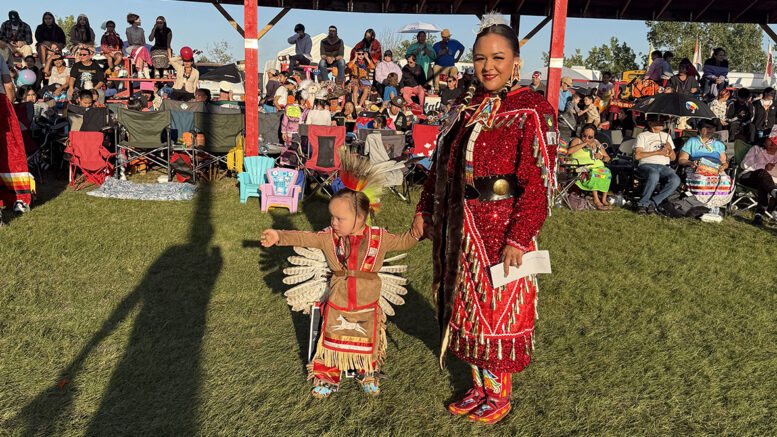
Neil and LaDawn Redcrow’s journey into the powwow circle began through their children. What started as a family attending powwows together became a way of life and one that has brought them closer to culture, community, and each other.
At the heart of their story is their youngest child, Waseskwan, whose connection to the drum has touched people throughout the powwow community.
LaDawn, whose family is from Buffalo Narrows, Saskatchewan, and who now lives in Edmonton, said their family’s powwow journey began about 13 years ago when their daughter inspired them to attend their first gatherings.
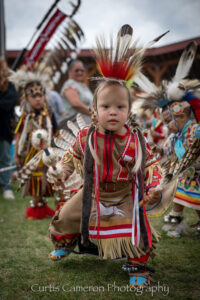
Waseskwan Redcrow in his powwow regalia. Photo by Curtis Cameron Photography.
“We knew nothing really about powwows or anything,” LaDawn said. “We just started bringing her around the powwow circle and kind of just going to powwows all summer.”
Over time, powwow became more than a family activity. It became part of their identity.
Their three children, two daughters and their son, have grown up knowing the powwow circle as a place of culture, family, and connection.
Neil Redcrow, who is from Saddle Lake Cree Nation, had attended powwows throughout his life but did not begin dancing until his daughter became interested. “I’ve always gone to powwows my whole life, but I never really danced all that much until my daughter was born,” Neil said.
He began dancing in 2015, and as LaDawn learned to make regalia, the family became more involved. Their daughters now dance powwow, with their oldest daughter Kiana having held princess titles, including Tiny Tot Princess and Junior Princess.
“Our children grew up with it,” Neil said. “Our son too likes dancing and singing. Everybody knows him at powwow.”
For the Redcrow family, everything comes back to the drum. “To us, it’s the drum,” LaDawn said. “The drum is the spirit. It’s the ceremony. It’s everything that a powwow is.”
She said dancers are not simply performing, they are responding to the spirit and heartbeat of the drum. That connection became especially meaningful when Waseskwan took his first steps.
LaDawn remembers attending a powwow in Cold Lake when an intertribal song began. At the time, Waseskwan, who has Down syndrome, had not yet started walking. “That was the first time an intertribal song came on, and that was the first time he ever walked,” she said. “I believe it was the spirit of that drum.”
Neil said he witnessed the same connection. At about 18 months old, Waseskwan was only able to take a few steps. During a powwow, he connected with a drum group and began dancing. “Before he could even fully walk, he was just dancing,” Neil said. “He just never stopped since then.”
Today, Waseskwan is known across the powwow community. He goes from drum to drum, singing with groups and being welcomed into the circle. “He just jumps in there and starts singing with people, and they just allow him,” Neil said. “Through him, I know people all over Indian Country.”
Neil said his son has introduced him to people he may never have met otherwise. “We’ll go to powwows and people I don’t even know are like, ‘Hey, it’s Wasey’,” he said. “I’m like, ‘Wow, my son knows everybody’.”
For Neil, powwow also carries teachings about responsibility. “You’re supposed to be protectors [of children], and protectors of the women,” he said. “I have two daughters, so it’s a big role to fulfill, keeping your children close.”
He believes the positive impact of powwow is what matters most. “I always look for the positives in powwow,” Neil said. “There could be negatives anywhere you look, but I always just try to follow the positives – what good it’s done for my children.”
The family knows the powwow lifestyle requires commitment. There are late nights preparing regalia, early mornings getting ready, and long days travelling. “It’s a lot of work, but it’s enjoyable at the end of the day,” Neil said.
For him, the drum remains the centre of everything. “The drum is very powerful,” he said. “That’s really what makes the powwow happen.”
The Redcrow family believes powwow also plays an important role in healing Indigenous communities. Neil said cultural gatherings provide opportunities to grieve, but also to celebrate life. “Our Indigenous communities overall need a lot of healing and they need something to celebrate,” he said.
Through powwows, ceremonies, and gatherings, he believes communities can reconnect and create moments of joy for future generations.
For Neil and LaDawn, Waseskwan’s journey is a reminder that culture belongs to everyone. When they learned their son had Down syndrome, Neil wondered whether he would be accepted within the Indigenous community. Over time, he saw a growing acceptance and recognition of people with disabilities within powwow spaces.
“The most amazing part for me is just how he’s accepted and known all over,” Neil said.
Through the drum, dance, and the powwow circle, Waseskwan has shown people the power of love, inclusion, and belonging.
“It’s such a beautiful way of life,” LaDawn said. “Through this little boy, you get to see that.”

Be the first to comment on "The Spirit of the Drum: The Redcrow Family’s Journey of Love, Culture and Belonging"