By Chevi Rabbit, Local Journalism Initiative Reporter
(ANNews) – As National Tourism Week highlights travel experiences across Canada, Blackfoot Crossing Historical Park is being recognized as one of Alberta’s most significant cultural and tourism destinations both as a historic treaty site and as a living expression of Blackfoot history, governance, and identity.
Located on Siksika Nation, the site is widely known as the place where Treaty 7 was signed in 1877. Terry Goertzen, Vice President of Indigenous Relations and Economic Development for Travel Alberta, said Blackfoot Crossing holds deep historical importance as a gathering place where Nations came together during the treaty process that shaped the region.
He noted that Indigenous Nations including the Stoney Nakoda, Tsuu T’ina, and Blackfoot peoples were part of those historic gatherings connected to Treaty 7.
Goertzen emphasized that while the treaty is a key historical moment, it represents only a small part of a much longer story.
“The treaty is only 150 years ago. The Blackfoot story is many thousands of years,” said Goertzen.
He said Blackfoot Crossing reflects both the treaty relationship and the long-standing cultural presence of Blackfoot peoples on the land.
“So Blackfoot Crossing is a place where you learn about the treaty signing, but more importantly, you learn about the history of Blackfoot nations that have been here for thousands of years,” Goertzen said.
Goertzen also described the broader national and regional significance of the site.
“Blackfoot Crossing is where Canada started its relationship with Indigenous nations in Southern Alberta,” he said. “Blackfoot Crossing is the place where Treaty 7 was signed and Canada was born.”
He added that Treaty 7 represents the beginning of Canada’s formal treaty relationship with Indigenous nations in Southern Alberta. While Canada had already entered into treaty relationships with Indigenous nations through Treaties 1 through 6 in other parts of the country, Treaty 7 marked the extension of those agreements into the southern Alberta region.
Today, Siksika Nation has developed Blackfoot Crossing into an immersive cultural and educational destination where visitors can engage directly with Blackfoot storytelling, history, and land-based knowledge.
For first-time visitors, Goertzen said the experience is intentionally designed to be immersive. “I think it’s what we would call an authentic, immersive experience, where you walk through the history of the treaty signing, and then you walk into and back into the history of the Blackfoot culture and nations,” he said.
Beyond the interpretive centre, Blackfoot Crossing now offers overnight accommodations and cultural programming that deepen visitor engagement.
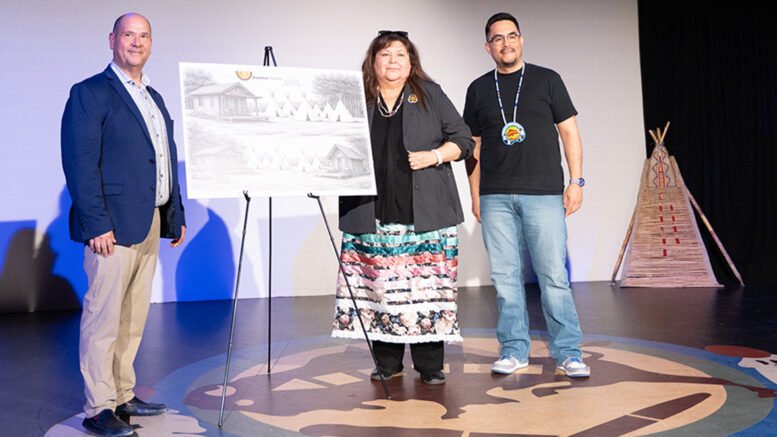
“And on top of that now, you have the opportunity, because of the cabins and the teepee that we’ve supported, to stay overnight and then experience other Blackfoot culture activities or things like tanning hides, making pemmican, and experiencing Blackfoot food,” Goertzen said. “So it’s a really immersive, authentic, full Blackfoot experience.”
As Alberta continues to expand its tourism strategy, Blackfoot Crossing has been highlighted by Travel Alberta and Indigenous Tourism Alberta as part of ongoing efforts to promote Indigenous tourism.
Earlier this week, Travel Alberta announced more than $8 million in tourism investments across the province, with a focus on winter travel, rural destinations, and Indigenous tourism development.
Goertzen said Indigenous tourism is central to Alberta’s long-term economic strategy, while also emphasizing its distinct cultural appeal. “We prioritize investments in Indigenous tourism because it’s what sets Alberta apart,” he said. “These are the authentic experiences that really resonate with people from around the world who are seeking something deeper.”
To expand global reach, Travel Alberta works closely with Indigenous Tourism Alberta and industry partners through international travel trade events such as Rendezvous Canada.
“We work with Indigenous Tourism Alberta in travel trade when we go to Rendezvous Canada and other travel trade operators,” Goertzen said. “We meet operators and work to highlight these kinds of investments in Indigenous tourism.”
He said familiarization tours known as FAM tours are another key tool for promoting Indigenous destinations. “These FAM tours bring journalists, travel trade professionals, and content creators into Indigenous communities so they can experience the destinations firsthand,” Goertzen said.
He added that marketing efforts also play a major role in expanding visibility for Indigenous tourism. “This last year alone, I think we have highlighted over 20 Indigenous operators through our marketing and content team, through all of our channels,” he said.
Goertzen stressed that Indigenous leadership remains central to tourism development in the province. “We think it’s important that Indigenous leaders and operators take the lead on tourism in their communities, and that’s the kind of thing we support,” Goertzen said.
He pointed to Siksika Nation leadership and pride in sharing Blackfoot history with visitors. “We heard today from Chief Crowfoot directly at Siksika Nation and how proud he is to share that Blackfoot story with everybody who would like to hear,” he said.
Goertzen said this reflects a broader shift toward Indigenous-led tourism development in Alberta. “That is the kind of thing that we are very excited about, Indigenous-led tourism with Indigenous stories that will invite the international and Canadian traveler to places like Blackfoot Crossing,” he said.
As Blackfoot Crossing continues to expand through new infrastructure, cultural programming, and tourism development, it is also expected to create local employment opportunities within Siksika Nation, strengthening the connection between cultural preservation and economic development.
At its core, Blackfoot Crossing stands as a place where history, culture, and Nationhood meet offering visitors not only a chance to learn about Treaty 7, but to experience the living Blackfoot world that continues far beyond it.




Be the first to comment on "Blackfoot Crossing: A Living Treaty Site Driving Indigenous-Led Tourism in Alberta"