By Chevi Rabbit, Local Journalism Initiative Reporter
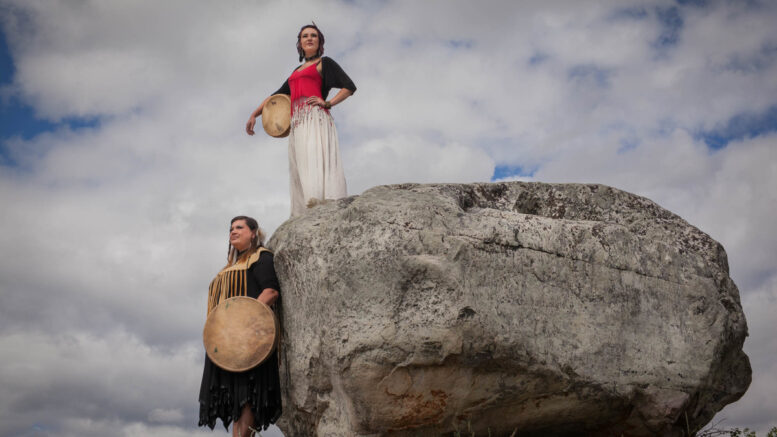
(ANNews) – Mackenzie Brown (Kamamak, which means “butterfly” in Cree) and Matricia Bauer (Isko-achitaw Waciy / ᐃᐢᑯ ᐃᐦᒋᑕ ᐘᒋᕀ), co-owners of Warrior Women, are bringing Cree culture to Edmonton from February 17 to 19 to showcase their talent, art, and Indigenous knowledge at the International Indigenous Tourism Conference (#2026IITC).
The mother-daughter duo from Sturgeon Lake Cree Nation are recognized leaders in Indigenous tourism, known for sharing Cree stories, land-based teachings, and cultural practices with audiences from around the world in ways that are authentic, respectful, and community-guided.
“We’re a mother-daughter duo from Sturgeon Lake Cree Nation, and we absolutely love what we do,” said Mackenzie Brown. “Tourism really found us. We didn’t set out thinking we were going into tourism – we were just sharing who we are.”
Warrior Women is a Cree-led, Indigenous-women-owned tourism business operating in Calgary and Jasper, offering plant walks, drumming and singing, moccasin and mitt-making, art workshops, fireside teachings, and Indigenous art walk tours.
“We started performing not just for local audiences, but for people traveling from Japan, China, Australia, New Zealand – from all over the world,” Brown said. “It’s important that we tell our own stories from our own voices, because so often people tell stories about Indigenous people that aren’t always true.”
Sharing Culture With Care and Responsibility
Both Brown and Bauer emphasize that showcasing culture publicly comes with responsibility, accountability, and guidance from Elders.
“Because we teach about our history and aspects of our culture, it’s really important that we’re always talking with our Elders,” Brown said. “Everything that we share is vetted, and it has to be appropriate and okay to share…You can’t share everything – and you shouldn’t. Some teachings need to stay with the people, and you need some mystery.”
Matricia Bauer, a Cree knowledge keeper, artist, singer, and cultural educator, says Indigenous tourism allows communities to share stories on their own terms. “Indigenous tourism allows Indigenous people to tell their story the way they want to tell it, share what they want to share, and have their art appreciated and not appropriated,” Bauer said. “Every song we sing, every story we tell, comes from our perspective. That’s what makes it real.”
She explained that Indigenous tourism is rooted in lived experience, history, and connection to land. “Indigenous tourism is real stories told by Indigenous people through an Indigenous lens,” Bauer said. “Not every story is meant to be shared with the general public. The beautiful thing about being in charge of what gets shared is you get to choose what stories you tell, which songs you sing, and what art gets to be shared.”
Recognized Leadership in Indigenous Tourism
According to Top 40 Under 40 by Calgary Avenue Magazine, Mackenzie Brown “acts as a bridge between Indigenous and non-Indigenous cultures and experiences — that’s her superpower.”
Brown is an artist, educator, and tourism consultant. She is a former director at Indigenous Tourism Alberta and she currently serves as the executive advisor of Indigenous engagement at the Glenbow Museum, continuing her work to advance Indigenous leadership, cultural understanding, and institutional change within Alberta’s arts and tourism sectors.
Matricia Bauer, whose traditional name Isko-achitaw Waciy means “She Who Moves Mountains,” has shared Cree teachings on international stages, including TED Talks, and has received numerous honours, including the Esquao Award for Art and Culture (2021), Mayor’s Artist Award – Jasper (2015), and the Aboriginal Woman’s Day Award (2005).
Indigenous Tourism and Reconciliation
Both leaders see Indigenous tourism as a powerful tool for education, reconciliation, and community investment. “When you invest in Indigenous tourism, you’re investing in communities,” Brown said. “Tourism is an industry of industries.”
“I’ve seen communities create language programs, Elders programs, and youth programs funded through tourism. Profits stay in the community.”
Brown added that tourism offers an accessible way for people to learn about truth and reconciliation. “Tourism is one of the easiest ways for people to learn about reconciliation,” she said. “You have a captivated audience who wants to learn from Indigenous people about their culture.”
An International Gathering
At the conference, the duo will connect with Indigenous tourism operators from across the globe, including Māori tourism leaders from New Zealand and Indigenous representatives from Chile, Finland, Japan, China, and across North America.
“At the conference, Indigenous people from all over the world come together to discuss what Indigenous tourism is, what it can be, and to share best practices for the future,” Bauer said. “The goal is to show visitors that Indigenous culture is alive, vibrant, and evolving – not just history.”
The International Indigenous Tourism Conference (#2026IITC) will be hosted by the Indigenous Tourism Association of Canada in partnership with Indigenous Tourism Alberta, Explore Edmonton, and Travel Alberta on Treaty 6 Territory, home to many Nations, including Cree, Saulteaux, Blackfoot, Sioux, and Métis Peoples, in Amiskwacîwâskahikan/Edmonton, Alberta, from February 17 to 19, 2026.
For more information and registration, visit:
https://indigenoustourism.ca/events/2026-international-indigenous-tourism-conference/
For more about Warrior Women, visit https://warriorwomen.ca/about-warrior-women/
and https://kamamak.ca

Be the first to comment on "Warrior Women bring Cree Culture to the International Indigenous Tourism Conference in Edmonton"