By Chevi Rabbit, Local Journalism Initiative Reporter
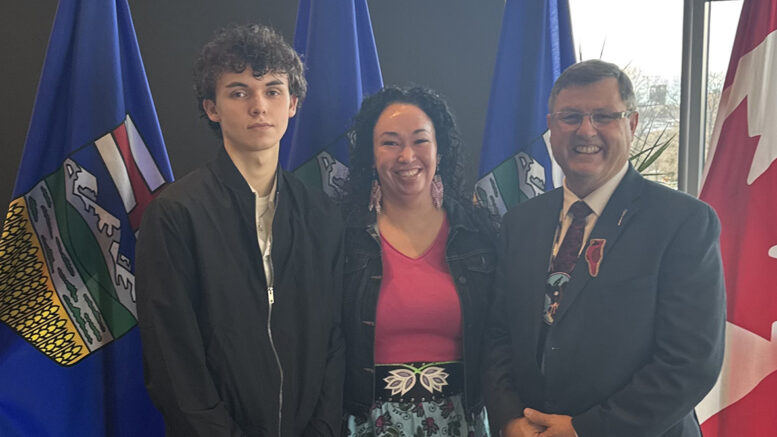
(ANNews) – For over 25 years, Suzanne Life-Yeomans has been at the forefront of Indigenous consultation in Alberta, shaping how governments, industry, and communities work together. Blending strategy with culture, she ensures Indigenous voices are not only heard but acted upon. Raised on the traditional territory of the Cowichan Tribes and a member of the Liidlii Kue First Nation, Life-Yeomans emphasizes reconnecting with culture and ceremony. “Even if you’re not raised in your culture, you can still learn, listen, and carry those teachings forward in everything you do,” she says.
Life-Yeomans is the Owner & Senior Consultant of Suzanne Life & Associates, providing strategic consultation, engagement, and advisory services for Indigenous communities, industry partners, and regional organizations. Her clients include Enoch Cree Nation, Louis Bull Tribe, Beaver Lake Cree Nation, ABOriginal, Town of Ponoka, and Cowichan Tribes, among others. She has also held leadership roles across government and First Nations organizations, including Indigenous Relations Director at Matrix Environmental Inc., Intergovernmental Affairs & Industry Relations Director at Beaver Lake Cree Nation, and Consultation & Lands Director at Montana First Nation, along with senior management positions with the Governments of Alberta and British Columbia.
“Meaningful consultation goes beyond compliance; it involves genuine engagement where Indigenous voices are heard, respected, and valued,” Life-Yeomans explains. Her firm actively involves community members in decision-making, facilitates open discussions, and adapts strategies based on feedback, prioritizing culturally appropriate and impactful engagement. Her dual perspective as a community leader and provincial advisor allows her to advocate effectively for Indigenous needs while ensuring government requirements are met. She emphasizes that governments often fall short when consultation is treated as a checkbox rather than a partnership, and she works to maintain personal, culturally grounded connections even in digital engagement.
Life-Yeomans’ influence extends beyond consultation and governance. She manages Tipi Village at the Ponoka Stampede, a space where powwow dancing, drumming, storytelling, artisan crafts, and elder teachings are offered free to the public. She serves on Alberta’s Joint Working Group on Missing and Murdered Indigenous Women, Girls, and 2SLGBTQQIA+ people (MMIWG2S+) and co-chairs the First Nations Women’s Council on Economic Security, advocating for trauma-informed, Indigenous-led solutions to systemic gaps in services. Her work is deeply personal, informed by her mother’s experiences with systemic harm and historic injustices, and aims to ensure that Indigenous voices are included before decisions are made, not after.
Leadership for Life-Yeomans spans multiple councils and boards. She is Chair of the First Nations Women on Economic Security Council and of the Lands and Economic Development Advisory Council, and serves on the Treaty & Aboriginal Land Stewards Association of Alberta, the Ponoka Economic Development Board, and the Ponoka Youth Centre. She believes leadership is about stepping up where the community needs it most, rather than accumulating titles.
Life-Yeomans also connects Indigenous engagement to economic opportunity. Since 2021, the Government of Canada requires that at least 5% of federal contracts be awarded to Indigenous-owned businesses. Her firm participates in these contracts, ensuring Indigenous perspectives influence projects from start to finish. By engaging communities early in planning, she promotes shared objectives that balance economic growth with cultural heritage and environmental sustainability. Her advocacy for ethical engagement practices also helps elevate industry standards, inspiring others to prioritize respect, integrity, and accountability.
Policy influence is another cornerstone of her work. As part of Alberta’s MMIWG Roadmap initiatives, Life-Yeomans consulted with community members, families, and service providers to identify gaps in cultural safety, access to supports, and systemic barriers. The insights she helped gather directly shaped policy actions under Pathway 1 and Pathway 3, ensuring trauma-informed, Indigenous-led solutions are implemented.
Looking ahead, Life-Yeomans envisions consultation integrated into all levels of decision-making, with Indigenous voices at the forefront. “Consultation is not a form you fill out. It’s a conversation, a relationship, and a responsibility,” she says. Her work demonstrates how strategic consultation, cultural advocacy, and leadership can intersect to create systemic change. Through initiatives like Tipi Village, advisory leadership, and federal and provincial contracting, Suzanne Life-Yeomans sets a new benchmark for Indigenous consultation — one rooted in inclusion, accountability, and meaningful, lasting impact.

Be the first to comment on "Suzanne Life-Yeomans: Leading the Way in Indigenous Consultation and Female Empowerment"