By Chevi Rabbit, Local Journalism Initiative Reporter
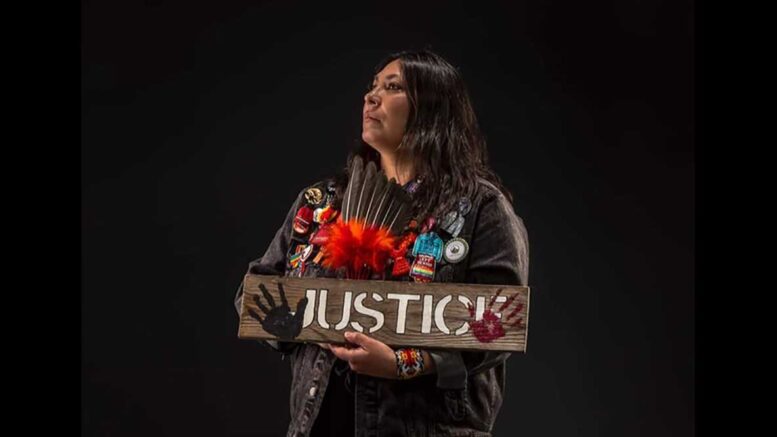
(ANNews) – On Feb, 22, National Human Trafficking Awareness Day, Cree, Dene, and Métis advocate Stephanie Harpe shared her experience as a survivor, highlighted the risks facing Indigenous youth, and called for stronger community support and prevention programs.
Harpe, a Cree, Dene, and Métis advocate from Fort McKay First Nation, has transformed her personal experiences as a survivor of domestic trafficking and family violence into a platform for education, healing, and advocacy across Indigenous communities in Canada.
“I’m just trying to make sure we’re educating everybody and speaking about this more. Human trafficking is far more common than people realize. Survivors are in grocery stores, in meetings, in restaurants, and in traditional circles – it’s important for the public to know what’s really happening,” Harpe says.
She has shared this message nationally and internationally, delivering TED Talks, speaking at conferences in London, Malaysia, and Dubai, and participating in documentaries and youth programs. Her advocacy is complemented by her music career; with The Stephanie Harpe Experience, she blends rock and Indigenous storytelling and has opened for Blue Rodeo, Tom Cochrane, and Barenaked Ladies, earning an Indie Spirit Award.
Harpe’s work spans multiple areas, including community workshops, documentaries, and school-based programs, all designed to equip youth and families with practical tools to prevent exploitation and trauma.
Protecting youth remains a top priority for Harpe.
“We have children being lured online, sometimes into chat rooms, sometimes by adults pretending to be kids. Some of our youth have been severely abused. We have to talk to them about the risks and help them understand the red flags before it’s too late,” she explains.
She also emphasizes the dangers of sextortion, pornography, and AI-facilitated exploitation:
“We really tell people not to share any photos of their children or grandchildren. Children can access explicit material as soon as they get a phone, and that can normalize violence. That’s one of the leading causes of why our women and girls are hurt or exploited.”
To address these risks, Harpe is developing educational materials with Treaty 8, including age-appropriate presentations and videos that teach online safety, personal protection, and sexual abuse prevention. She also helped create the End to the Lights documentary with Native Health Services, providing a sensitive introduction to human trafficking, highlighting how victims can recognize danger early and access support.
Her programs target children in care, youth living in poverty, and those with disabilities or mental health challenges — groups statistically more vulnerable to exploitation.
Harpe emphasizes that combating human trafficking is not only about protecting youth but also strengthening communities.
“If we got rid of lateral violence and stopped fighting with each other, we’d be much safer. The fight isn’t with each other; the fight is with systems that are failing us. When we come together as Nations, we can be stronger and protect our children,” Harpe says.
Addressing trauma and fostering unity in families and communities is central to her approach:
“A lot of what we’re trying to do is falling on deaf ears. We have hurt each other, but some hurts are forgivable, and some are not. We just have to work together to heal and be strong.”
Harpe’s advocacy also includes men and boys. She is developing a short documentary and programming highlighting their experiences within the murdered and missing framework, and continues to organize Blue Jean Jacket Day on June 6, now recognized nationally and internationally to honour murdered and missing Indigenous men and boys.
“Families are really happy that we get to honour our males and have them included,” she says.
Harpe collaborates with Indigenous organizations, health services, and local leadership to create preventative programs addressing sexual exploitation, human trafficking, and online safety. She is particularly focused on youth education, community workshops, and mentorship programs.
Her programs also aim to support survivors of trafficking and abuse, helping them heal and reintegrate safely into their communities. By combining education, awareness, and cultural connection, Harpe creates spaces for empowerment and resilience.
Music plays a central role in Harpe’s advocacy and personal wellness:
“My wellness comes from my family, my community, and my music,” she says.
Through The Stephanie Harpe Experience, she uses folk and rock music to engage audiences, raise awareness about Indigenous issues, and amplify her message of youth protection and community healing. Music becomes both a storytelling medium and a therapeutic tool for her and her audiences.
Harpe’s work has reached audiences across Canada and globally, and her contributions have been recognized with an Indie Spirit Award. She continues to perform, speak, and mentor, demonstrating how art, advocacy, and education can intersect to protect youth and strengthen Indigenous communities. Her efforts reflect a commitment to education, prevention, and community healing. On Feb. 22 – National Human Trafficking Awareness Day – her message is simple: communities must come together, youth must be protected, and Indigenous voices must be amplified.
According to Statistics Canada, police-reported human trafficking incidents have more than tripled since 2014, with 608 incidents reported in 2024, most victims being women and girls, many of them youth.
“The truth is what will set us free. When we’re more empowered to talk about it, we can prevent it — and protect our children from human trafficking and exploitation,” Harpe says.
Her work serves as both a warning and a guide: by educating, protecting, and uniting, communities can reduce the prevalence of exploitation and build safer environments for all youth.

Be the first to comment on "Stephanie Harpe Speaks Out on Human Trafficking Day: Protecting Youth and Communities"