

by Kinnukana
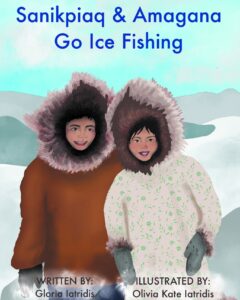
(ANNews) – A heartfelt new children’s book, Sanikpiaq and Amagana Go Ice Fishing, has been released, offering young readers a warm and engaging introduction to life in the Inuvialuit Settlement Region. Written by Gloria Iatridis and illustrated by her daughter Olivia Kate Iatridis, the story follows siblings Sanikpiaq and Amagana as they head out onto the ice with their father, learning patience, traditional fishing practices, and some introductory Inuvialuktun words, such as iqaluk (fish).
 The book is inspired by the real childhood of Sanikpiaq, Sarah Anderson (née Nasogaluak), an Inuvialuk born on Baillie Island and raised in Tuktuyaaqtuuq (Tuktoyaktuk). As the oldest daughter in a family of eleven children, she grew up helping her parents, working on the land, hauling ice, harvesting wood, trapping, and she even had her own dog team and trap line. Formal schooling did not exist in her community until she was thirteen, when she entered kindergarten and learned to read from the Dick and Jane series. Sanikpiaq shared with her daughter Gloria that she never saw herself in school. The educational tools never reflected her, her culture, or the Arctic world she knew so well.
Sanikpiaq and Amagana Go Ice Fishing was created to change that experience for today’s Inuit children. Too often, northern students still read stories centered on southern Canadian communities or faraway places. This early reader book ensures that when kindergarten children begin school, they see themselves, their families, their land, and their traditions represented in the pages in front of them. Through simple sentences, repetition, and culturally grounded imagery, the book supports young readers in building confidence, pride, and early literacy skills while strengthening cultural understanding.
“Inuit children deserve to see themselves in books in ways that feel normal and that encourage pride and confidence in who they are. For non-Inuit readers, the story offers an opportunity to learn about Inuit culture and the Arctic through a joyful, everyday experience,” says Gloria. “I am grateful to be able to create a book that inspires positive change.”
This book also honours Sanikpiaq’s legacy as an educator. As an adult, she returned to school, upgraded her education, and became an Inuvialuktun teacher. She spent twenty-seven years teaching language and culture at Mangilaluk School in Tuktoyaktuk. Her belief in culturally appropriate education and the importance of Inuit voices in learning resources continues through this book and plans for future titles in the series.
This release is especially meaningful as it marks Olivia Kate Iatridis’s debut as an illustrator, bringing warmth, vibrancy, and Inuvialuit identity to every page.
“This story honours my Nanuk, who I loved deeply and admired for her strength,” says Olivia. “Illustrating this book allowed me to share her spirit and bring the Inuvialuit culture to young readers everywhere.”
It was important for Gloria and Olivia to make the book Irlen-friendly to ensure every young reader can enjoy the story comfortably. Irlen Syndrome is a perceptual processing condition that can make reading difficult due to sensitivity to light contrast and certain visual patterns. The colours, spacing, and font choices were selected to help reduce visual stress and support children with Irlen Syndrome.
Sanikpiaq and Amagana Go Ice Fishing reflects Gloria and Olivia’s commitment to creating culturally grounded early-reader books that celebrate Inuit identity and support early literacy for young learners.
The book is now available for purchase at Sanikpiaq and Amagana Go Ice Fishing – ReadersMagnet and major book outlets.
Kinnukana is a Local Journalism Initiative Reporter

Be the first to comment on "New book helps Inuit children see themselves in early reading books"