
By Chevi Rabbit, Local Journalism Initiative Reporter
(ANNews) – For the first time, the International Indigenous Tourism Conference has been welcomed to Edmonton — and according to Chelsey Quirk, Chief Executive Officer of Indigenous Tourism Alberta, the impact will be felt for years to come.
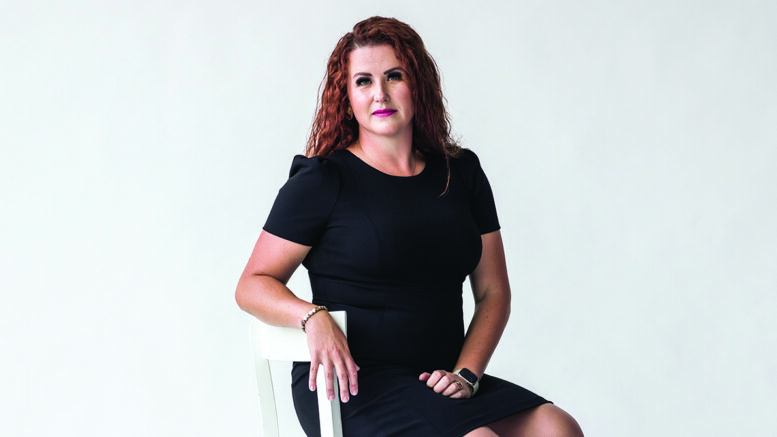
A proud Métis woman with deep roots in the Red River Valley, Quirk brings both personal and professional dedication to Indigenous tourism, cultural revitalization, and reconciliation. She spent nearly a decade at Edmonton International Airport, where she led the launch of the Indigenous Interpretive and Retail Centre, a space showcasing Indigenous culture, history, and entrepreneurship. Her leadership has been recognized by Edify Edmonton, naming her among the Top 40 Under 40, reflecting her commitment to creating tangible opportunities for Indigenous peoples and communities.
“This is the first time that we’ve welcomed this conference to Edmonton,” Quirk said on Feb. 16 at the outset of the conference. “There are over a thousand delegates here who are seeing — and this afternoon are going to be experiencing — all of our cultural experiences. We have 17 cultural tours taking place this afternoon where people from not only across Canada, but 14 countries around the world, are going to be experiencing Indigenous tourism right here in Treaty 6 territory. This is our chance to put Indigenous tourism in Alberta on the global map, and the stories, momentum, and excitement that come from this are going to ripple across this province for years.”
Alberta’s Indigenous tourism sector is unique in its collaborative approach. Indigenous Tourism Alberta maintains longstanding partnerships with Travel Alberta and Explore Edmonton, formalized through memorandums of understanding.
“In Alberta, we’ve got a really unique relationship in the tourism industry. It really is a collaborative, relationship-based industry. Indigenous Tourism Alberta has a longstanding MOU with Travel Alberta. It’s the largest investment of a provincial tourism association to an Indigenous tourism association. That is a longstanding relationship that we have,” Quirk said.
“We work alongside Explore Edmonton through an MOU as well, really building on collaborative relationships. We support our members, and where we may not have the right tools, Explore Edmonton will step in and lend their tools. Same with Travel Alberta. It’s really a collaborative relationship across the board. That’s what we discussed at the conference – how we’ve built this relationship and this ecosystem in Alberta as a model that other provinces and territories can use.”
The organization also works closely with non-Indigenous businesses to support Indigenous-led growth and promote reconciliation.
“Alongside supporting our members, we actively build partnerships with non-Indigenous businesses. These partners help support growth, strengthen operations, and collaborate on Indigenous-led initiatives in the way Indigenous businesses want to grow,” Quirk said.
“That’s what we discussed at the conference with Explore Edmonton and Travel Alberta – how non-Indigenous businesses can come to the table and support Indigenous-led growth; we work alongside different non-Indigenous organizations and the broader tourism community to make that happen.”
“Being an active partner of Indigenous Tourism Alberta is a solid way to tangibly support and showcase a commitment to reconciliation.”
The sector is experiencing strong market demand, especially from younger generations.
“We know that one in three international travelers are coming here looking for an Indigenous tourism experience — and that is even higher amongst Canadians. The younger the generations get, the more they want an Indigenous tourism experience. We see 75 per cent of Gen Zs looking for an Indigenous tourism experience,” Quirk said.
“The business case is there. People are interested in on-the-land experiences, culinary experiences, boutique accommodation, medicine walks, plant walks, scenic tours of the river valley. They’re looking for stories. They’re looking for connection. They’re looking to move beyond Instagram-worthy moments and build relationship — and leave this place with a little bit of legacy. Those are the places where we’re focusing.”
Quirk also shared that Indigenous Tourism Alberta is preparing a new four-year strategy to strengthen capacity, develop export-ready experiences, and welcome international visitors.
“Having the conference here in Alberta, in Edmonton, in Treaty 6 territory, and being able to showcase what we’re doing and build off the growth and momentum – that’s a really big deal for us. We’re getting ready to release our new strategy that will take our organization forward for the next four years – really focusing on capacity building, getting new products that are at the export-ready level, welcoming international guests, and using our voices very loudly to showcase the growth and the strength of Indigenous tourism. There’s going to be a lot of new things that come out in our new strategy, which we will be sharing very soon.”
Quirk emphasized that Indigenous tourism experiences are for everyone, not just international visitors.
“Showcasing the collaborative partnerships we’ve built across the sector – partnerships that don’t exist in other places – is going to spur other people to go home and have those conversations with their municipalities, provinces, or destination marketing organizations and say: Come sit at our table. Let’s do this together.”
“Indigenous tourism experiences aren’t just for people outside of Edmonton or outside of Alberta. They’re here right now for everyone to experience. We highly recommend people explore their own city, explore their own territory, and take in an Indigenous tourism experience.”

Be the first to comment on "International Indigenous Tourism Conference Puts Alberta on the Global Stage"