By Chevi Rabbit, Local Journalism Initiative Reporter
(ANNews) – April Eve Wiberg is an Indigenous movement builder, survivor, and advocate who transforms lived experience into action for justice and community care. Her journey, marked by trauma and resilience, has shaped her mission to protect Indigenous women, girls, men, boys and Two-Spirit people from exploitation, violence, and systemic neglect.
During January, Human Trafficking Awareness Month, Wiberg’s story highlights the realities of exploitation, the importance of early intervention, and the power of survivor leadership. Her advocacy work, grounded in lived experience, is helping communities across Canada and internationally better understand the complex dynamics of trafficking and the urgent need for systemic change.
Early Life and Homelessness
Wiberg grew up in rural southern Saskatchewan, where she experienced racism, family violence, sexual abuse, and multiple forms of harm.
“By the time I was 17, I was homeless in Edmonton for the second time. Being homeless as a young Indigenous girl in the city was terrifying,” she said.

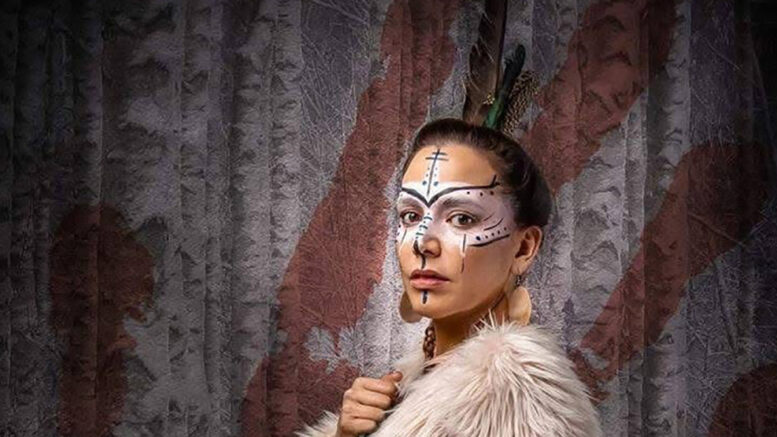
April Eve Wiberg. Photo by Visions of Heaphen Photography.
While living near 118th Avenue and 82nd Street, Wiberg witnessed the sexual exploitation of young people firsthand. After moving to lower-income suburban areas in west Edmonton, her mother left the city for Vancouver with her three younger siblings, leaving Wiberg behind.
A friend urged her to seek help at an emergency youth shelter, but she was turned away.
“They told me there were no beds and turned me away without offering any other resources,” Wiberg recalled.
A subsequent visit to Catholic Social Services ended in blame rather than support.
“The social worker asked me, ‘What did you do?’ I was a scared, vulnerable Indigenous teenager in a big city, reaching out for help. Instead of support, I was handed what I believe was a $200 food voucher and sent away. I never entered the system as a vulnerable youth in need of care – I ended up in the sex trade.”
Exploitation and Survival
Wiberg says her exploitation involved grooming, coercion, and manipulation.
“To unravel my story, there are so many layers. In a nutshell, I was targeted. I was coerced. I was manipulated. I was love-bombed – all of it.”
At age 19, Wiberg was “turned out” in the sex trade, a term used to describe being put up for sale. She was moved between cities, including New York, Vancouver, Fort McMurray, Saskatoon, Las Vegas, and Edmonton, and remained in exploitation for eight years.
“I went from being groomed to being fully exploited,” she said.
Her eventual escape did not come through law enforcement. In New York, the person who helped her leave was involved in the illicit drug trade – not a predator toward her, but someone who had the means to get her out of a life-threatening situation.
Years later, Wiberg chose to share her story publicly. Through journalist Brandi Morin, who was freelancing for Al Jazeera, Wiberg recounted her experiences of exploitation in Fort McMurray.
“I was tired of living in shame and hiding parts of my story. Exploitation and human trafficking are part of why Indigenous women, girls, men, and boys go missing and are murdered,” she said.
Her lived experience informs her leadership of the Stolen Sisters & Brothers Action Movement (SSBAM), a grassroots organization advocating for MMEIP — Missing, Murdered, and Exploited Indigenous People.
“During my exploitation, I could have gone missing or been murdered many times, in Fort McMurray, Edmonton, Saskatoon, Las Vegas, and New York. That’s why our movement works to protect our communities and shine a light on systemic failures.”
Understanding Grooming and Exploitation
Wiberg warns that exploitation often begins subtly and psychologically, especially online.
“They offer things that look like stability – friends, attention, money, and a sense that there’s more to life. It can feel like being welcomed into a new group, a new world,” she said.
She notes that traffickers increasingly use gaming platforms to groom youth, including Minecraft, Roblox, and Fortnite.
“They don’t just show up and say, ‘Come meet me.’ It’s very meticulous. They slowly surround someone with attention and flattery. They listen when you’re upset with your parents. They position themselves as the one person who understands you.”
Wiberg says traffickers often use distinct patterns of control, commonly referred to as different “types” of pimps.
Boyfriend pimps:
“He gives you flowers, attention, affection. He makes you feel special and loved. Eventually, he starts asking for small ‘favours,’ and then it escalates. He might say, ‘I know this older guy — he just wants to spend some time with a nice girl.’”
Popcorn pimps:
“These are less boyfriend-like but manage multiple women at the same time. It’s less emotional, but the exploitation is still there.”
Gorilla pimps:
“These are the most violent. They know exactly how to target the most vulnerable, and they use fear and violence to control them.”
“These dynamics are not about consent or choice, but about coercion, manipulation, and survival. Some of these situations end in serious harm or death. That’s why it’s so important for people to understand how exploitation actually works,” she added.
Recognizing these patterns is essential for prevention and early intervention, particularly for those working with youth and vulnerable populations.
Advocacy and Global Awareness
Wiberg has been part of a growing global movement raising awareness about missing, murdered, and exploited people across Indigenous and marginalized communities worldwide. During Human Trafficking Awareness Month, her story is being shared to highlight both the dangers of exploitation and the resilience of survivors.
Her advocacy and lived experience have been featured in media and public education efforts, including the trailers The Missing, Murdered, and Forgotten and The Right Track.
“I didn’t realize I was being trafficked in the moment,” she said. “When you’re inside it, you’re just trying to survive.”
She explains that this lack of awareness is common among those being exploited, particularly youth and young women who are groomed gradually over time.
“Trafficking doesn’t always look like what people expect. It often looks like relationships, survival, and manipulation — until you’re already trapped.”
Survivor Leadership and Advocacy Work
Wiberg acknowledges the weight of survival.
“I’m very blessed. I’m very fortunate. A lot of my sisters did not survive, but I survived. It’s a lifelong journey of healing and self-discovery.”
She continues to seek specialized therapy to address the trauma she endured while giving back through advocacy. Today, she serves as a volunteer board member with the Alberta Centre to End Trafficking in Persons and is the only survivor on the board.
“It’s a real honour and a privilege, but it’s a huge responsibility.”
Wiberg highlights the importance of mentorship and learning from other survivors. She points to Juanita Murphy, who works with CEASE — the Centre to End All Sexual Exploitation — as a guiding influence.
“Juanita has been helping other women and girls who have suffered from human trafficking for many years, supporting survivors on how to heal and navigate the aftermath of exploitation.”
Beyond advocacy, Wiberg is focused on systemic change, calling attention to gaps in education, social services, and law enforcement responses.
“We need to teach young people about healthy relationships, boundaries, and online safety. We need communities that see vulnerability and respond with care, not blame.”
Looking Forward: Hope and Empowerment
Wiberg continues to mentor other survivors and support grassroots movements. By combining lived experience with leadership and advocacy, she provides both guidance and hope to those navigating life after exploitation.
“Survivor leadership is powerful. We can transform pain into action, trauma into change. That’s what gives me purpose every day.”
As Human Trafficking Awareness Month continues, Wiberg’s story serves as a reminder of both the dangers that persist in vulnerable communities and the resilience, courage, and leadership survivors bring to the fight against exploitation.

Be the first to comment on "April Eve Wiberg: Survivor, Advocate for the Missing, Murdered and Forgotten"