By Chevi Rabbit, Local Journalism Initiative Reporter
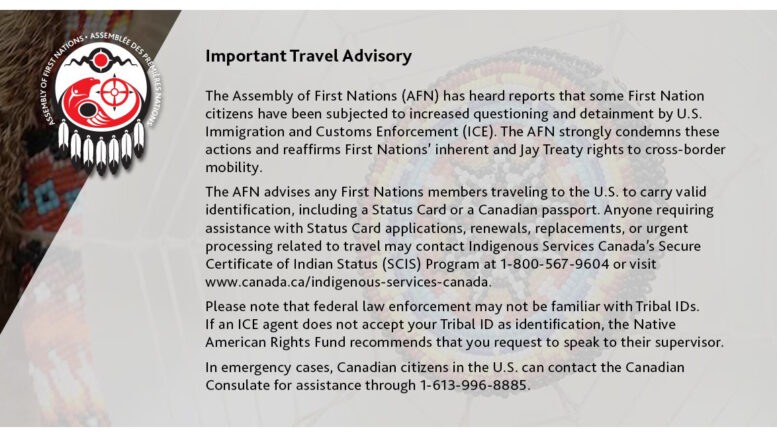
(ANNews) – The Assembly of First Nations (AFN) has issued an urgent travel advisory for First Nations citizens planning to cross the Canada–United States border, urging caution and preparedness in light of recent actions by U.S. immigration authorities.
On January 23, 2026, the AFN released a statement expressing concern about reports that some First Nations people have faced increased questioning, detainment, and other confrontations with U.S. Immigration and Customs Enforcement (ICE) while attempting to enter the United States. The advisory stresses that these incidents have raised alarms about the safety and rights of Indigenous travellers.
National Chief Cindy Woodhouse Nepinak confirmed to the Canadian Press that at least one First Nations individual experienced a negative border encounter, prompting the AFN to call on members to exercise extra caution when crossing into the U.S. She emphasized that the incidents reflect not only enforcement overreach but potential violations of inherent Indigenous rights and the historic Jay Treaty, which is recognized by the U.S. as ensuring free passage for Indigenous peoples across the border.
“We call on the U.S. administration to fully uphold First Nations peoples’ right to cross the border without harassment or undue hindrance,” Woodhouse Nepinak told the Canadian Press.
What the Advisory Recommends
The AFN strongly encourages First Nations travellers to be fully prepared with all appropriate identification and documentation before attempting to cross the border. Key documents recommended include:
Indian Status Card
Canadian passport
Long‑form birth certificate
Documentation verifying familial lineage where applicable.
The advisory also notes that some forms of Tribal identification may not be recognized by U.S. enforcement officers. In such cases, the AFN suggests travellers politely request to speak with a supervisor if their Tribal ID is not accepted.
Community Warnings and Broader Concerns
Several First Nations across Canada have echoed these concerns, issuing their own local advisories. For example, the Kashechewan First Nation — currently managing an evacuation — directed residents in Niagara Falls, Ont. to remain on the Canadian side of the border due to the current political climate and increased U.S. patrol activity. Likewise, the Mississauga First Nation urged members to ensure their identification is valid and current before travelling.
These developments have reignited discussions about border rights and the application of historic agreements. The Jay Treaty of 1794, while recognized by the United States, is not formally acknowledged by the Canadian government — complicating legal interpretations of Indigenous cross‑border mobility rights.
Support and Resources
As part of its advisory, the AFN has provided contact information for travellers in need of assistance, including the Canadian Consulate in the U.S. for emergency support.
Looking Ahead
National Chief Woodhouse Nepinak has indicated plans to meet with counterparts in the National Congress of American Indians this spring to discuss border mobility and protection of Indigenous rights. Advocates hope these conversations will lead to clearer processes for First Nations citizens navigating international travel while safeguarding their rights.

Be the first to comment on "AFN Issues Advisory Warning for First Nations Travelling to the United States"