By Chevi Rabbit, Local Journalism Initiative Reporter
(ANNews) – As communities across Canada prepare to mark Sisters in Spirit Day on October 4, it is an important time to catch up with Josie Nepinak, president of the Native Women’s Association of Canada (NWAC), for a conversation about leadership, loss, advocacy and the ongoing work of creating safe spaces for Indigenous women and families. NWAC continues to support Sisters in Spirit vigils across the country, which honour the lives of missing and murdered Indigenous women, girls and 2SLGBTQIA+ people while supporting families, survivors and communities.
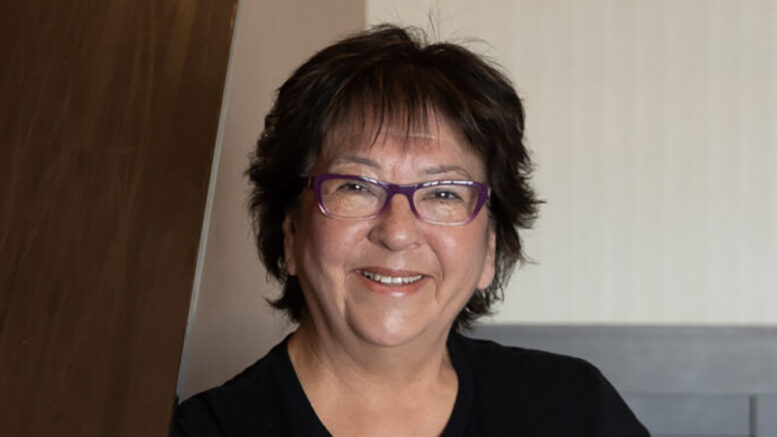
“Much of my learning and much of the values and the skills that I have, first and foremost, come from my own family,” Josie Nepinak said. For the president of the Native Women’s Association of Canada (NWAC), leadership has been shaped by family, Elders, lived experience and decades of advocacy for Indigenous women and families. A proud Anishinaabe woman from Treaty 4 territory with roots in Minegoziibe Anishinabe, Nepinak has more than 30 years of executive leadership experience and holds a bachelor’s degree in Women’s Studies. Her work has taken her through Indigenous organizations and frontline services and into provincial and national policy discussions.
“Learning from Indigenous women about courage, strength and resiliency is top of mind,” Nepinak said. She recalled working with women who had survived decades of abuse and arrived at support services deeply wounded. “I watched women coming in who were very broken, broken to spirit, where they had lived through decades of abuse,” she said. Yet alongside that pain, she saw resilience. “Each of them have a story. Each of them have a life. They all had children, and in my eyes they’re great mothers.”
Nepinak said violence against Indigenous women must be understood beyond conventional definitions. “It’s not only physical, it’s not only the emotional, sexual, financial, which is the mainstream definition of violence,” she said. “It also, and should include, interference by the state.” She pointed to child welfare and other systems that can affect Indigenous women and families. “There is an abusive structure that affects the day-to-day lives of Indigenous women,” Nepinak said. “And Indigenous women are often punished by systems that are intended to help them, but realistically they’re not.”
The teachings that stay with her
Nepinak credits Indigenous women and Elders with helping shape her approach to leadership. She spoke about Muriel Stanley Venne, founder of the Institute for the Advancement of Aboriginal Women, now known as Esquao. “Watching Muriel Stanley Venne speak, where people didn’t want to hear what she said, but she was a strong, strong role model for me, because I thought, I can do that too.”
She also recalled Elders Rosie Day Rider, Annie Blackwater and Bruce Wolf Child, whom she said have since gone to the spirit world. Nepinak said the Elders adopted her into Blackfoot territory in 2011 and gifted her a Blackfoot name and a dress. Her work with Awo Taan Healing Lodge Society further reinforced the importance of listening to Elders and respecting the Indigenous foundations of organizations.
Nepinak recalled opposing efforts to remove references to Elders and prayer from organizational bylaws. “Has anybody taken their tobacco, taken their gift to go talk to the Elders?” she asked. For Nepinak, organizations cannot separate themselves from the Indigenous knowledge, ceremony and relationships that helped create them. “We mustn’t ever forget that when we create space for Indigenous women, Indigenous organizations, that we don’t do this alone,” she said.
She also remembered Grandma Annie Bear Shin Bone, who prepared her for the challenges ahead through prayer and ceremony. “She said to me, ‘This work you’re going to do is very hard. Not everyone is going to like you.’” Years later, when Nepinak faced opposition, she sought guidance from Elder Reg Crowshoe. She remembered the prayers offered decades earlier and what Crowshoe told her: “Remember those prayers from 30 years ago, or more, from Grandma Annie Bear Shin Bone, are just as powerful today as they were back then.” That reminder reinforced the role of ceremony, family and Elders in the work she continues today. For Nepinak, creating safe spaces for Indigenous women is connected to the generations who fought to establish them.
From loss to advocacy
For Nepinak, the work is deeply personal. She has led the Sisters in Spirit event in Calgary for 24 years, a commitment connected to the loss of two family members who were murdered. “I have led the Sisters in Spirit event in Calgary for 24 years. And part of that is a recognition of my own family member who was murdered, and to honour her. Actually two of them, to honour them. I remember their spirit not only on red dress day. But when something like that happens, as I’m sure many of us know, it’s very painful, and the grief sits with you. It stays with you, but it also feeds your spirit to continue to do the work, to continue to be strong, continue to have voice, and continue to march and to challenge systems that continue to oppress.”
Nepinak’s advocacy is also connected to personal loss and what it meant to experience that loss without having a voice. “When this happened, we didn’t have a voice,” she said. Today, she brings lived experience and policy positions to government tables. Nepinak said. “I’m able to bring lived experiences forward and influence legislation that goes forward.”
She said that work is not for herself alone. “It is for my children, my grandchildren, and for the next generations to come.” That responsibility is rooted in what she has witnessed throughout her career. “What draws me to my work is that I have witnessed genocide, colonial violence and racism toward Indigenous women and girls,” Nepinak said. “The need to continue this work, to advocate and amplify voices, is critical to providing the supports needed to reduce violence.”
For Nepinak, the work is far from finished. “We still have a lot of work to do,” she said. “We will continue to do the work as needed, and we have many young, brilliant people coming forward and taking on those advocacy roles.” For Nepinak, the work continues at policy tables, in communities and through the voices of a new generation of advocates. That continuation carries a larger responsibility: ensuring the next generation inherits not only the challenges, but also the knowledge, strength and teachings needed to change them.
To get involved with Sisters in Spirit Day or make a donation, visit Sisters in Spirit.

Be the first to comment on "In Conversation with Josie Nepinak: Leadership, Loss and the Work of Creating Safe Spaces"