By Chevi Rabbit, Local Journalism Initiative Reporter
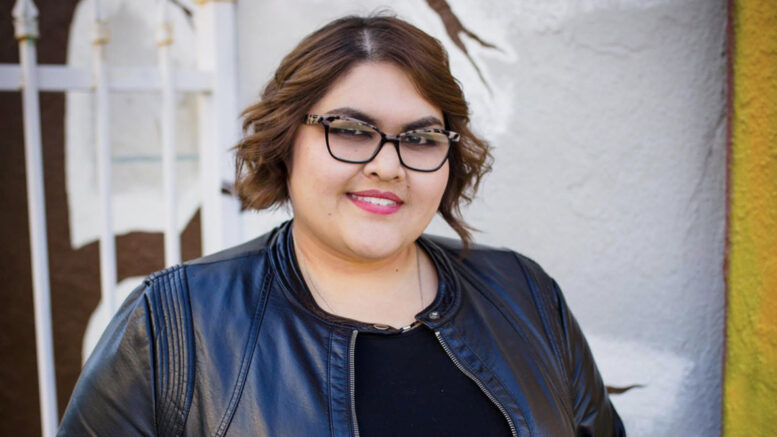
(ANNews) – Approaching Indigenous food as both a reporter and a curious listener, I found that Andi Murphy’s work extends far beyond the kitchen. A Diné (Navajo) journalist and multimedia storyteller, Murphy uses her podcast Toasted Sister to explore how food carries culture, sovereignty, and identity revealing that every dish reflects deeper stories about land, systems, and community.
Murphy, a National Native Media Award recipient and a Native American 40 Under 40 honouree, has built her reputation not only through recognition, but through independence. Her podcast is largely a solo production, shaped entirely through her own editorial direction.
“It’s meant a lot, because I started this on my own and I do everything myself, the writing, the editing, the recording, the interviews, the social media, and even the artwork and logo. It’s truly a one-woman show.”
From a journalist’s perspective, that independence functions as a form of creative sovereignty. It allows Murphy to approach food not as lifestyle content, but as a serious entry point into policy, environment, and access.
Across Toasted Sister, Murphy consistently frames food as inseparable from the systems that shape it. Her conversations move between agriculture, climate change, representation, and reconciliation, often beginning with something as simple as a meal.
“The food… myself and my guests on the podcast, we talk about important issues that impact food. They really impact food and the way we think about food and the way we access food,” she said.
For Murphy, food is never just nourishment. It reflects infrastructure, inequality, and resilience, and often leads to deeper questions about production and access.
“The folks who are enthusiastic about food can’t help but go beyond that and look at who is growing the food and who is lacking food, or lacking the infrastructure to grow food and do what they need to create access to food,” she said.
Murphy’s storytelling approach is careful and deliberate. Rather than simplifying Indigenous knowledge for broader audiences, she works to provide context that preserves meaning.
“Usually I like to approach episodes and stories by not taking things too simply or simplifying culture,” she said. “I try to create space to give some background, maybe add historical context, or ask a guest to explain what something means.”
“It still has to be relatable and accessible, without losing its meaning.”
That balance – accessibility without dilution – runs throughout her work and reflects a broader challenge in Indigenous media representation.
When Murphy launched Toasted Sister in 2017, Indigenous food storytelling had limited visibility in mainstream media. She entered a space that was still emerging.
As the podcast grew, Murphy expanded her writing into outlets such as Eater and Civil Eats, contributing to wider conversations on Indigenous food sovereignty and cultural representation. She has also highlighted issues of cultural appropriation, including controversies such as the attempted copyrighting of the term “Aloha Poke.”
These discussions underscore how food intersects with identity, economics, and ownership.
Murphy’s path into food storytelling began in radio production, where her interest in food grew alongside her journalism experience.
“When I first came to Native America Calling as a producer about 12 years ago, I already had this really big interest and obsession with food,” she said.
“That’s when I thought about doing a podcast… so I might as well do it on the side, but focus on Indigenous food. So that’s what I did, and I started it in 2017.”
At the heart of Murphy’s work is the idea that food is a connector – linking people across time, place, and community.
“Food represents history and culture and connectivity between chefs and their community, and chefs and their history,” she said.
“It connects the people who are eating the food to the ingredients, the flavors, the culture and history, it’s really just an extension of people, community, and culture.”
Murphy’s commitment to quality shapes every part of her production process. She describes herself as selective about structure and tone, preferring journalistic storytelling over casual conversation.
“There are a couple of different tools that I have to pay for to make sure it’s the quality I want it to be. That’s also a responsibility for me making sure it meets my standards as a journalist, and as a pretty picky podcast listener myself.”
“I really like news podcasts and shows that are produced by radio people and journalists. I don’t really like the free-flowing ‘hey guys’ style. I need something structured.”
That independence, however, comes with limits.
“It’s also made it harder for me to bring other people into the project, because there aren’t very many Native audio folks out there, or people I’ve really gotten close enough to and trust to be involved in it at that level.”
“Yeah… it’s my baby.”
Murphy hopes Toasted Sister continues to expand public understanding of Indigenous food systems and contemporary Indigenous life.
“I love that it’s already been talked about as a show that’s created space – maybe took up space for our stories within the podcast realm,” she said.
“I hope it contributes to how people understand Native food, Native people, and culture, especially contemporary Native people and food.”
She also emphasizes diversity within Indigenous food communities and the shared goals that connect them.
“I hope people learn how diverse it is, but also how connected everyone is, and how we all seem to have the same goal: reconnecting with food and making sure our wildest dreams can come true,” she said.
“It’s great to see some of these chefs and restaurant owners really making their dreams come true.”
“That’s what we all want for each other in the food community.”
Through Toasted Sister, Murphy continues documenting Indigenous food stories with depth and curiosity, treating food not only as sustenance, but as a map of sovereignty, memory, and shared futures.

Be the first to comment on "Toasted Sister: Indigenous Food, Storytelling, and the Meaning Behind Every Plate"