
By Troy Dumont, Local Journalism Initiative Reporter
(ANNews) – On March 11, MacEwan, Kihêw Waciston, IslamicFamily, and The Mosquers Film Festival presented îbutze îciyabi (“to make yourself thirsty”), an event that showcased cultural connections through fasting.
The event brought together Muslim and Indigenous perspectives. Panellists spoke about their experiences with fasting, their relationships to spirituality and religion, and the importance of community in sustaining those practices.
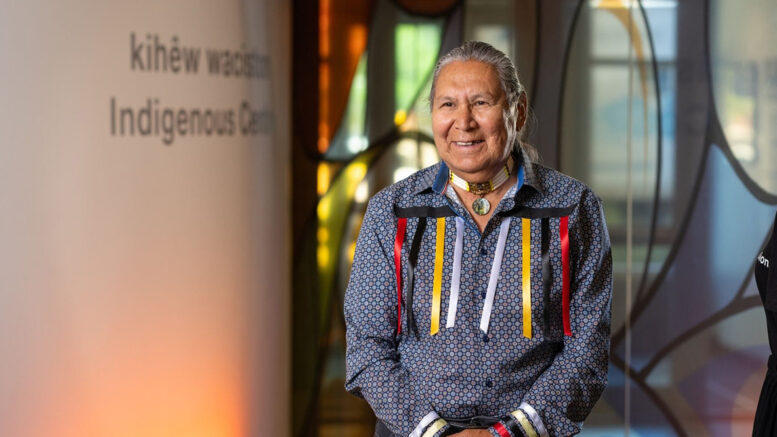
Opening prayers were offered by Omar Yaqub of the Islamic Family & Social Services Association and Elder Tom Snow, Knowledge Keeper for Kihêw Waciston, setting the table for the Interdisciplinary Dialogue Project 2026: Food Matters series. Roughly 200 people attended, including Muslim and Indigenous community members and students who came to listen and learn. The setup felt thoughtful and symbolic, with water and dates placed at the centre, drawing attention to the shared act of breaking the fast in an Islamic context. For many Muslims, breaking the fast with dates holds both spiritual and symbolic importance, as it follows a long-standing tradition.
As the evening progressed, panellists (Amber Dion, Ibrahim Long, Tom Snow, and Suhana Samshood) shared their experiences with attendees, offering insights into their personal journeys. The first question was a two-parter and set the table for the entire event: “Can you describe how fasting helped you feel closer to creator, Allah, or spirituality? And how?”
Elder Snow responded by reflecting on the spiritual influences that shaped his early life and the path that eventually led him back to his culture. He spoke about being mentored into traditional teachings, learning traditional prayer, and reconnecting with a way of life that gave fasting deeper meaning. He described a three-night, four-day fast as a turning point, one that helped him let go of fear, anxiety and things that he had been holding on to.
Omar Long approached the question through language, reflecting on what the word fast actually means. While it is often associated with speed, he noted that the word also carries meanings connected to firmness and stability, as in phrases like “fasten your seatbelt” or “hold fast.” He then moved to the Arabic term ṣiyām, describing it as a form of restraint or abstaining, and connected that meaning to the inward work of stilling oneself.
Other questions throughout the evening invited panellists to reflect on discipline, identity, and the role of community in sustaining fasting practices. While each speaker approached the subject differently, the discussion continued to return to shared themes of restraint, reflection, and responsibility to one another.
Because Ramadan follows the lunar calendar, it shifts through the seasons, which creates significant variation in when some Muslims break their fast. In Edmonton, sunset on March 11 fell at 7:31 p.m. The event held their schedule tight to the minute, offering the Adnan, or call to prayer at 7:34. When Ramadan falls during the spring and summer months, fasting can become especially demanding because of the city’s long daylight hours. Around the June solstice, Edmonton sees just over 17 hours of daylight, with sunrise at about 5:04 a.m. and sunset at about 10:07 p.m.
The event was more than a discussion about fasting. While cultures may hold many differences, it is often through shared values that people find deeper connection with one another. What emerged that evening was a reminder that even across different traditions, people are often searching for the same things: purpose, healing, and community.

Be the first to comment on "Event showcasing Shared Values and Different Traditions presented at MacEwan U"